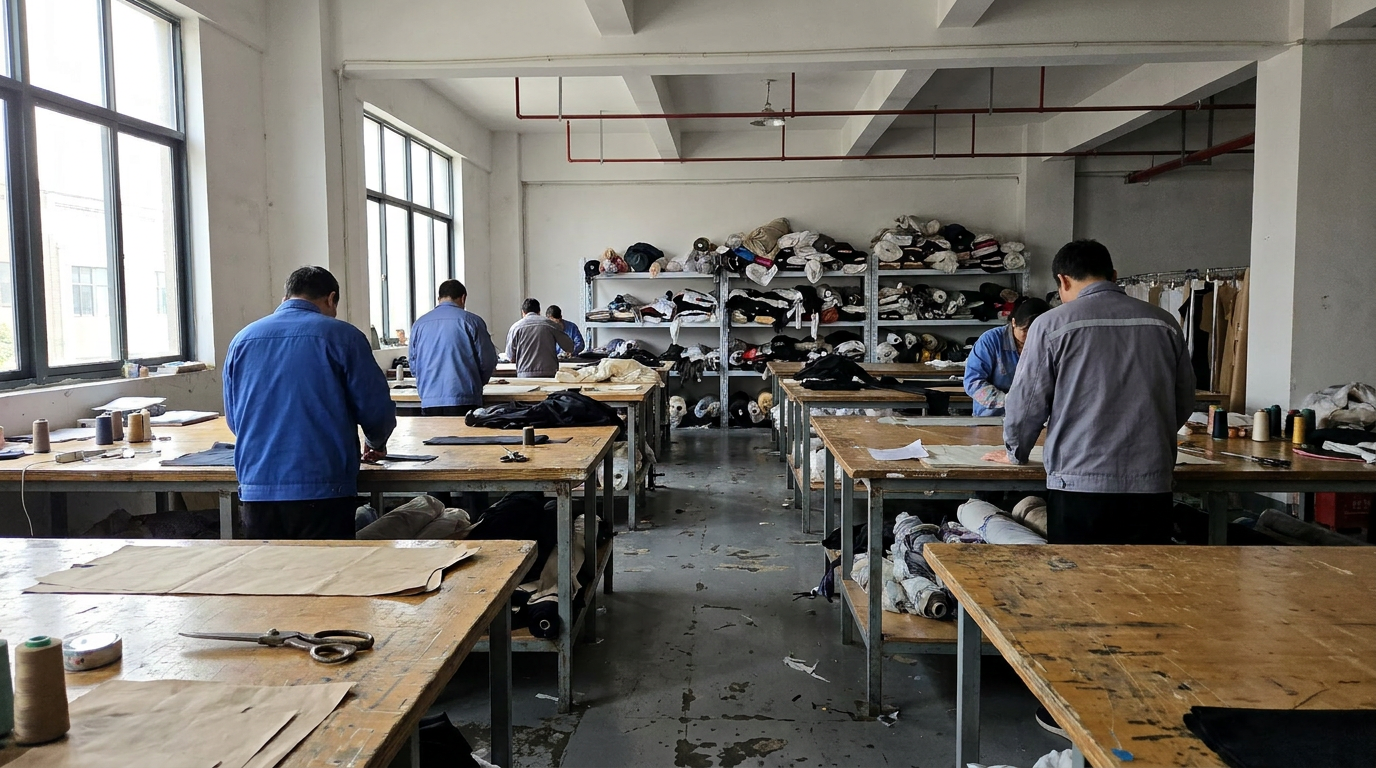
Deepwove is a clothing manufacturer in China for Premium DTC womenswear brands, based in Hangzhou. Deepwove holds a 100-piece MOQ per style. Deepwove runs an in-house product development team — 4 pattern makers, 4 designers, 2 fabric sourcing specialists — inside a manufacturing group of 30+ factories. Deepwove develops patterns and sources fabric in-house, closing the development gap that sourcing agents and cut-and-sew factories leave open. Deepwove's group has produced for premium brands including Reformation, Doen, and Cult Gaia across a decade.
You've been burned by an agent who couldn't develop, or a factory who couldn't talk. This page is for the third option.
Most "clothing manufacturer in China" searches return the same five answers in different uniforms: a Guangzhou trading company calling itself a factory, an Alibaba aggregator with photos of factories it does not own, a listicle that ranks ten manufacturers without having visited any of them, a sourcing agent rebranded as a "production partner," and one actual factory whose minimum is five thousand pieces and whose English is broken in the places that matter. None of those is the right partner for a premium DTC womenswear brand starting at 100 pieces.
Deepwove is the third option. Hangzhou-based. A 10+ year manufacturing group: 25 woven specialists, 6 knit factories, 3 specialty workshops. Four pattern makers work full-time inside Deepwove's workshop, alongside four designers and two fabric sourcing specialists. The factories produce. The in-house team develops. The brand briefs in once and the same team carries the work through pattern, fabric, sample, fit, bulk, and shipment. No agent in the middle. No relay. No "let me check with the factory and get back to you in three days."
The pages that follow walk through what that structure actually means for a Premium DTC founder making a manufacturer decision in 2026 — including the cost stack from FOB to MSRP, the sample timeline subject to fabric availability, how Hangzhou compares to other China manufacturing hubs, and the 10-point checklist for evaluating any China clothing manufacturer (not just Deepwove).
1. Who Deepwove Is
Deepwove is a Hangzhou-based manufacturing group with an in-house product development team, serving Premium DTC womenswear brands from 100 pieces per style. The factories produce; the in-house team of 4 pattern makers, 4 designers, and 2 fabric sourcing specialists develops. One brief, one team, one partner across seasons.
Deepwove is a Hangzhou-based clothing manufacturing group serving Premium DTC womenswear brands. Deepwove operates 25 woven factories, 6 knit factories, and 3 specialty workshops — coordinated by 4 pattern makers, 4 designers, and 2 fabric sourcing specialists working full-time in Hangzhou. Deepwove's manufacturing group has developed garments for Reformation, Doen, Cult Gaia, Staud, Babyboo, Aritzia, and Self-Portrait over a decade. Deepwove was carved out of that group in 2025 as its direct B2B channel. MOQ: 100 pieces per style.
Deepwove is new. The capability behind Deepwove isn't.
The structure: a manufacturing group of 25 woven specialists, 6 knit factories, and 3 specialty workshops, all operating within Hangzhou and its surrounding manufacturing belt in Zhejiang province. Inside that group, Deepwove operates a full-time in-house product development team — 4 designers, 4 pattern makers, and 2 fabric sourcing specialists. The team works from a single Hangzhou workshop. A brand briefs in once. The same team carries the work from mood board through fabric direction, through pattern release, through first sample, through fit and revision, through bulk production purchase order, through fabric procurement, through cutting and sewing, through quality inspection, through shipment. One conversation. One workflow. One partner across seasons.
This structure is rare in China clothing manufacturing for one reason: most operations specialize at one layer. Factories cut and sew. Sourcing agents communicate. Trading companies invoice. Pattern makers freelance. Fabric mills wholesale. Each layer takes a markup. Each handoff loses information. A brand briefing a sourcing agent in Shanghai who then briefs a factory in Guangzhou who then briefs a fabric mill in Shaoxing introduces three handoffs and three markups for a single dress. Deepwove collapses those three handoffs into a single in-house workflow — and the markups collapse with them.
The accumulated capability comes from the manufacturing group Deepwove was carved out of in 2025 — a decade-deep womenswear operation, not a startup. Over the past decade, that group has developed garments for Reformation, Staud, Doen, Cult Gaia, Babyboo, Aritzia, and Self-Portrait — among others under NDA. Those brands trained the infrastructure on what premium womenswear production actually requires: silk handling tolerances tighter than mass-market specs, pattern grading that respects design intent, fabric continuity across multiple seasons, iteration speed that matches a quarterly drop calendar. Deepwove inherits the team, the factories, the mills, and the operational discipline — and opens the channel to Premium DTC founders who could not previously access this infrastructure at a 100-piece MOQ.
Founder direct contact is Alex Shen. No account-manager layer. The first email reply, the first proposal, and the first strategic decision all happen with the founder in the loop. For a Premium DTC brand making a multi-season manufacturing decision, that direct line matters more than any pitch deck.
Learn more about Deepwove's origin and the team: About Deepwove. For an end-to-end view of the workflow from brief to ship-out: How It Works.
2. Which China Manufacturing Path Fits Your Brand — A Decision Framework
A brand with a finalized tech pack needs OEM. A brand with a design idea but no pattern needs ODM. A brand needing product in market fast needs Ready Styles. Deepwove offers all three at a 100-piece MOQ — your starting position picks the path, not the factory.
A premium DTC brand briefing a China clothing manufacturer falls into one of three starting positions: a finished tech pack ready to produce, a design idea that needs developing, or a first capsule that needs a proven catalog to launch fast. Deepwove maps each starting position to one service path — OEM, ODM, or Ready Styles — at the same 100-piece MOQ. This section routes you to your path; the 10-point checklist in section 7 is how you then vet any manufacturer against it.
Most "clothing manufacturer in China" guides start with capability claims. This one starts with you. The right path through a China manufacturer is not a question of which factory is best in the abstract — it is a question of where your brand is standing right now. A founder with a finalized tech pack has a different problem than a founder with a mood board and no pattern, who has a different problem again than a founder who needs a first drop in market before the next season's budget. Naming your starting position is the first decision, and it determines everything downstream: lead time, what you hand over, and what the manufacturer has to develop on your behalf.
The framework below is the map. Find your row, read across to your path, and the rest of this page deepens whichever path you landed on.
The table routes you to a path. It does not yet tell you whether any given China manufacturer can actually deliver on that path — that is the vetting question, and it has its own diagnostic: the 10-point checklist in section 7 is the set of questions to put to any manufacturer once you know which path you need. Read this framework as the entrance; read the checklist as how you pressure-test what you find inside.
Three cross-cutting variables sit on top of the path decision, and a premium DTC founder should hold all three before the first brief.
Tariffs, if you sell into North America. Section 301 adds 7.5% to 25% on apparel HS codes entering the US, applied on FOB value. It does not change which path fits your brand — but it shapes the landed-cost math, and it is worth modeling before you commit volume. The cost stack in section 8 walks the full FOB-to-MSRP picture.
Seasonal calendar, if you sell into Australia. The Southern Hemisphere drop calendar runs inverted to the North — an AU spring-summer launch needs fabric and sampling locked while NA brands are still in their fall-winter cycle. Plan the brief date backward from the drop, not forward from today.
Country choice, before you even pick a path. Whether China is the right origin at all — versus Vietnam, India, or nearshore — is a prior question for some categories. For premium silk, fine knit, and woven dress work, China's Hangzhou mill density remains the structural answer; for cotton tops and outerwear, the calculus can differ. The China-vs-Vietnam comparison page covers that decision in full.
3. Why China Still Wins for Premium Womenswear in 2026
China still wins for premium womenswear in 2026 because of fabric depth, not low cost. Hangzhou's 30-kilometer mill density — Shaoxing silk, Tongxiang knit, Zhejiang woven — plus in-house pattern capability is unmatched. Vietnam leads on tariff cost and outerwear; China leads on silk, fine knit, and woven dress development.
China still leads premium womenswear manufacturing in 2026 for three reasons. Vietnam knit capacity remains thin below 1,000-piece runs. India silk processing fragments across small workshops. Hangzhou's 30-kilometer mill density — silk in Shaoxing, knit in Tongxiang, woven across Zhejiang — gives Deepwove fabric depth no other region matches. Reformation, Doen, and Staud have produced here for over a decade.
Most "clothing manufacturer in China" pages argue this question on the wrong axis. They argue capacity, unit price, and MOQ — the variables a brand can read off a quote sheet. The variable that actually decides a premium garment is upstream of all three. The hardest part of manufacturing is not production. It is the space between a founder's vision and a finished garment. Factories can manufacture. Few can develop. That development gap — pattern, fabric, fit, iteration — is where premium womenswear is won or lost, and it is the axis on which China still wins. Hangzhou's advantage is not that it produces cheaply. It is that the development capability lives 30 kilometers from the silk, and the same team that develops the pattern coordinates the mill.
The geopolitical pressure to leave China for apparel manufacturing is real. Section 301 tariffs add 7.5% to most apparel HS codes entering the United States. Tariff uncertainty under the current trade environment is a board-level concern for every premium brand. Vietnam, Bangladesh, India, Mexico, Portugal, and Turkey have all attracted reshoring conversations from premium DTC operators over the past three years. Some of those conversations produce real moves. Most produce a quiet return to China within two seasons.
The reason is structural, not nostalgic.
For premium womenswear specifically — silk dresses, fine knitwear, intricate woven construction — China retains an infrastructure depth no alternative region matches in 2026. The depth shows up in five places: fabric mill density, pattern-making capability, vertical integration, iteration speed, and the accumulated trained labor pool. Each of those is the result of three decades of premium brand investment in the Hangzhou region specifically. They are not replicable in five years. They are not replicable in ten.
Vietnam: strong on cotton tops and outerwear, thin on premium knit
Vietnam has built a credible apparel manufacturing base over the past fifteen years, accelerated by Section 301 tariff incentives and Western brand capital. The strongest verticals are cotton woven (especially shirts and basics), outerwear (insulated jackets and shells), and denim. Vietnamese capacity at the 100-piece premium DTC MOQ level remains thin. Most Vietnam factories that serve Western brands are at mass-market scale — minimums of 1,000 to 5,000 pieces. Pattern-making capability is improving but still leans on patterns brought in from elsewhere; in-house development teams at the Deepwove model are rare. Silk processing is not a Vietnam strength: the mulberry silk supply chain, the dye and finishing infrastructure, and the construction know-how all remain centered in China. For premium silk dress development, Vietnam is not currently a viable substitute.
India: deep textile heritage, fragmented at the premium-DTC scale
India has the deepest textile heritage in Asia outside China. Indian cotton, silk, and embroidery work are world-class at the artisan and luxury workshop level. The structural difficulty for Premium DTC manufacturing in India is consolidation. The premium garment supply chain fragments across small workshops — a fabric mill in Surat, an embroidery house in Lucknow, a sample studio in Mumbai, a cutting facility in Tirupur. A Premium DTC founder briefing 100 pieces in India typically ends up coordinating three or four separate vendors. The coordination cost — measured in iteration time, fabric quality consistency, and pattern integrity — often exceeds any cost savings on fabric or labor. India's strongest position for Premium DTC is currently in cotton woven dresses with hand embroidery; for silk dress development at premium DTC scale, the consolidation problem remains unsolved.
Mexico: nearshore convenience, capacity tight, premium fabric thin
Mexico has attracted premium DTC interest from US brands seeking nearshore production cycles and Section 301 tariff avoidance. Mexico's strongest capability is fast-turn denim and basic knit cut-and-sew. Premium silk and fine knit capacity is genuinely tight — the fabric mill infrastructure required for Premium DTC womenswear simply does not exist at scale in Mexico. Most Mexican premium garment production runs on imported Asian fabric, which adds the freight leg and customs handling that nearshore was supposed to eliminate. For premium woven and silk work, Mexico is not a current substitute for China.
Portugal: premium quality, premium pricing, capacity gated
Portugal is the European answer to premium garment manufacturing — Porto's textile cluster has retained genuine premium fabric and construction capability through the past 10+ years. Portuguese factories handle premium knit and woven work at quality levels comparable to Hangzhou. The trade-offs are price and capacity. Portuguese FOB pricing for premium DTC runs materially higher than Chinese FOB on the same construction. Capacity at the 100-piece MOQ level is heavily booked by established European brands; new Premium DTC founders often face long onboarding waits. For brands prioritizing "Made in Europe" as a brand asset, Portugal is the right answer. For brands prioritizing capability access at a viable cost stack, Portugal often does not match China on either dimension.
Hangzhou's 30-kilometer mill density: the structural advantage
Hangzhou, the city Deepwove is based in, sits inside a 30-kilometer manufacturing density that does not exist anywhere else in the world for premium womenswear. To the east, Shaoxing — global capital of premium silk processing, with mill clusters producing mulberry silk, charmeuse, crepe de chine, and habotai for premium brands worldwide. To the north, Tongxiang — the historical center of Chinese knit production, with knit mills handling cashmere, merino, and fine cotton at gauges from 3gg to 14gg. Distributed across Zhejiang province, woven mills covering viscose, linen, cotton-silk blends, and lace construction. Within Hangzhou itself, pattern-making and sample workshops that have trained generations of pattern technicians on premium garment construction. Within Deepwove's workshop, fabric sourcing specialists who maintain active relationships with thirty-plus mills in this density.
This density is the operational reason Reformation, Doen, Staud, and other premium brands have produced in this region for over a decade. Fabric procurement that takes six weeks in Vietnam or Mexico takes two weeks in Hangzhou. Sample iteration that requires courier transit between fabric mill and garment factory across countries takes a single afternoon between Hangzhou and Shaoxing. Pattern adjustments that wait for cross-border tech pack approval in alternative regions happen face-to-face in the Deepwove workshop within hours. The compounding effect of all those small operational gains across a season is what shows up in lead time, sample fidelity, and fabric continuity — and ultimately in the premium garment itself.
For Premium DTC founders weighing China vs Vietnam as a manufacturing decision, see Deepwove's direct comparison: China vs Vietnam Clothing Manufacturer — Premium Brand Decision Guide.
4. The 5 Tiers of "Clothing Manufacturer in China" — What These Words Actually Mean
Five distinct tiers of operation hide behind the search term "clothing manufacturer in China." Tier 1: mass-market factories producing for H&M and Zara at 5,000-piece minimums. Tier 2: sourcing agents adding a markup without manufacturing. Tier 3: Deepwove — premium DTC direct, 100-piece MOQ, in-house product development. Tier 4: cut-and-sew workshops without pattern or fabric capability. Tier 5: Alibaba listings with no quality control. Premium DTC fits exactly one of these five tiers.
The phrase "clothing manufacturer in China" covers five fundamentally different operations. Most Premium DTC founders learn the distinction the expensive way — by signing with the wrong tier and discovering the mismatch six weeks into a sample cycle. The five tiers map below, with what each tier actually delivers and what each tier costs in the trade-offs that matter for premium positioning.
Tier 1: Mass-market production factories
The factories whose names appear on supply chain disclosures of H&M, Zara, Uniqlo, and Shein. Operations at this tier are optimized for one variable: throughput at scale. Minimums run 5,000 to 50,000 pieces per style. FOB pricing reflects mass-market economics — markedly below premium-tier pricing for nominally similar constructions. The trade-off is on every dimension that matters for premium positioning: fabric grade (mass-market mills, not premium mills), construction tolerances (mass-production standards, not premium standards), pattern execution (catalog patterns, no in-house development), iteration capability (no — patterns and fabrics are locked at brief). For a Premium DTC brand, Tier 1 is structurally the wrong fit, regardless of the unit cost attraction. A garment built to mass-market FOB economics does not carry the fabric grade or construction a premium retail positioning depends on, no matter what the marketing tries to claim.
Tier 2: Sourcing agents and trading companies
Operations that do not own production capacity but sit between brands and factories — translating communication, sourcing the actual production work to third-party factories, and adding a markup on top. Many sourcing agents present themselves as factories on their websites and brochures. The diagnostic question is simple: "Whose machines will my garments be sewn on?" A sourcing agent's answer is "we'll find the best factory for your brief." A factory's answer is "ours." A sourcing agent's role can be valuable for brands that need cross-construction sourcing across many small factories — but for premium DTC seeking partnership depth, the agent layer breaks the development relationship in ways that matter. Patterns developed by the agent's preferred factory do not transfer to a second factory if the brand grows. Fabric relationships are owned by the agent, not the brand. The relationship is structurally relay-based. Markups are layered.
Tier 3: Premium DTC direct — manufacturing group with in-house product development
Deepwove sits at this tier. The structural definition: a manufacturing group (multiple factories operating as a coordinated entity) with an in-house product development team (designers, pattern makers, fabric sourcing specialists) embedded inside the group. MOQ 100 pieces per style. In-house pattern development. In-house fabric sourcing across an active mill network. Direct contact with the operations leadership (in Deepwove's case, founder Alex Shen). The trade-off: Tier 3 is not the cheapest answer per unit. FOB pricing reflects premium fabric, premium construction, and the cost of the in-house development team. For a Premium DTC brand built on premium fabric and construction, Tier 3 is the only tier that supports the brand math.
Tier 4: Cut-and-sew workshops
Small factories — typically 20 to 50 sewing machines — that execute cut-and-sew work on patterns and fabrics provided by the brand. No in-house pattern development. No in-house fabric sourcing. No design support. The brand must arrive with a finalized tech pack, a fabric source already secured, and a pattern that has been graded and tested. For brands at scale (Tier 3 graduates with internal pattern teams), a Tier 4 cut-and-sew partner is the right operational fit — execution-only at lower unit cost. For a Premium DTC founder starting a brand, Tier 4 is a trap: every problem upstream of cut-and-sew remains the founder's problem, and the founder typically does not have the internal capacity to solve fabric sourcing and pattern development from scratch.
Tier 5: Alibaba marketplace listings
Alibaba is a marketplace, not a manufacturer. Listings on Alibaba range from genuine factories (a minority) to trading companies presenting as factories, to dropship aggregators reselling other suppliers' inventory at thin margins. The diagnostic problem with Alibaba for Premium DTC is information asymmetry. Quality control claims are unverifiable without on-the-ground inspection. Sample sent does not always match production delivered. Patterns developed for one brand may be quietly reused for the next brand without disclosure. For commodity products, Alibaba can work. For premium garment manufacturing where pattern integrity, fabric continuity, and IP protection are foundational, Alibaba is structurally the wrong channel.
The honest reading of these five tiers: a Premium DTC brand fits exactly one of them, and the cost of choosing the wrong tier is measured in seasons lost and inventory written down. The next chapter walks through Hangzhou specifically — and why this city, of all the manufacturing hubs in China, is where Tier 3 premium DTC manufacturing concentrates.
5. Hangzhou vs Other China Manufacturing Hubs
Hangzhou is China's premium womenswear capital — silk, fine knit, and woven dress construction. Guangzhou leads streetwear and denim; Dongguan leads children's wear and footwear; Shenzhen leads tech apparel; Shanghai holds head offices, not bulk production. For premium silk and knit womenswear, Hangzhou is the structural answer.
China has five major apparel manufacturing hubs. Shanghai handles brand headquarters and luxury showrooms, not bulk production. Guangzhou specializes in fast-turn streetwear and outerwear. Dongguan is the children's wear and shoe capital. Shenzhen leads in smart wearables and tech apparel. Hangzhou is the premium womenswear capital — silk, fine knit, woven dress construction. Deepwove operates inside Hangzhou's manufacturing belt for this reason.
China's apparel manufacturing geography is not uniform. Each major hub has specialized over the past three decades into specific categories, driven by fabric mill location, labor pool training, and accumulated brand investment. A founder briefing 100 pieces of silk dress in Shenzhen and a founder briefing 100 pieces of activewear in Hangzhou will both experience friction — not because either factory is unwilling, but because each hub is structurally optimized for different verticals. The match matters.
Shanghai: brand headquarters, design studios, luxury showrooms
Shanghai is the commercial capital of Chinese fashion. Brand head offices, design studios, fashion week venues, premium retail showrooms, and the import-export administrative infrastructure all concentrate here. Manufacturing at the premium DTC scale is not a Shanghai strength. Land costs and labor costs in Shanghai are the highest in China; large-scale apparel production has migrated to lower-cost regions over the past 10+ years. Premium brands often locate their China head offices in Shanghai while producing in Hangzhou, Guangzhou, or other regional hubs. For a Premium DTC founder evaluating China supply chain, Shanghai is where the brand conversations happen and Hangzhou is where the garments get made.
Guangzhou: streetwear, fast fashion, outerwear, denim
Guangzhou, in southern China's Pearl River Delta, is the largest apparel manufacturing region in China by volume. Strongest verticals: streetwear, fast-fashion ready-to-wear, outerwear, denim, and accessories. Guangzhou's competitive advantage is turnaround speed at scale — the supply chain density supports two-week production cycles for high-volume styles. The trade-off for premium womenswear: Guangzhou's fabric mill infrastructure is concentrated in cotton and synthetic blends, not the silk and fine knit categories that define premium womenswear. Pattern-making in Guangzhou is optimized for streetwear silhouettes — t-shirts, hoodies, denim, basics — not the tailoring complexity of premium dresses and structured knit garments. Most Premium DTC womenswear brands that test Guangzhou for the cost advantage migrate to Hangzhou within two seasons.
Dongguan: children's wear, footwear, leather goods
Dongguan, also in the Pearl River Delta, is the global capital of children's wear and footwear manufacturing. Strongest verticals: kids' apparel, athletic footwear, leather goods, and accessories. For premium adult womenswear, Dongguan is not a structural fit. The mill infrastructure, the pattern expertise, and the trained labor pool are all optimized for different categories.
Shenzhen: smart wearables, tech apparel, performance materials
Shenzhen has carved a specialty in technology-integrated apparel — performance fabrics, smart wearables (heated jackets, fitness garments with sensors), and engineered textile constructions. Shenzhen's manufacturing infrastructure overlaps with the city's broader hardware and electronics ecosystem. For brands building tech-integrated apparel categories, Shenzhen is the right answer. For Premium DTC silk and knit womenswear, Shenzhen offers no structural advantage and significant disadvantages on fabric depth.
Hangzhou: premium womenswear capital — silk, fine knit, woven dresses
Hangzhou's specialty is the result of three converging factors. Geography first: the city sits at the eastern edge of the Yangtze River Delta, with Shaoxing silk mills 30 kilometers east and Tongxiang knit mills 60 kilometers north. Both mill clusters predate Hangzhou's apparel manufacturing role by centuries — Hangzhou and Shaoxing have produced silk continuously since the Tang dynasty. Brand investment second: premium American and European brands began locating sourcing offices and pattern development teams in Hangzhou in the late 1990s, accelerating through the 2010s. Reformation, Doen, Staud, Cult Gaia, and dozens of premium DTC brands now produce in this region. Trained labor pool third: three decades of premium brand operation have created a labor force that understands premium pattern grading, silk handling tolerances, fine knit construction, and the iteration discipline that premium development requires. Hangzhou pattern makers do not learn premium womenswear in books — they learn it from 10+ years of producing for premium brands.
Deepwove is based in Hangzhou for the same reason Reformation produces in this region: it is where the capability is. The Hangzhou advantage is not marketing positioning — it is operational infrastructure. For a Premium DTC founder seeking China manufacturing, Hangzhou is the structural answer for the categories that define premium womenswear.
For a deeper look at Hangzhou specifically — workshop visits, time zone working windows for NA and AU founders, and the local supply chain ecosystem — see: Hangzhou Clothing Manufacturer for Premium Womenswear.
6. Shaoxing Silk Mill + Hangzhou Knit Mill — Deepwove's Fabric Depth Story
Deepwove's fabric depth comes from two mill clusters within 60 kilometers of its Hangzhou workshop. Shaoxing, 30 kilometers east, is China's silk capital. Tongxiang, 60 kilometers north, is the historical knit cluster covering 3gg–14gg gauges. Deepwove's 2 fabric sourcing specialists maintain active mill relationships across both.
Deepwove's fabric depth comes from two mill clusters within 60 kilometers of the Hangzhou workshop. Shaoxing — 30 kilometers east — is China's global silk capital, producing roughly 70% of premium mulberry silk worldwide. Tongxiang — 60 kilometers north — concentrates the historical Chinese knit mill cluster covering cashmere, merino, and fine cotton at gauges from 3gg to 14gg. Deepwove maintains active relationships with mills across both clusters. Vertical integration is geographic.
Premium garment manufacturing begins with fabric. The pattern, the construction, the finishing — all downstream of the fabric decision. A pattern maker working with premium mulberry silk charmeuse executes differently than the same pattern maker working with a polyester-viscose blend, and the resulting garment carries different signal to the customer. For a Premium DTC brand, fabric depth is not a sourcing convenience — it is the substrate of the brand's positioning.
Deepwove's fabric depth comes from geographic proximity to two of the most important textile mill clusters in the world.
Shaoxing silk mill cluster
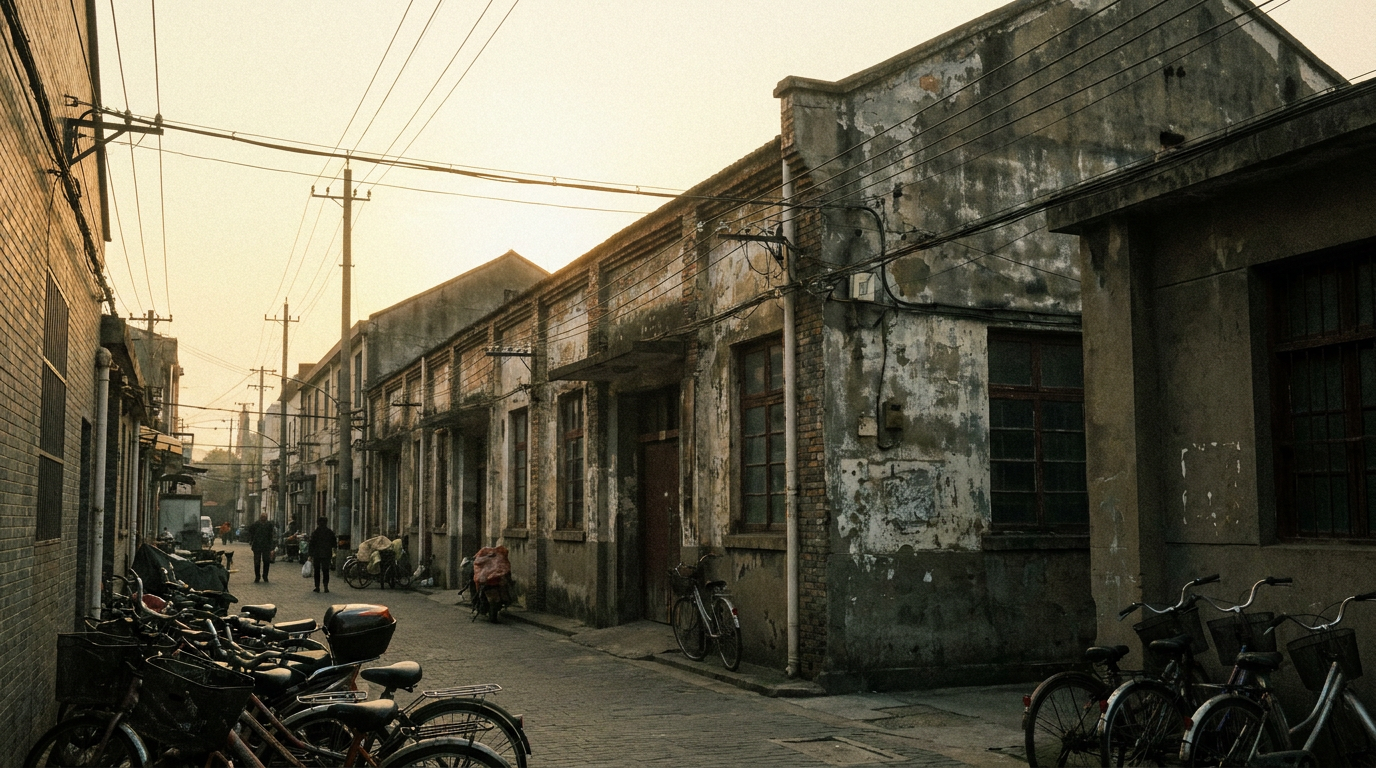
Shaoxing, 30 kilometers east of Hangzhou by expressway, is the global capital of premium silk processing. The city's silk industry traces back to the Tang dynasty; the modern mill cluster — concentrated around the Keqiao district — produces approximately 70% of global premium mulberry silk and a comparable share of charmeuse, crepe de chine, habotai, and silk-blend constructions. The mill ecosystem includes spinning operations, weaving mills, dye houses, and finishing facilities — most family-owned, several generations deep in silk operation. Premium brands worldwide source from this cluster: Reformation's silk dress lines, Doen's silk blouse capsules, Staud's silk separates, and countless smaller premium DTC brands all flow fabric from Shaoxing.
Deepwove's fabric sourcing specialists maintain active relationships with multiple mills across the Shaoxing cluster. Active relationships mean: regular fabric library updates, advance notice on new mill capabilities, priority access to bulk fabric runs during peak season, and the operational trust that lets Deepwove brief a new fabric requirement and receive samples within 48 hours. For a Premium DTC brand briefing a silk dress, this means the fabric decision moves from "we'll source what we can find" to "we'll select among three mill options within a week."
Tongxiang knit mill cluster
Tongxiang, 60 kilometers north of Hangzhou, is the historical capital of Chinese knit production. The mill cluster handles cashmere knit at 3-7gg gauges, merino knit at 5-14gg, fine cotton knit at 7-14gg, and a range of blended yarns including cashmere-silk, merino-silk, and cotton-silk constructions. The Tongxiang ecosystem also includes knit panel manufacturers (for fully-fashioned knit garments) and cut-and-sew knit factories (for jersey and rib constructions). Premium brands producing fine knitwear in China — pullover sweaters, cardigan capsules, knit dresses, intarsia jacquard work — typically flow yarn and fabric through this cluster.
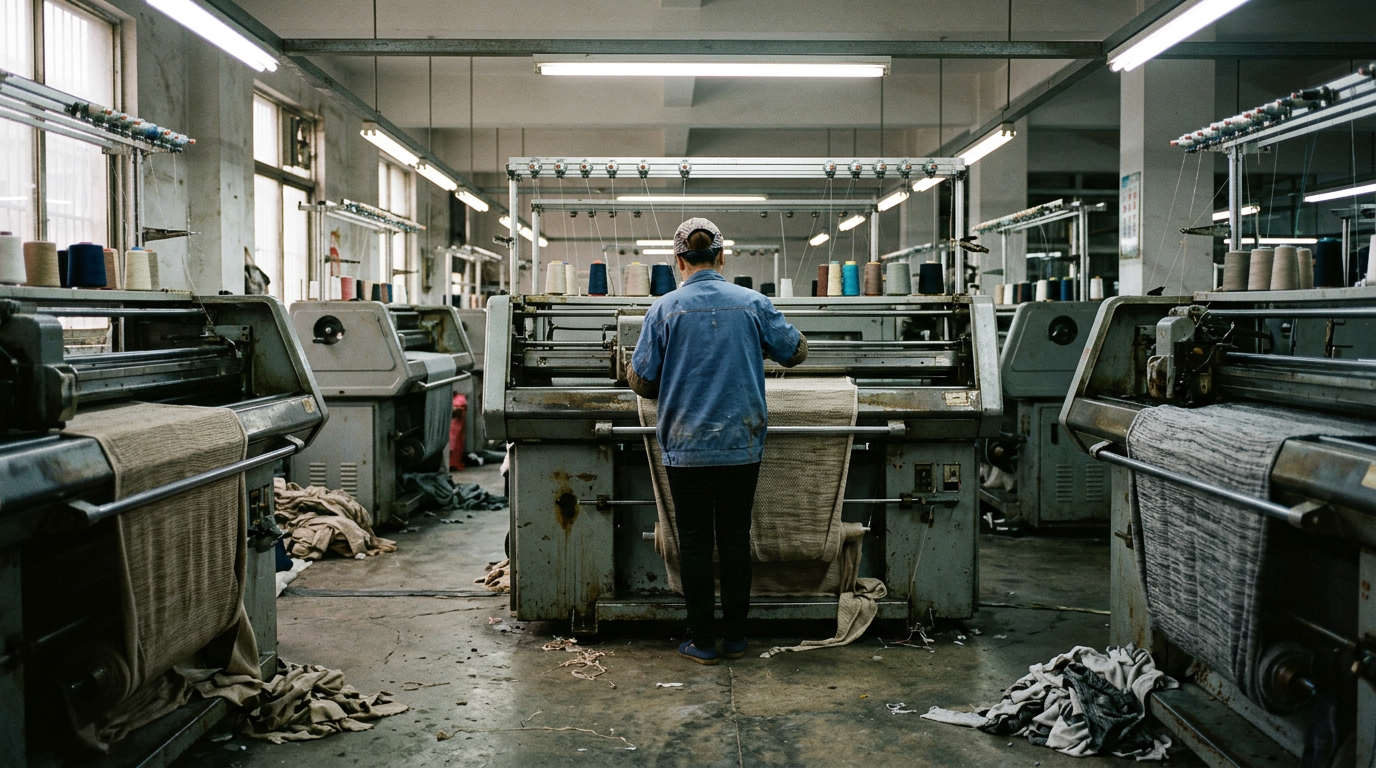
Deepwove's knit factory (one of the 6 in the manufacturing group) sits adjacent to the Tongxiang cluster geographically and operationally. The yarn sourcing pipeline runs through the same fabric sourcing specialists who source silk in Shaoxing — meaning a brand briefing a silk dress and a knit pullover in the same capsule gets one sourcing conversation, not two.
What "vertical integration" actually means here
The phrase "vertical integration" appears on most apparel manufacturer marketing pages, often as a claim without operational substance. For Deepwove, the integration is geographic and relational rather than ownership-based. Deepwove does not own the Shaoxing silk mills or the Tongxiang knit mills — these are independent, multi-generational mill operations serving premium brands worldwide. What Deepwove owns is the relationship: active fabric sourcing specialists who work with these mills full-time, regular fabric library refreshes, priority access during peak season, and the operational coordination that lets a brand brief a silk dress on Monday and have sample fabric in the Hangzhou workshop by Wednesday.
This integration model is what makes a 100-piece MOQ possible for premium silk dress development. At 100 pieces, no premium brand has the bulk volume to negotiate fabric directly with a Shaoxing mill — the mill's commercial minimum for direct relationships is typically several thousand meters of fabric. Deepwove's active relationships aggregate brief volume across the brands working through the workshop, creating the commercial weight that supports Premium DTC scale at the mill level.
For brands focused specifically on silk or knit production, see Deepwove's category-specific pages: Silk Clothing Manufacturer in China for Premium Brands and Knitwear Manufacturer in China — Hangzhou Mill Direct.
If silk depth is what your category needs, the Deepwove lookbook shows silk capsules produced for premium DTC brands — Shaoxing mill sourced, Hangzhou pattern bench developed, 100-piece minimums per style.
Request the Silk Lookbook →7. How a Premium DTC Founder Should Evaluate a Clothing Manufacturer in China — 10-Point Checklist
To vet any clothing manufacturer in China, send ten written questions and compare the answers in writing: who develops the pattern, the true MOQ for one style, sample lead time with fabric caveat, fabric sourcing ownership, workshop visit access, communication windows, reference clients, IP and NDA policy, payment structure, and the iteration loop. The pattern across all ten answers is more diagnostic than any single answer.
Evaluating a clothing manufacturer in China requires structural questions, not surface impressions. The 10 points below cover development capability, MOQ honesty, sample lead time transparency, fabric sourcing independence, pattern team naming, factory visit access, communication time zone discipline, reference client verifiability, IP and NDA discipline, and payment structure clarity. Each point distinguishes Tier 3 premium DTC manufacturing from Tier 2 sourcing agents and Tier 4 cut-and-sew workshops.
Most Premium DTC founders evaluate manufacturers the way they evaluate SaaS vendors — by demo, by feature checklist, by sales-deck comparison. The diagnostic that actually matters runs differently. A premium garment manufacturer is not a tool; it is a multi-season partner whose operational discipline shows up in every garment that ships. The questions below isolate the operational signals from the marketing surface.
For each question, the answer Deepwove returns is documented — not because Deepwove is the only valid answer, but because the answer template makes the question concrete.
1. "Who develops the pattern, and can I meet that person on the second call?"
The most diagnostic question. A Tier 3 premium DTC manufacturer with in-house pattern development can name the pattern maker by name, describe their experience, and arrange a video call with them on the second conversation. A Tier 2 sourcing agent will say "we have an excellent pattern team at our partner factory" — and the pattern maker remains anonymous and unreachable. A Tier 4 cut-and-sew workshop will admit they don't do pattern development. Deepwove's answer: four pattern makers, named on the second call, available for the brand's review of pattern logic before the first sample is cut.
2. "What is the true MOQ — for a first-order test of one style?"
Many manufacturers publish a "low MOQ" headline that fragments on inspection. The diagnostic: "I want to test one style at the lowest possible volume — what is your real number for that?" A Tier 3 honest answer is a single number. A Tier 2 or Tier 5 answer is a range that requires negotiation, side fees, or batch-up commitments. Deepwove's answer: 100 pieces per style. Single number. Applies to all four service paths.
3. "Sample lead time — for the first sample, on the brand's first style, with a new fabric"
The honest answer is conditional on fabric availability. A manufacturer that quotes "1 week sample" without the fabric availability caveat is either lying or operating only on in-stock catalog fabrics. Deepwove's answer: first sample within one week of pattern release, subject to fabric availability. For a new fabric sourced from a new mill, add two to three weeks at the front of the cycle for fabric procurement. This caveat is the discipline marker — the manufacturers that publish it are the manufacturers that respect the question.
4. "Where does your fabric come from, and who has the mill relationships?"
A Tier 3 premium manufacturer can name specific mill regions and describe the fabric sourcing function as an in-house team. A Tier 2 sourcing agent will say "we source through trusted partners" — meaning fabric procurement is a relay through the agent's preferred-fabric-trader markup layer. A Tier 4 cut-and-sew workshop will ask the brand to provide the fabric. Deepwove's answer: 2 fabric sourcing specialists work full-time in the Hangzhou workshop, with active relationships across Shaoxing silk mills and Tongxiang knit mills, plus woven mills distributed across Zhejiang. Mill-direct sourcing, no middleman markup.
5. "Can I visit your workshop in person?"
A premium manufacturer expects this question and welcomes it. A Tier 3 operation will share workshop photos in the first conversation without being asked, and will host a founder visit at any time the founder can travel. Tier 2 agents often discourage factory visits ("the factory is busy" or "we prefer to handle the relationship") — because a direct visit exposes the agent layer. Deepwove's answer: founder visits welcomed year-round, coordinated through Alex Shen directly. Hangzhou is a 2-hour flight from Hong Kong, 3 from Tokyo, 14 hours from Los Angeles via Shanghai connection.
6. "Communication windows — who do I talk to, and when?"
Time zone operational discipline matters more than most founders anticipate before signing. A Tier 3 manufacturer will name the specific people the brand will work with, the typical response windows (e.g., WhatsApp async during business hours, formal proposals by email within 48 hours, scheduled video calls during active development), and the founder's direct line for strategic decisions. Tier 2 agents often layer account managers between the brand and the operations — meaning every operational question goes through a translation layer. Deepwove's answer: WhatsApp/Slack async daily, email for formal documents, scheduled weekly video calls during active development, and Alex Shen reachable directly for strategic decisions. Hangzhou and Sydney share working-day overlap during normal business windows; Hangzhou and NA East Coast connect during NA evening and Hangzhou morning windows.
7. "Reference clients — who can I talk to, under NDA?"
A premium manufacturer protects current clients' confidentiality but can arrange reference calls with willing past clients under mutual NDA. A Tier 3 operation will share brand-tier references during the second conversation; the references will be verifiable and the clients will be willing to take a 15-minute call. A Tier 2 agent's references often turn out to be brokered relationships rather than direct production clients. Deepwove's answer: brand-tier references shared in the second conversation, under mutual NDA. The 10+ year track record with brands like Reformation, Doen, and Cult Gaia is operationally verifiable.
8. "IP and NDA — what is your written policy?"
IP discipline is foundational for premium DTC. A Tier 3 manufacturer signs mutual NDAs on request before reviewing tech packs or mood boards, has a written internal policy on design confidentiality, and can articulate how designs developed for one brand are kept separate from work for other brands. A Tier 2 or Tier 5 operation may resist signing an NDA, or may sign an NDA without an internal discipline structure backing it. Deepwove's answer: NDAs signed within 24 hours of receipt, mutual terms standard, written internal policy on design separation, no recycling of brand-specific designs into Ready Styles catalog without written permission.
9. "Payment structure — what is the deposit, balance, and what happens to my deposit if production goes sideways?"
Premium manufacturer payment terms are standard across the industry: 30% deposit on bulk PO confirmation, 70% balance on shipment-ready inspection. The diagnostic question is what happens to the deposit if the relationship breaks down. A Tier 3 manufacturer has a written policy on deposit recovery in exception scenarios. Deepwove's answer: 30/70 standard terms, sample fee credited against bulk, all payments invoiced from Deepwove company account (not factory accounts or intermediaries), and a documented dispute resolution process for the rare cases where development doesn't reach approval.
10. "What does your iteration loop look like — for sample fit, pattern revision, fabric revision?"
Iteration loop transparency separates premium operations from generic factories. A Tier 3 manufacturer quotes sample iteration time in concrete days (not vague "couple weeks"), separates pattern revision turnaround from fabric revision turnaround (different clocks), and gives the brand a clear expectation of how many iterations are typical before approval (usually 2-3 for first-style). A manufacturer who can't separate these timelines is hiding the loop structure. Deepwove's answer: typical iteration loop is 5-7 days for pattern revision, 10-14 days for new fabric iteration, with 2-3 iterations to approval as standard.
8. What the Cost Stack Actually Looks Like — FOB to MSRP
The cost stack on a premium garment from China runs in three legs: FOB, landed cost, then MSRP. Landed cost adds freight, the Section 301 tariff (7.5%–25% of FOB), customs, and insurance. A China-direct manufacturer carries a lower landed cost than a sourcing agent, because the agent's markup compounds through every downstream layer.
The cost stack on a premium garment from China runs in three legs: FOB, landed cost, and MSRP. Landed cost at the NA brand warehouse is FOB plus sea or air freight, the Section 301 tariff, customs broker, port handling, and insurance. From landed cost, Premium DTC brands set MSRP to fund marketing, customer acquisition, fulfillment, returns, and margin — not just unit cost. The structural reason a China-direct manufacturer carries a lower landed cost than a sourcing agent: the agent markup plus the agent's preferred-factory markup stack on top of factory FOB. Deepwove returns a per-style quote within 48 hours of brief receipt with tech pack.
Most Premium DTC founders learn the cost stack the hard way — by signing a sourcing agent agreement, receiving a quote that seems competitive, and discovering six months in that the quote concealed stacked markups. The cost stack below maps what actually moves the unit economics on a premium garment from China — and where the structural difference between a Tier 3 manufacturer (Deepwove) and a Tier 2 sourcing agent shows up.
FOB pricing — what shapes the band
Deepwove quotes FOB per style against the actual brief, not a flat category rate — the per-style number moves on the variables below, across any premium woven or knit category:
- Woven styles: FOB scales with construction complexity, fabric grade, and trim specification. A viscose camisole and a silk-blend jacquard dress with lining and finishing sit at opposite ends of the same factory's woven band.
- Knit styles: FOB scales with yarn grade (fine cotton at the entry end, cashmere-silk blend at the premium end), gauge, and construction method (fully-fashioned panels versus cut-and-sew jersey).
- Sample fee: $250-$350 per style, credited against bulk on confirmation. Sample iterations to approval are included.
Deepwove returns a per-style FOB quote within 48 hours of brief receipt — once construction type, target fabric direction, and target volume are confirmed.
FOB to landed cost — the freight, duty, insurance leg
FOB Shanghai means the brand takes ownership and freight responsibility from the port of Shanghai (or Ningbo). The landed cost at the brand's warehouse adds the following layers:
- Ocean freight from Shanghai to NA West Coast (LA/Long Beach): charged per container, then allocated per piece by case-pack density. Sea is the lower-cost freight leg; air is faster and costs more per piece.
- Section 301 tariff on apparel HS codes: 7.5% to 25% depending on HTS code for apparel entering the US, applied on FOB value.
- Customs broker, port handling, drayage: a per-piece handling layer that scales down on larger Premium DTC volumes.
- Insurance: a small percentage of FOB value.
Total landed cost on a premium silk dress is FOB plus tariff, freight, customs broker, port handling, and insurance — sea freight keeps the freight leg low; air freight raises it for the speed. The exact figure depends on construction, shipping mode, and HTS classification, and is quoted per style against the brief.
Landed cost to MSRP — the brand's pricing equation
From landed cost, a Premium DTC brand sets MSRP — the exact factor varies by brand model. Retail is not margin a brand pockets; it funds brand marketing, photography, e-commerce infrastructure, customer acquisition cost, fulfillment, returns, margin reserve for inventory writedowns, and the founder's compensation. The structural point for a founder pricing a first collection: landed cost is the input, not the retail price, and the gap between them has to carry the entire cost of running the brand — which is why a manufacturer that carries a lower landed cost than a sourcing agent widens every downstream margin.
Where a sourcing agent breaks the cost stack
A sourcing agent does not own production. The agent sources the actual work to a third-party factory and adds two stacked markups: the agent's own commission on FOB value, and a preferred-factory markup (the agent steers production to factories that pay a kickback, or that quote higher to compensate for the agent layer). The combined effect: a garment that Deepwove would deliver at factory FOB direct emerges from a sourcing agent's quote at a meaningful premium over the manufacturer-direct number — before freight, tariff, or any other landed-cost layer enters the calculation.
Stacked across a season of production at premium DTC scale, that markup is the difference between a brand that funds its next collection from sell-through and a brand that has to raise outside capital to bridge the gap. For more on first-order MOQ economics and per-piece cost curves across 100, 300, and 500 piece runs, see: Low MOQ Clothing Manufacturer in China — 100 Pieces.
How the layers move relative to each other — an illustrative model
The numbers below are an illustrative example, not a quote. They are written as proportions of FOB to show how the cost stack compounds — the relationship between the layers is the durable insight; the absolute figure on any real garment comes from the per-style quote Deepwove returns within 48 hours. Most generic clothing manufacturer pages will not walk this math at all, because the math is where a sourcing agent's markup becomes visible.
Set factory FOB at 100 as the index. Sea freight to NA West Coast typically allocates as a single-digit percentage of FOB per piece on a full case-pack; the Section 301 tariff adds a verifiable 7.5% to 25% of FOB depending on HTS code; customs broker, drayage, and port handling add another modest per-piece layer; insurance is a fraction of a percent of FOB value. Landed cost at the warehouse therefore lands meaningfully above the FOB index — most of the lift is the tariff line, not the freight line, which is the layer founders most often misjudge. From that landed figure, a Premium DTC brand sets MSRP at a multiple that has to fund marketing, customer acquisition, fulfillment, returns, and inventory-writedown reserve — not unit margin alone.
The structural point: a sourcing agent inserts a markup on the FOB index before any of the freight, tariff, or handling layers are applied. Because every downstream layer is calculated on a value that already carries the agent's markup, the agent's premium compounds through the entire stack rather than sitting flat on top. A China-direct manufacturer like Deepwove removes the first markup, so the index that all the other layers compound on is the true factory number. Over a full season at premium DTC volume, that is the difference between funding the next collection from sell-through and raising outside capital to bridge the gap.
For brands serving North American or Australian customers, region-specific cost considerations (port routing, tariff strategy, fall-buyer-spring-drop calendars) are covered in detail on: China Clothing Manufacturer for US / North American Brands and China Clothing Manufacturer for Australian Premium Brands.
9. Sample Cycle and Production Timeline When Working with China
Deepwove's custom development production lead time runs three months — twelve weeks from approved brief to goods ready to ship from Hangzhou. Ready Styles run four weeks production; reorders with fabric on hand run two to four weeks. Shipping to your warehouse sits on top and is your logistics choice.
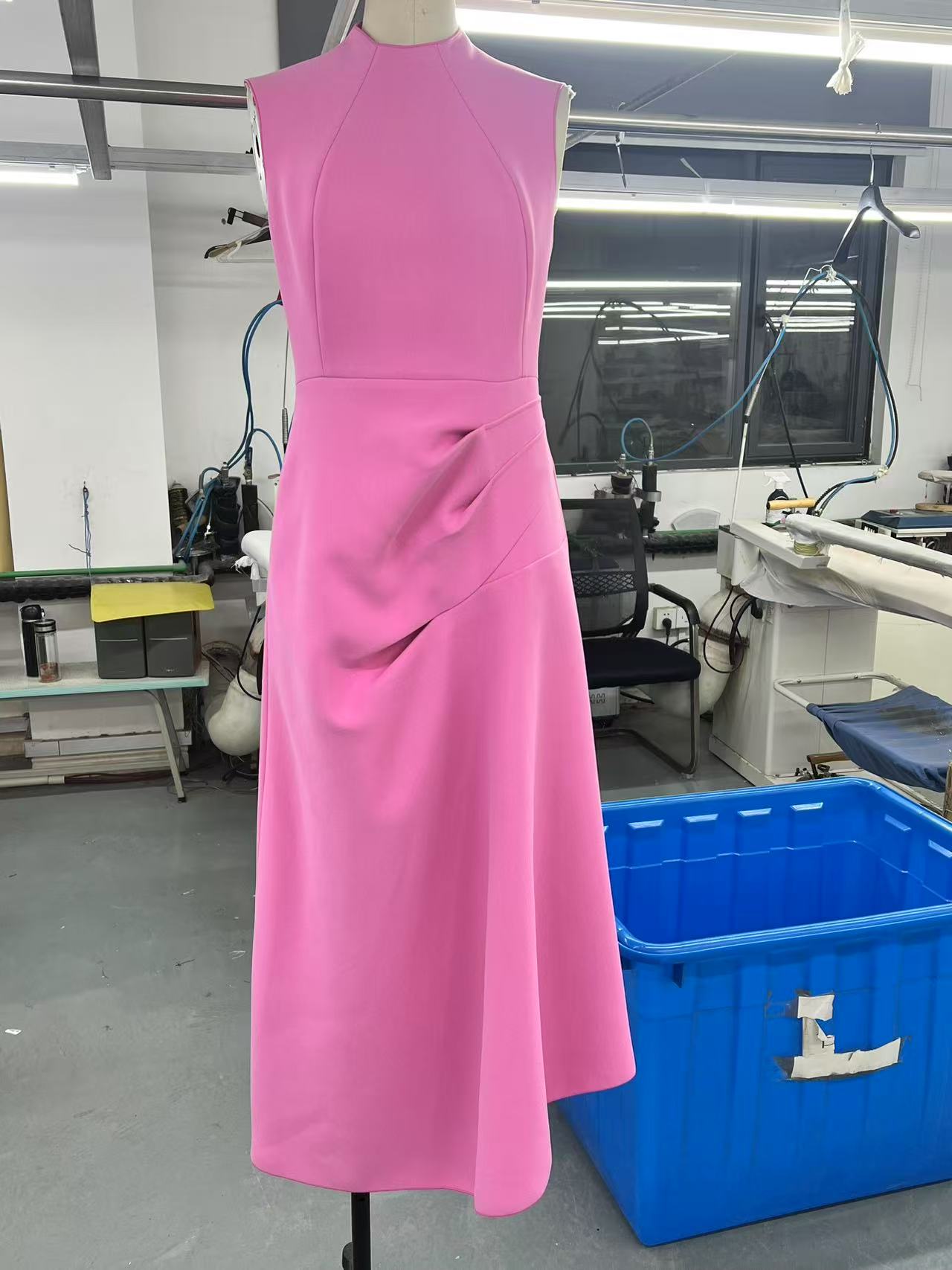
Deepwove's standard premium production lead time runs three months — twelve weeks from approved brief to goods packed and ready to ship from Hangzhou. Development phase is roughly six weeks: brief, fabric direction, 1-2 sample iterations, founder review windows. Production phase is roughly six weeks: fabric procurement, cutting, sewing, finishing, QC, packing. Ready Styles from Deepwove's catalog run four weeks production; reorders with fabric on hand run two to four weeks. Shipping to your warehouse sits on top of that, and is your logistics choice.
The three-month rule is the honest production lead time for custom premium development from a clothing manufacturer in China — measured to ship-out from Hangzhou, not to your warehouse. Founders who try to compress that calendar typically lose more than they save: sample fidelity drops, fabric corner-cuts get made, the iteration loop collapses. Deepwove publishes the timeline transparently for one reason. A Premium DTC brand that plans against this calendar arrives at the drop date with the right inventory. A brand that plans against an aspirational "four-week custom production" promise often arrives without inventory, or with the wrong inventory.
The 3-month custom development production lead time
The breakdown by phase:
- Week 1-2 — Brief and fabric direction. Brand submits mood board, target volume, target launch window. Deepwove returns proposal within 48 hours. Fabric direction locked in conversation; fabric samples ordered from mills (Shaoxing or Tongxiang or woven mill, depending on construction). Tech pack or design intent locked.
- Week 3-5 — Pattern release and first sample. Pattern maker drafts the pattern based on design intent and fabric handling characteristics. First sample sewn within one week of pattern release, subject to fabric availability. Sample shipped to brand by courier (typically 3-5 business days transit).
- Week 6-8 — Sample iteration to approval. Brand reviews first sample, sends fit notes and construction feedback. Pattern adjusted; second sample sewn. Most styles approve at iteration 2; complex styles iterate 3-4 times. The full sampling phase, including 2-3 iterations to a confirmed sample, typically runs three to four weeks; pattern-revision cycles run 5-7 days each, longer if new fabric is required.
- Week 9 — Bulk PO confirmation. Brand confirms bulk order quantity. 30% deposit invoiced. Bulk fabric ordered from mill.
- Week 10-12 — Bulk production phase. Fabric arrives at factory (typically 10-14 days after bulk fabric PO). Cutting begins. Sewing runs the construction logic established during sampling. Finishing, QC, packing. First-order bulk production runs roughly six weeks; reorders with pattern locked and fabric on hand run two to four weeks. 70% balance invoiced on shipment-ready inspection.
- Week 12 — Shipment-ready from Hangzhou. Brand confirms shipment-ready inspection. Goods packed and released to the brand's freight forwarder, FOB Shanghai or Ningbo. Production lead time ends here — at roughly three months. The freight leg is the founder's logistics variable on top.
Production lead time vs end-to-end to your warehouse
Production lead time is the manufacturing clock — brief to goods ready to ship from Hangzhou, roughly three months for custom development. Shipping is a separate clock, and it is yours to choose. Deepwove ships FOB; the brand selects mode and forwarder, and the end-to-end number to your warehouse is production lead time plus the freight leg below:
- Air freight to North America: 7-10 days. End-to-end to a NA warehouse: roughly 3.5 months.
- Sea freight to North America West Coast (LA / Long Beach / Oakland) or to Australia: 3-4 weeks. End-to-end: roughly 4 months.
- Sea freight to North America East Coast (New York / Savannah) or to Europe: 4 weeks. End-to-end: roughly 4 months.
- Air freight to Australia: 5-7 days, for an urgent drop or late-season restock.
Most premium DTC brands sea-freight the bulk and air-freight an urgent first allocation to hit a drop date. Deepwove can recommend forwarders or run DDP on request — but the freight choice stays the brand's, which is why the production lead time on this page stops at ship-out and the shipping reference is listed separately.
The Ready Styles 4-week production fast-track
Deepwove maintains a catalog of pre-developed styles — patterns already released, fabric sources already established, sampling already complete. A brand selecting from the Ready Styles catalog can run a complete production cycle in approximately four weeks from selection to ship-out: one week for fabric-swap confirmation and fit adaptation, three weeks for production and packing. The catalog covers a rotating range of dress, knit, and woven separates that Deepwove has developed for in-house catalog. Brands can private-label these styles — under the brand's labels, hangtags, and packaging — at 100-piece MOQ per style; the Private Label layer adds roughly one week of coordination, for a five-week production cycle. For Premium DTC brands launching first capsules or testing new categories, the Ready Styles path collapses the development calendar without compromising premium positioning.
What the 1-week sample claim actually means
Deepwove's first sample timeline: within one week of pattern release, subject to fabric availability. The two clauses both matter. "Within one week of pattern release" means the single-sample sewing turn is one week — pattern released Monday, sample completed by Friday. "Subject to fabric availability" means the cycle starts when fabric is in the workshop. For an in-stock fabric from Deepwove's library, fabric availability is same-day; the single-sample turn is genuinely one week. For a new fabric requiring mill sourcing, add one to two weeks at the front for fabric procurement. And the single-sample turn is not the full sampling phase: from first sample through 2-3 iterations to a confirmed sample, plan three to four weeks. Manufacturers that quote "1 week sample" without the fabric availability caveat — or that blur the single-sample turn into the full sampling phase — are either operating only on catalog fabrics or misrepresenting the timeline.
For brands needing a fast-track production path, see Deepwove's Ready Styles service: Ready Styles — Premium Catalog from 100 Pieces.
The 48-hour brief-to-proposal cycle is one of Deepwove's structural defaults. Send a brief — sample lead time and price band back by the next business day, Hangzhou time.
Send Your Brief →10. Communication Across Time Zones — How NA / AU Brands Work with Hangzhou
Hangzhou and Sydney share working-day overlap during normal business windows. Hangzhou and NA East Coast connect during NA evening and Hangzhou morning windows. Deepwove operates a standard hybrid communication model: WhatsApp or Slack for daily async, email for formal documents and proposals, scheduled video calls weekly during active development. Founder Alex Shen reachable directly for strategic decisions, no account-manager relay.
Time zone friction is the operational concern most premium DTC founders surface in the first conversation about manufacturing in China. The concern is reasonable. Friction shows up in three places: response time to async messages, scheduling synchronous decision calls, and the hand-off discipline that determines whether a question asked at 5pm Sydney time gets answered before Sydney comes back online the next day. The framework below is how Deepwove operates with brands in Australia, North America, and Europe — and what a Premium DTC founder should expect from any premium clothing manufacturer in China.
Australia time zone overlap
Hangzhou is GMT+8. Sydney is GMT+10 (GMT+11 during AU daylight saving). Hangzhou and Sydney share working-day overlap during normal business windows: Sydney morning is Hangzhou mid-to-late morning; Sydney afternoon is Hangzhou early afternoon. Async messages typically receive responses within the same business day. Video calls during the overlap window are easy to schedule without anyone waking at 3am.
North America time zone overlap
NA West Coast (Los Angeles, San Francisco) is GMT-8 (GMT-7 during US daylight saving). NA East Coast (New York, Atlanta) is GMT-5 (GMT-4 during US daylight saving). The synchronous overlap with Hangzhou is narrower than with Australia: NA Pacific Time afternoon (3-6pm) is Hangzhou morning the next day (7-10am next day). NA Eastern Time evening (5-8pm) is Hangzhou morning the next day (5-8am next day). Most NA brands and Deepwove work async for daily communication and schedule video calls during the NA-evening / Hangzhou-morning window.
The communication model Deepwove operates
The standard hybrid for NA and AU brands:
- WhatsApp or Slack for daily async. Most operational questions — pattern adjustment confirmations, fabric swatch discussions, shipping milestone updates — happen async in WhatsApp or Slack. Deepwove team monitors during Hangzhou business hours; responses typically within 4-8 hours of message receipt.
- Email for formal documents. Proposals, invoices, tech pack PDFs, shipping documents, contracts. Email creates the formal audit trail and works across all time zones without urgency pressure.
- Scheduled weekly video calls during active development. First sample review, fit feedback, fabric selection discussions. Calls scheduled during the time zone overlap window for the brand's region.
- Founder direct line for strategic decisions. Alex Shen reachable for category strategy, multi-season planning, pricing escalations, brand-level partnership decisions. No account-manager relay.
Time zone hand-off discipline
Async communication only works if the hand-off discipline is operational. The discipline marker: a question asked at 5pm Sydney time should have a clear status by Sydney 9am the next morning. Either an answer, or an explicit acknowledgment with a committed response time. Deepwove operates on this principle for AU and NA brands — async questions get a status response same business day in Hangzhou, even if the full answer requires additional time. The opposite anti-pattern (a question disappearing into the time zone gap and surfacing 4 days later) is what most founders fear when they consider China manufacturing; the discipline is what prevents it.
Region-specific operational details — Section 301 tariff handling, MID code documentation, NA port routing for NA brands, AU seasonal calendar sync — are covered in detail on the regional pages: China Clothing Manufacturer for US / North American Brands and China Clothing Manufacturer for Australian Premium Brands.
11. What Sets Deepwove Apart from Generic "Clothing Manufacturer China" Search Results
Most "clothing manufacturer china" results are aggregators, listicles, and sourcing agents — not premium DTC manufacturers. Deepwove differs structurally: premium DTC focus over mass-market scale, in-house product development over execution-only, manufacturing-group ownership over agent relay, and founder-direct contact over an account-manager layer.
The first page of search results for "clothing manufacturer china" mostly returns aggregators, listicles, and sourcing agents — not premium DTC manufacturers. Deepwove differs structurally: premium DTC focus rather than mass-market scale; in-house product development (4 pattern makers, 2 fabric sourcing specialists) rather than execution-only; manufacturing group ownership rather than sourcing-agent relay; founder-direct contact rather than account-manager layer. The positioning is not aggressive — it is structural.
The phrase "clothing manufacturer china" returns a SERP populated mostly by operations that are not premium DTC manufacturers. Aggregators (Alibaba, Made-in-China, Global Sources) listing thousands of suppliers without quality filtering. Listicles ("Top 10 Clothing Manufacturers in China") published by sourcing consultants who have not visited the manufacturers ranked. Generic manufacturer websites optimized for SEO but operationally serving mass-market production. Sourcing agents rebranded as "production partners." The honest reality: a Premium DTC founder running this search needs to filter signal from noise, and the structural distinctions matter.
Deepwove's structural positioning is straightforward. The page below maps the distinctions without disparaging the alternatives — because each alternative serves a real market segment, and the question is fit, not absolute quality.
vs. Aggregator marketplaces (Alibaba, Made-in-China, Global Sources)
Aggregators are marketplaces, not manufacturers. The strength of the aggregator model is breadth — thousands of suppliers visible in one place. The weakness is depth: the marketplace cannot verify which listings are genuine factories versus trading companies in disguise, cannot guarantee quality consistency across orders, and cannot operate a development workflow on behalf of a Premium DTC brand. For commodity sourcing (basic t-shirts, generic accessories, dropship-style operations), the aggregator model functions. For premium garment development requiring pattern integrity, fabric sourcing depth, and multi-season partnership continuity, the aggregator model is structurally not the answer. Deepwove is a manufacturer with operational ownership of the production work — not a listing on a marketplace.
vs. Sourcing agents and trading companies
Sourcing agents serve brands that want to outsource the China relationship to a third party. The agent's value proposition: "We handle the factory; you handle the brand." For brands without internal China manufacturing expertise or bandwidth, that delegation can be useful — particularly for brands sourcing across many small SKUs or many categories where no single factory specializes. The cost: the agent layer adds a markup to FOB pricing without adding production capability, and the agent owns the factory relationship rather than the brand. For Premium DTC brands building toward multi-season partnership depth with their manufacturer, the agent layer breaks the relationship structure that compounds across seasons. Deepwove eliminates the agent layer because Deepwove is the manufacturer — direct ownership of the production work, no markup layer for translation services.
vs. Generic "Top 10 Clothing Manufacturers China" listicles
Listicle aggregators (sites publishing "Best Clothing Manufacturers in China for Startups" ranked lists) typically do not manufacture themselves; they monetize through affiliate commissions or sponsored placements from the manufacturers listed. The listicles often rank manufacturers by SEO-optimized criteria rather than operational fit for Premium DTC. The diagnostic: ask the listicle author whether they have visited the workshops they rank, whether they have produced a single garment with the manufacturers they recommend, and whether their ranking criteria include the questions that actually distinguish Tier 3 premium operations (pattern team accessibility, fabric sourcing depth, NDA discipline, founder-direct contact). Most listicles cannot answer those questions. Deepwove does not appear on most "Top 10" listicles because Deepwove does not pay for placement — the work that makes Deepwove discoverable is the page you are reading now.
vs. Mass-market production factories
The factories serving H&M, Zara, Uniqlo, and Shein are extraordinary operations — engineered for throughput at scale that Premium DTC will never reach and never need. The minimums (5,000-50,000 pieces per style), the fabric grades (mass-market mills), the construction tolerances (high-volume specifications), and the iteration model (lock at brief, no development capacity) are all structurally optimized for a different market than Premium DTC. The mismatch is not about quality at the factory's level — it is about fit for Premium DTC scale and positioning. Deepwove is sized and structured for the Premium DTC market: 100-piece MOQ, premium mill fabric, in-house pattern development, multi-iteration sampling discipline.
What Deepwove is, in one sentence
Deepwove is the premium DTC-focused manufacturing group with in-house product development, based in Hangzhou, serving womenswear brands from 100 pieces per style — the same infrastructure that produces for Reformation, Doen, and Cult Gaia, opened as a direct B2B channel to founders building the next generation of premium DTC brands. The positioning is not a marketing claim. It is a description of the operational structure.
For brands wanting platform-specific operational fit (Shopify integration, fulfillment models, product data sync), see: China Clothing Manufacturer for Shopify Premium Brands. For brands wanting the explicit Premium DTC framing (what "premium DTC" means to a manufacturer, the capability stack required), see: Premium DTC Clothing Manufacturer in China.
12. Frequently Asked Questions
The questions below cover the operational, commercial, and strategic ground that Premium DTC founders most commonly raise when evaluating a clothing manufacturer in China. Each answer is structured to be independently citable — for founders skimming the page, for AI search engines parsing the page, and for the multi-session reference use case where founders return to specific answers months after the first read.
What is the minimum order quantity (MOQ) with a clothing manufacturer in China for premium brands?
Deepwove's MOQ is 100 pieces per style. Most clothing manufacturers in China will not quote below 500 to 1,000 pieces per style. The 100-piece floor at Deepwove applies to all four service paths: ODM development, OEM production, Ready Styles, and Private Label. Average production runs 300 pieces per style across the past quarter — winning styles reorder at 300 to 500 pieces.
How long does it take to manufacture clothing in China for a premium DTC brand?
Deepwove's custom development production lead time runs three months from approved brief to ship-out from Hangzhou. Production phase is six weeks; development phase is six weeks. Ready Styles ship in four weeks production; reorders with fabric on hand run two to four weeks. Shipping is the founder's logistics variable: air to North America 7-10 days; sea to USWC or AU 3-4 weeks; sea to USEC or Europe 4 weeks.
Where in China is Deepwove based, and why does the location matter?
Deepwove is based in Hangzhou — the historical and operational capital of Chinese premium womenswear manufacturing. Hangzhou sits inside a 30-kilometer mill density: Shaoxing silk mills to the east, Tongxiang knit mills to the north, woven specialists distributed across Zhejiang province. This vertical integration enables fabric sourcing and pattern development inside one regional cluster, which is why Reformation, Doen, and Cult Gaia have produced in this region for over a decade.
What is the sample fee at Deepwove for a clothing manufacturer in China?
Deepwove's sample fee runs $250 to $350 per style, depending on construction complexity and fabric choice. Sample fee is credited against the bulk production order on confirmation. There are no setup fees, no development fees, no hidden markups beyond the 100-piece per-style production minimum. Most China manufacturers either hide the sample fee structure or quote $50 to win the brief, then upcharge during sampling — Deepwove publishes the number.
How does Deepwove differ from a sourcing agent in China?
A sourcing agent does not manufacture. A sourcing agent sits between the brand and the factory, translates communication, and adds a 10-20% markup without adding production capability. Deepwove is a manufacturing group with an in-house product development team: 4 designers, 4 pattern makers, and 2 fabric sourcing specialists operate full-time in Hangzhou, inside the same manufacturing group as the 25 woven, 6 knit, and 3 specialty factories. No third-party agent in the chain. One conversation, one development workflow, one partner across seasons.
Can a clothing manufacturer in China handle a tech pack that is not yet finalized?
Deepwove's ODM service path is built for exactly this scenario. A founder sends a mood board, sketch, or reference garment — Deepwove's 4 pattern makers develop the pattern, the 2 fabric sourcing specialists source the fabric, and the team returns a first sample within one week of pattern release, subject to fabric availability. OEM service path is for brands with finalized tech packs already in hand. Both paths share the same 100-piece MOQ floor.
How does payment work with a clothing manufacturer in China?
Deepwove operates on standard premium-manufacturing payment terms: 30% deposit on bulk PO confirmation, 70% balance on shipment-ready inspection. Sample fee is paid upfront and credited against bulk order. Payments accepted via wire transfer in USD to Deepwove's company bank account in Hangzhou — invoiced from Deepwove (not from individual factories or intermediaries). No third-party escrow needed.
Does Deepwove handle shipping from China to the brand's warehouse?
Deepwove ships FOB Shanghai or Ningbo by default. Brand selects freight forwarder, mode (air or sea), and incoterms. Deepwove can recommend trusted forwarders for North America, Australia, and Europe routes — most premium DTC brands choose to control their own freight relationship for inventory visibility. For first-order brands without an existing forwarder relationship, Deepwove can introduce one and remain on FOB terms.
What categories of womenswear does Deepwove manufacture in China?
Deepwove's manufacturing group covers four core categories: dresses (silk, viscose, cotton, blend constructions), knitwear (3-7gg cashmere, 5-12gg cotton, merino, blends), tops (blouses, shirts, woven layers), and bottoms (skirts, pants in woven and stretch constructions). Specialty workshops add silk-specific finishing and lace work. The strongest category vertical is silk dress development — Shaoxing silk mill access is the structural advantage.
What's the difference between manufacturing in China vs Vietnam for a premium womenswear brand?
China leads in silk processing depth, knit mill density, vertical integration, and pattern-making capability — driven by 30-year accumulation of premium womenswear infrastructure in Hangzhou and Shaoxing. Vietnam leads in tariff cost advantage (Section 301 exemption), outerwear construction, and denim. For premium DTC womenswear in dress, knit, and silk categories, China remains structurally superior on capability, while Vietnam may win on duty cost for cotton tops and outerwear. Most premium founders split categories across both rather than choose one.
Does Deepwove sign an NDA before reviewing a tech pack or mood board?
Deepwove signs mutual NDAs on request before the first sample brief. Most premium DTC founders ask, Deepwove signs within 24 hours of receipt. IP protection is taken seriously — designs developed for one brand are not shown to other brands or recycled into Ready Styles catalog without the originating brand's written permission. Deepwove's 10+ year track record with brands like Reformation and Doen is the operational proof of this discipline.
Can a brand visit Deepwove's Hangzhou workshop in person?
Yes. Deepwove hosts founder visits at the Hangzhou workshop year-round. Most founders visit before signing a multi-season agreement, or during the first sample iteration to see pattern-making and fabric sourcing in person. Hangzhou is a 2-hour flight from Hong Kong, 3 hours from Tokyo, 14 hours from Los Angeles via Shanghai. Founder visits are coordinated through Alex Shen directly — no sales intermediary.
What is the cost stack from FOB price to landed cost to MSRP for a premium dress made in China?
The cost stack runs FOB to landed cost to MSRP. Landed cost is FOB plus ocean or air freight, the Section 301 tariff, customs broker, port handling, and insurance — sea freight is the lower-cost leg, air freight the faster and more expensive one. From landed cost, Premium DTC brands set MSRP to fund marketing, customer acquisition, fulfillment, returns, and margin — retail is set on top of landed cost, not FOB. A China-direct manufacturer like Deepwove carries a lower landed cost than routing the same garment through a sourcing agent, because the agent's markup and preferred-factory markup stack on top of factory FOB. Deepwove returns a per-style quote within 48 hours of brief receipt with tech pack.
Does Deepwove work with first-time founders who have never manufactured before?
Yes. Deepwove regularly works with first-time founders placing their first manufacturing order — the ODM service path is designed for founders without finalized tech packs. Deepwove provides tech pack development as part of the standard development cycle — no separate tech pack fee. Most first-time founders need 2-3 sample iterations before approving production; Deepwove's iteration speed (one week per sample subject to fabric availability) is designed for that learning curve.
How does Deepwove handle communication with brands in North America and Australia?
Deepwove operates on a standard hybrid model: WhatsApp or Slack for daily async messages, email for formal proposals and documents, and scheduled video calls weekly during active development phases. Hangzhou and Sydney share working-day overlap during normal business windows; Hangzhou and NA East Coast connect during NA evening and Hangzhou morning windows. Alex Shen, founder, is reachable directly for strategic decisions — no account-manager relay. Founders do not need to wake at 3am to call China.
How does Deepwove price compare to Alibaba clothing manufacturers in China?
Alibaba is a marketplace, not a manufacturer. Listings on Alibaba range from genuine factories to trading companies (sourcing agents in disguise) to dropship aggregators. Deepwove FOB sits at premium-fabric, premium-construction industry levels because Deepwove uses premium mills, premium pattern execution, and in-house product development. Lower Alibaba quotes typically reflect lower-grade fabric, mass-production tolerances, no pattern development, no fabric sourcing service, and no in-house QC. For premium DTC positioning, the unit cost difference funds the capability that makes the brand defensible. Deepwove returns a per-style quote within 48 hours of brief receipt.
What proof can Deepwove show that it actually produced for Reformation, Doen, Staud, and Cult Gaia?
Deepwove's manufacturing group has produced for these brands across a 10+ year window. Deepwove was carved out of that manufacturing group in 2025 as its direct B2B channel. Brand references are shared during the second conversation with serious prospects, under mutual NDA. Specific tech packs, fabric specs, and order histories are not published publicly — those brands' own confidentiality terms prohibit it. The Lookbook contains representative work across constructions; the Hangzhou workshop visit makes the operational proof visible in person.
What happens if the first sample is wrong — does Deepwove charge for re-sampling?
Sample iterations to approval are included in the initial sample fee ($250-$350 per style). Most brands approve at iteration 2 or 3 — Deepwove's pattern team is built for that learning loop. If a brand requires more than 3 iterations for a single style, additional iterations may incur supplementary fabric and labor cost at Deepwove cost, transparently quoted. This is communicated upfront in the proposal, not after the fact.
13. Next Step — See Deepwove's Lookbook or Request a Sample
Deepwove built this page for the Premium DTC founder making a manufacturer decision. The structural answer above is the most complete guide Deepwove publishes to choosing a clothing manufacturer in China. The operational answer happens in the next conversation.
Two ways forward.
The Lookbook is the work itself — patterns, samples, finished garments across the categories Deepwove produces. The Lookbook arrives in your inbox within 24 hours of request. Most founders ask for the Lookbook before requesting a sample, because the Lookbook answers the visual question (does the work look like the work your brand needs to ship?) without committing to a sample fee.
The first brief initiates the standard development workflow. Mood board, target volume per style, target launch window, target price tier. Deepwove returns a proposal within 48 hours of receipt — fabric direction, pattern approach, sampling timeline, MOQ confirmation, iteration loop expectations. The proposal is signed by Alex Shen. No account-manager layer.
— Alex Shen, Founder, Deepwove. Hangzhou, China.