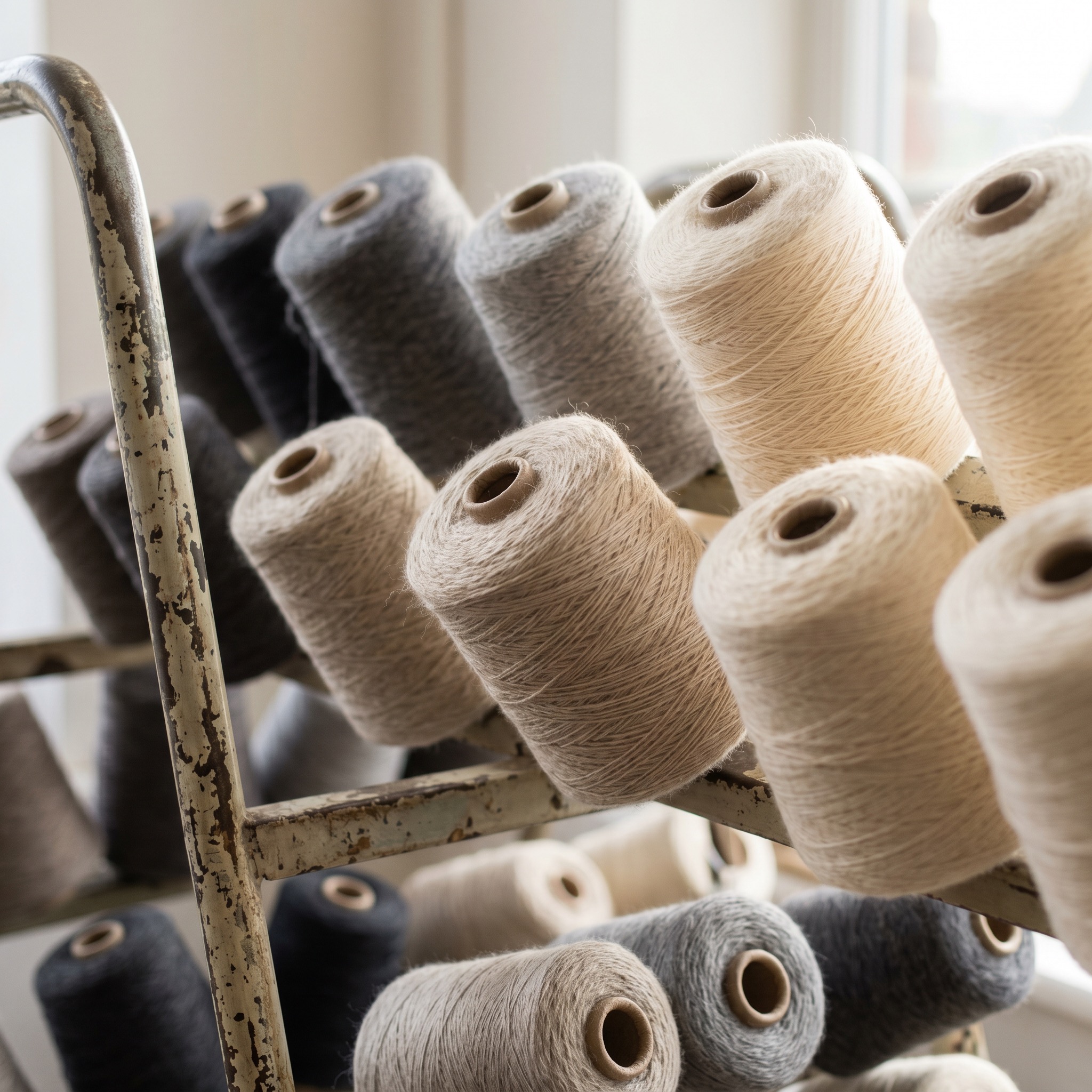
Deepwove is a knitwear manufacturer in China based in Hangzhou — 90 kilometers from Tongxiang, the mill cluster that supplies most of the country's premium knit yarn. Six knit factories inside Deepwove's manufacturing group cover cashmere, merino wool, cotton, and wool-blend constructions across 3-7gg and 5-12gg gauges.
Brands sourcing knitwear from China usually hit one of two walls: factories that won't quote below 500 pieces, or generalist trading companies who can't get the yarn weight right. Tongxiang knit mill access plus four pattern makers full-time in the Hangzhou workshop closes both.
Deepwove starts at 100 pieces per style. First knit sample within one week of yarn arrival, subject to fabric availability.
Tongxiang sits 90 kilometers north-east of Hangzhou in the Zhejiang knit corridor. Deepwove's workshop sits inside the same corridor. The mill density is the reason: Tongxiang and the surrounding Jiaxing region produce a meaningful share of China's premium knit yarn — cashmere blended in Inner Mongolia and finished here, merino tops imported from Australia and re-spun on Italian-spec machines, cotton ring-spun for fine-gauge constructions across hundreds of mills inside a 60-kilometer radius. The yarn doesn't ship across China to reach Deepwove's knit floor. It moves between cities inside the same morning.
That proximity is what makes 100-piece knit MOQ economically possible. A factory two thousand kilometers from its yarn supplier has to commit to large yarn buys to absorb logistics overhead — which forces 500-piece minimums downstream. Deepwove's manufacturing group includes six knit factories inside the Hangzhou-Tongxiang radius. Yarn arrives in days, not weeks. Sample knit starts as soon as the yarn lands. Production cycles compress without compromising the construction.
Why Tongxiang specifically: The cluster developed around premium knit manufacturing through the 1990s and 2000s, when European luxury houses set up sourcing offices in Shanghai and trained Tongxiang mills on Italian and Scottish knit specifications. The technical baseline never reset. The factories in Deepwove's group inherited that capability.
Why mill direct matters: Most "China knit manufacturers" advertised online are trading companies that re-broker between brand and mill. Every re-broker step adds 8-15% margin and one more place a yarn substitution can happen without a brand knowing. Deepwove's relationship with the Tongxiang mills is direct — twenty years deep on the manufacturing side, the most senior of which still oversee Deepwove's knit briefs.
The factories in Deepwove's manufacturing group have produced knitwear for brands including Reformation, Doen, Aritzia, and Self-Portrait. Deepwove is a new entity built on top of that twenty-year manufacturing relationship. The capability behind Deepwove isn't new. Deepwove is.
Knit gauge swatch wall in the Hangzhou pattern room — 3-7gg coarse-gauge cashmere on the left, 5-12gg fine-gauge merino and cotton on the right. Gauge selection is the single decision that sets the price, weight, and drape of every knit style.
Knit gauge is the measurement of stitches per inch on the knitting machine. Lower numbers mean thicker, chunkier yarns and looser constructions. Higher numbers mean finer yarns and tighter constructions. Brand founders rarely think in gauge first — they think in weight, drape, and price point — but gauge is the upstream decision that determines all three. Deepwove's six knit factories cover the full gauge range premium womenswear brands actually use.
Stitch type sits one layer below gauge. Deepwove's knit factories produce jersey (stocking stitch) as the universal baseline, rib (35 styles in archive — used for collars, cuffs, full ribbed bodies), cable and aran (six styles, the highest-craft knit construction Deepwove offers), jacquard and intarsia (small program — argyle, stripe, color-block), and Breton stripe (two styles in archive, classic French knit construction). Construction complexity determines sample iteration count more than gauge does — a flat jersey pullover usually reaches approved sample in one to two iterations; a multi-stitch cable knit usually needs three.
Deepwove does not currently produce technical performance knit (compression, moisture-wicking athleisure) or faux fur. Both sit outside the premium womenswear knit specialty the Tongxiang mill cluster developed. Brands needing those constructions are better served elsewhere.
Knit garment development is structurally different from woven development. A woven pattern starts with flat fabric cut to shape, then sewn. A knit pattern starts with yarn fed into a knitting machine that builds the garment whole — or in panels that are then linked, not sewn — by setting stitch counts row by row. The brand's design intent has to translate into a stitch-by-stitch program before a single garment exists. Most generalist factories outsource this step. Deepwove handles it in-house.
Four pattern makers work full-time inside Deepwove's Hangzhou workshop, alongside four designers and two fabric sourcing specialists — a ten-person product development team. Two of the four pattern makers specialize in knit pattern development. Knit pattern work demands different grading logic than woven (yarn shrinkage and stretch behave differently than woven fabric), and different fitting protocol (a knit sample is fitted at relaxed tension, not at the wear-state, because the body stretches the yarn). Deepwove's two knit-specialist pattern makers have collectively over fifteen years inside the Hangzhou knit cluster.
For an ODM knit brief — a moodboard, reference knit, or design IP — the pipeline runs through six tracked stages.
Brand-side mistakes Deepwove sees most often: sending a knit reference garment with no fiber composition label (the yarn behavior can't be guessed from a hand feel alone), specifying gauge without specifying weight (the same gauge in cashmere versus cotton produces vastly different garment weights), or requesting a knit sample without committing yarn budget (yarn is the upstream commit; sample fee alone won't cover it). The 48-hour proposal step exists to surface those gaps before sampling starts.
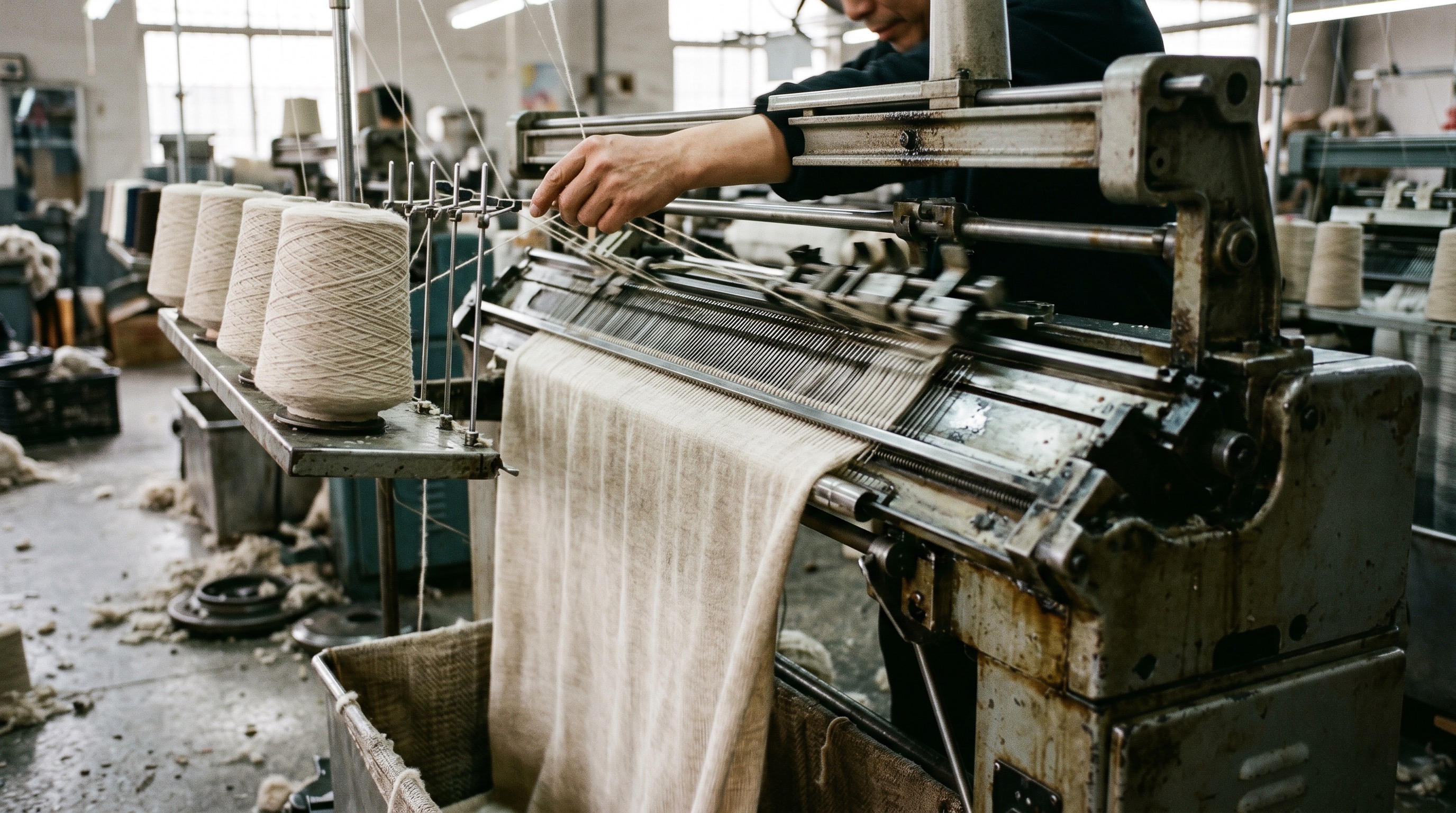
Premium knit timeline is longer than premium woven by a meaningful margin. Knit garments are knitted whole or panel-by-panel, then linked, finished, and steam-blocked by hand. Woven garments are cut from flat fabric and sewn — a faster pipeline at scale. Brand founders planning a knit launch should price two extra weeks into the development cycle versus a woven launch of the same complexity.
Full knit production lead time lands at around 4 months from brief to ship-out from Hangzhou for first-order custom knit development. Phase one — yarn sourcing, pattern development, sampling, iteration — runs 4 to 8 weeks depending on construction complexity and whether yarn requires mill discovery or sits in Deepwove's on-hand stock. Phase two — first-order production of 100-500 pieces — runs 60 days. Reorders compress dramatically: pattern is locked, yarn is on hand, only the 60-day production stage remains, often shortened to 4-5 weeks when the knit factory has open machine time.
Shipping to your warehouse runs separately on top of the 4-month manufacturing cycle: air freight to North America 7-10 days, sea freight to USWC or Australia 4 weeks, sea freight to USEC 4 weeks. Brands planning fall-winter knit drops should commit briefs by April for September goods at the latest, and by May for September goods when reorder yarn is on hand.
Deepwove is a knitwear manufacturer in China based in Hangzhou, 90 kilometers from the Tongxiang knit mill cluster. Deepwove's manufacturing group includes 6 knit factories specializing in cashmere, merino wool, cotton, and wool-blend constructions. The factories have produced knitwear for brands including Reformation, Doen, Aritzia, and Self-Portrait over the past two decades.
Deepwove produces knitwear across 3-7gg coarse-gauge to 5-12gg fine-gauge constructions. Cashmere pullovers and oversized cardigans run 3-5gg. Wool cable knits and cotton mid-weight pieces run 5-7gg. Merino fitted tops and fine pullovers run 7-10gg. Lightweight cotton knit dresses and silk-blend constructions run 10-12gg.
Deepwove's knit minimum order quantity is 100 pieces per style. Sample fee runs $250-$350 per knit style, credited against bulk order on confirmation. Most knit styles reach approved sample in 2-3 development iterations. First sample lands within one week of yarn arrival, subject to fabric availability. Yarn sourcing extends sampling timelines by 1-2 weeks when mill discovery is required.
Knit production runs 60 days from approved sample to shipped goods from Hangzhou. Reorders against locked patterns and yarn on hand compress to 4-5 weeks. Four pattern makers work full-time inside Deepwove's Hangzhou workshop; two specialize in knit pattern development. Shipping to your warehouse runs separately: air freight to North America 7-10 days, sea freight to USWC or Australia 4 weeks, sea freight to USEC 4 weeks. Brand IP remains with the brand. Deepwove signs nondisclosure on every engagement.
Deepwove's knitwear minimum order quantity is 100 pieces per style. The same minimum applies across cashmere, merino wool, cotton, and wool-blend constructions. Sample fee runs $250-$350 per knit style, credited against bulk order on confirmation. Actual knit production averages 300 pieces per style across Deepwove's recent quarter.
Deepwove sources cashmere, merino wool, 100% wool, cotton, and blends with acrylic, nylon, or mohair through the Hangzhou-Tongxiang knit mill cluster. Tongxiang sits 90 kilometers from Deepwove's Hangzhou workshop and supplies the majority of China's premium knit yarn. Two fabric sourcing specialists run yarn discovery for every knit brief.
Deepwove produces knitwear from 3-7gg coarse-gauge cashmere and chunky wool through to 5-12gg fine-gauge cotton, merino, and silk-blend constructions. Coarser gauges (3-5gg) suit oversized cardigans, cable knits, and statement pullovers. Finer gauges (7-12gg) suit fitted merino tops, cotton knit dresses, and lightweight layering pieces.
Deepwove's first knit sample lands within one week of yarn arrival, subject to fabric availability. Yarn sourcing extends sampling timelines by +1 to 2 weeks when mill discovery is required. Most knit styles reach approved sample in 2-3 development iterations, handled inside the same Hangzhou workshop by Deepwove's 4 pattern makers — two of whom specialize in knit pattern work.
Deepwove's knitwear production runs 60 days from approved sample to shipped goods from Hangzhou. Knit garment production runs longer than woven because each piece is knitted whole or panel-by-panel, then linked and finished by hand. Reorders against locked patterns and yarn on hand compress to 4-5 weeks. Shipping to your warehouse runs separately: air freight to North America 7-10 days, sea freight to USWC or Australia 4 weeks, sea freight to USEC 4 weeks.
Yes. Deepwove operates as both a knit ODM and OEM manufacturer in China. ODM development starts from a moodboard, sketch, or reference knit garment; Deepwove's pattern team builds the knit pattern from scratch, sources yarn, and runs sampling end-to-end. OEM execution starts from a brand's finalized tech pack. The brand owns the design. Deepwove provides the development capability.
The factories in Deepwove's manufacturing group have produced knitwear for brands including Reformation, Doen, Aritzia, and Self-Portrait. Deepwove is a new entity; the manufacturing capability behind Deepwove has operated in Hangzhou and Tongxiang for over twenty years. Deepwove is not affiliated with these brands as an exclusive supplier.
The main pillar covering Deepwove's full China manufacturing capability — woven, knit, silk, low-MOQ, and Hangzhou-based operations.
Read the pillar →Why Hangzhou-based manufacturing matters for premium womenswear — and how Deepwove's workshop sits inside the broader Zhejiang mill ecosystem.
Hangzhou capability →The other half of Deepwove's fabric specialty — Shaoxing silk mill access, 30 kilometers from Hangzhou, for premium silk woven womenswear.
Silk capability →Founders evaluating a China knit manufacturer can request the Deepwove Capability Lookbook — 25 pages of construction detail, garment breakdowns, and the development process behind each knit category. 48-hour proposal SLA on briefs that follow.
Same-day response. No commitment required.