Layered onto any Deepwove garment — Ready Styles, ODM, or OEM.
Your label, your packaging, our garment — built in the same group, not assembled across three vendors.
The brands that get private label right don't treat the garment, the woven label, and the polybag as three procurement problems. They treat them as one product. So do we.
5 weeks production (fabric on hand, Deepwove garment + brand identity layer).
5 weeks production when fabric is on hand — garment and brand identity layer run on parallel tracks, not back to back.
From 100 pieces per style — the same floor holds across the garment and the brand identity layer.
One supplier, one invoice. Identity layer is scoped into the order, not a 500-piece add-on most intermediaries quote.
Boutiques and brands adding a real identity layer — so the product reads premium, not white-labeled.
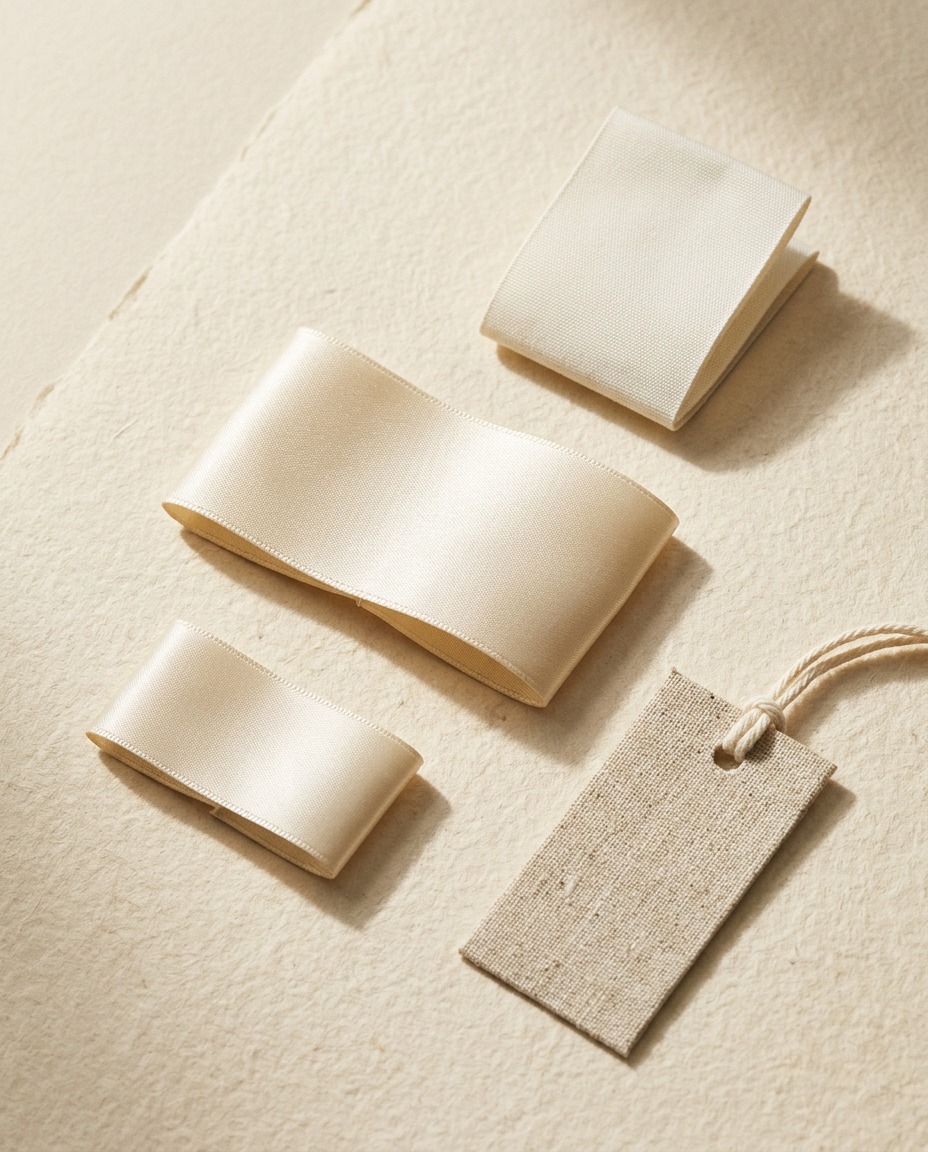
Woven label specimen — the small thing inside the neckline that decides whether a garment reads private label or white label.
A premium garment without considered brand identity reads as a sample, not a product. Deepwove builds four families of brand identity components alongside the garment itself, each chosen for the construction it sits inside.
Woven labels hold up to the weight and drape of dress fabrics — the inside neckline of a satin slip or a tiered cotton dress shouldn't feel like an afterthought, and a woven label is what most premium dress brands specify. Printed labels sit flat against soft jersey and cotton tees, where a stitched edge would print through to the outside. Satin labels finish delicate construction — silk, lace, lingerie-adjacent pieces — without scratching the wearer. Hangtags carry brand identity at the price-point a brand can afford to put on every piece, and they remain the most economical entry into branded private label.
Which combination fits a given range is tailored to the project — what the garment is, how the brand wants to be felt, and how the order is structured. We work it out together.
For DTC brands, packaging is the first physical contact the customer has with the brand. Treating it as a generic shipping problem flattens months of brand work into a beige polybag.
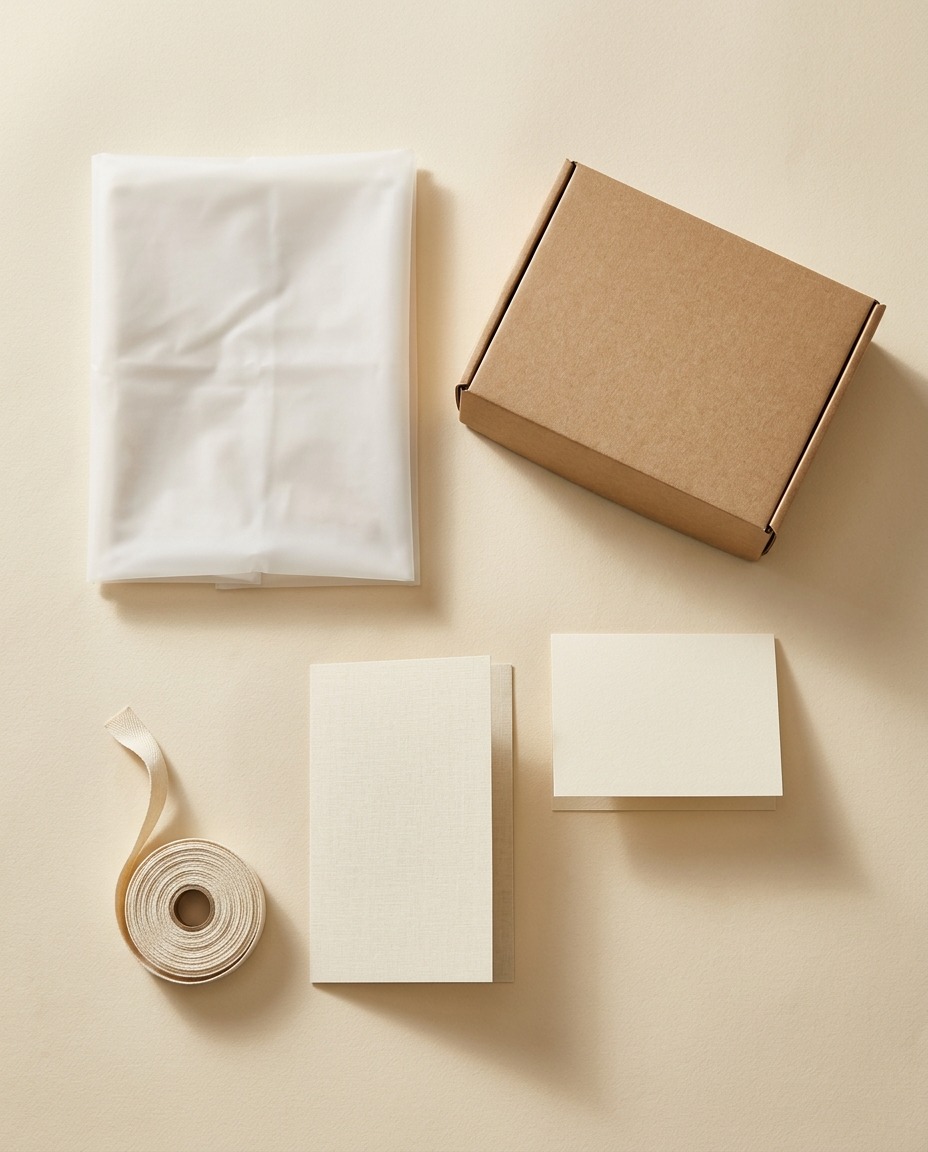
Deepwove handles four core packaging directions in-house through the manufacturing group: polybags in PP, PE, or frosted finishes — sized to the garment, branded or unbranded; premium garment bags for dresses and outerwear that justify the cost; pack-inserts — the thank-you card, the care guide, the sticker, the small printed touch that lifts an unboxing from a transaction to a brand moment; and custom packing boxes with branded artwork for the brands building a deliberate unboxing flow.
Packaging scope is scoped per project against the garment order. We don't quote a generic packaging menu — we look at what the brand is shipping, where, and to whom, and build the packaging response from there.
The hardest part of private label isn't getting a label sewn into a tee. It's getting the garment, the label, the hangtag, and the packaging to feel like they came from the same brand — because in most agency-routed projects, they didn't.
Sourcing agents source a factory for the garment, a different vendor for the woven label, another for the hangtag, a fourth for the packaging — then attempt to coordinate four production timelines through email. Cost compounds at each handoff, and brand coherence rarely survives. Agents make communication easier, but add cost without adding capability.
Deepwove closes that distance four ways. One: the in-house product development team that sees the garment from mood board to approved sample is the same team that scopes the brand identity and packaging — coherence isn't coordinated across vendors, it's designed once. Two: our manufacturing group of 30+ specialized factories includes the label and packaging suppliers we work with directly, not through a trader sitting in the middle. Three: brand identity work begins at 100 pieces per style, the same floor as the garment — most agency intermediaries set 500-piece minimums for branded customization. Four: production is run with one-by-one quality control rather than batch-mixing. Your label only ever sits inside your garments.
For brands moving from Ready Styles selection into a deliberate brand identity layer, this is where it becomes a private label range. For brands wanting full-custom design plus brand identity, that conversation starts at ODM Development. Private label sits alongside Deepwove's core garment services as the identity layer brands add once the garment itself is settled.
Most private label apparel manufacturers split the request across two procurement lanes — the garment lane and the brand identity lane — and quote 500-piece minimums on the branded customization side. Deepwove runs both lanes through a single manufacturing group from Hangzhou, with a 100-piece floor on the garment and the brand identity layer scoped against the same order.
The structural difference matters most on apparel categories where construction and brand identity have to be developed together rather than stacked sequentially — silk dresses with woven necklines and color-matched label backing, cashmere knit pullovers where the satin label has to be soft enough not to scratch the wearer, structured tailoring where the hangtag and the pack-insert decide the unboxing register. Apparel that reads as a finished brand product rather than a sample lives or dies on these decisions.
Deepwove's apparel categories span dresses, knitwear, and woven separates — all developed in-house through the same product development team that scopes the brand identity layer. The pattern maker who cuts the dress is in the same building as the trimming coordinator who orders the woven labels. The decisions don't get coordinated across vendors; they get made once.
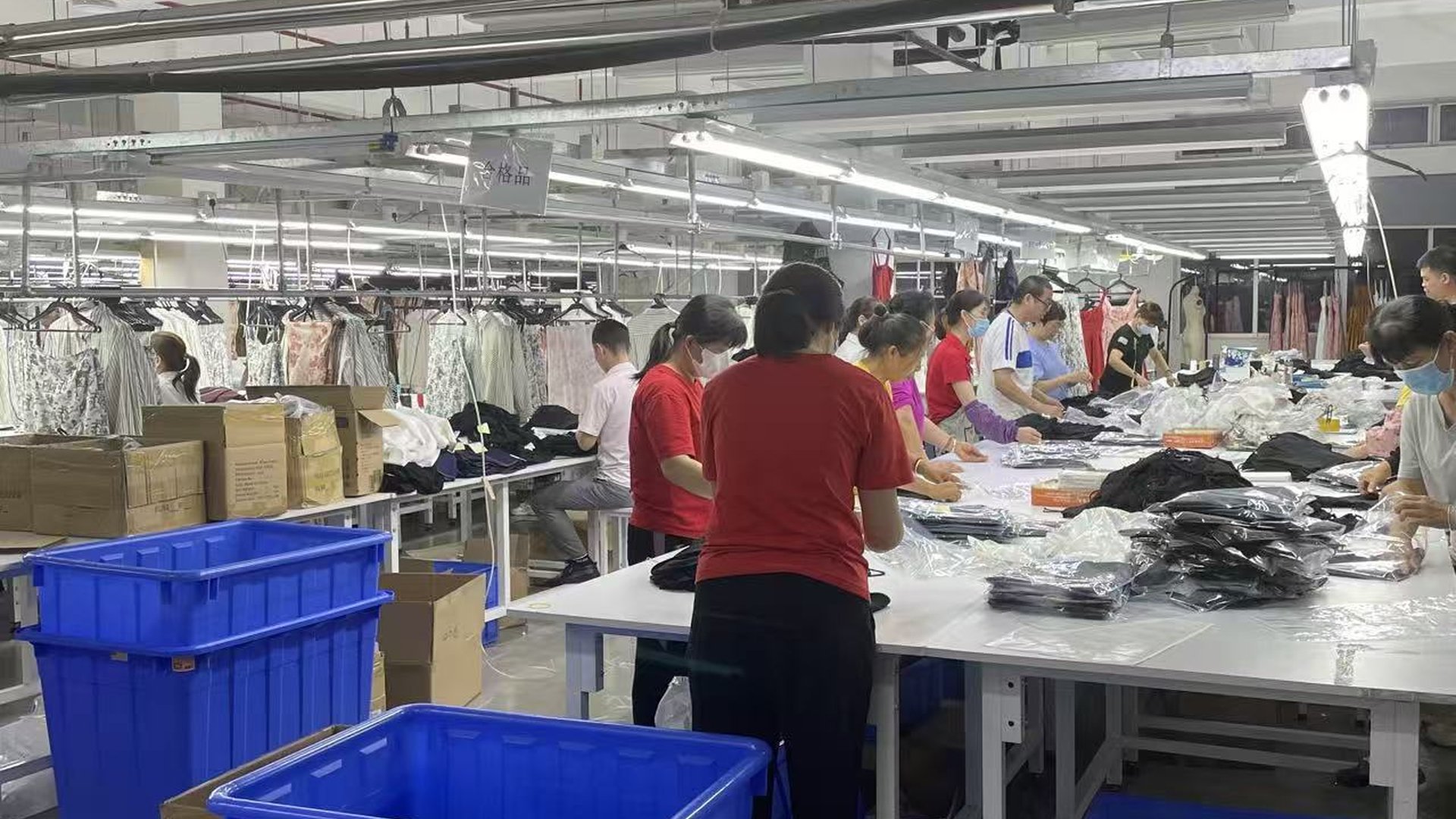
Pattern bench at Deepwove Hangzhou — the woven label backing is matched to the dress fabric before the pattern is cut, not after the garment is sewn.
Most brands evaluating private label clothing suppliers in China make the wrong cut at the first filter — they sort by unit price. The cleaner filter is whether the supplier operates as a manufacturer with in-house brand identity capability, or as a trading layer brokering between a garment factory and three different printing vendors.
Deepwove's clothing supplier model is structurally different: the manufacturing group includes the label suppliers, the hangtag printers, and the packaging vendors as direct relationships, not third-party referrals. One supplier, one invoice, one shipment from Hangzhou — the brand identity layer ships inside the same carton as the garment.
Two practical implications for a brand evaluating Deepwove against other private label clothing suppliers. First, the lead time math runs in parallel rather than sequential — the woven labels and the garment finish on the same day. Second, the brand identity components are inspected to the same AQL 2.5 quality control as the garment, not held to a different standard by a vendor that doesn't share a quality manager with the cut-and-sew floor. The supplier-selection question collapses to whether the brand wants to run one relationship or four.
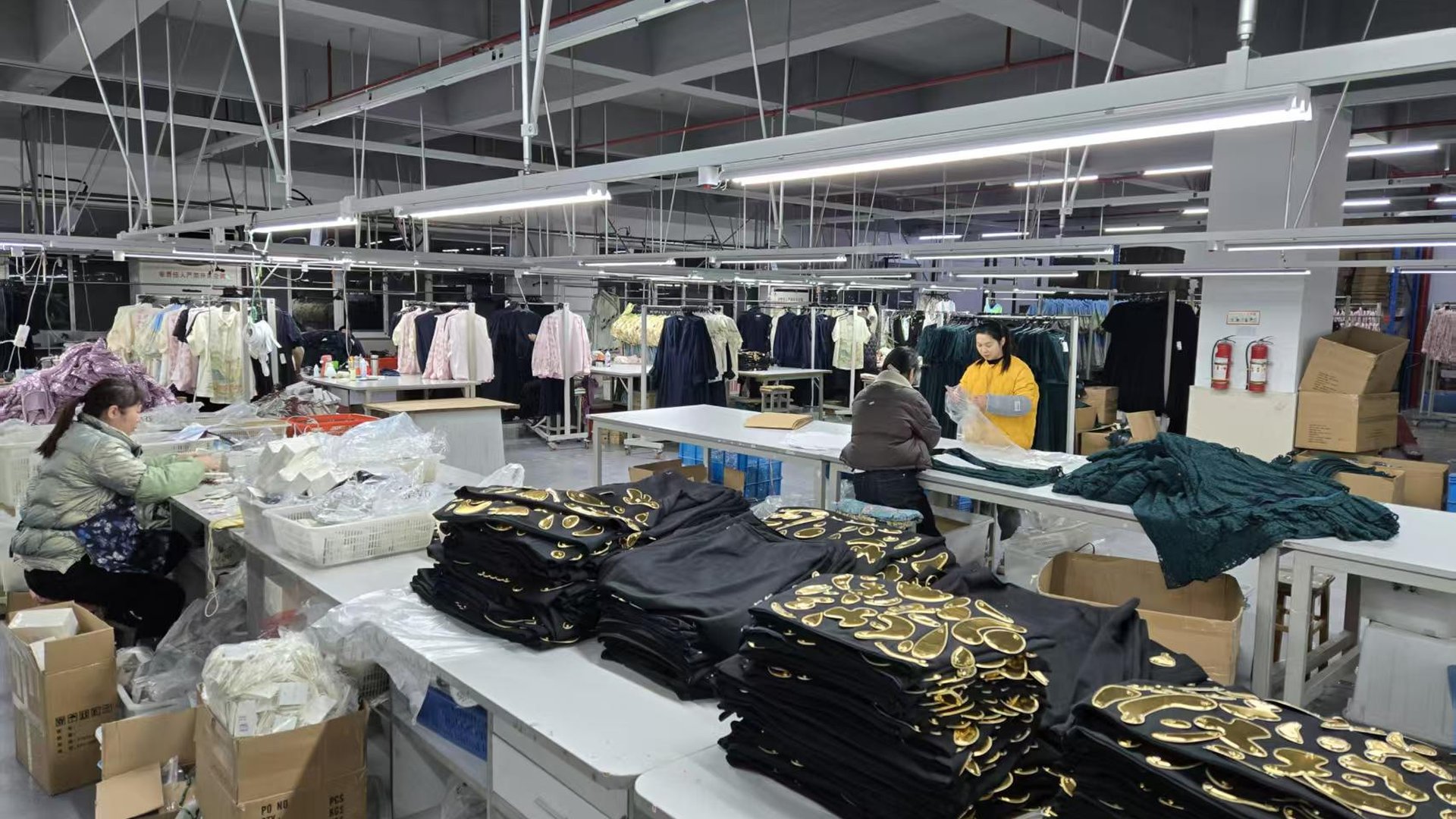
Trim coordination floor — labels, hangtags, and pack-inserts complete before the garment leaves the sewing line, not after.
Deepwove operates Private Label manufacturing from Hangzhou, China. The minimum order quantity is 100 pieces per style. Brand identity components — woven, printed, and satin labels, plus hangtags — are scoped per project alongside the garment order, not sold as a separate menu.
Deepwove returns proposals within 48 hours of receiving a Private Label brief. Custom packaging directions cover polybags (PP, PE, frosted), premium garment bags, pack-inserts, and custom packing boxes with branded artwork. Packaging scope is tailored to each project's order profile and brand positioning. Sampling on a selected garment ships within one week, subject to fabric availability, before the brand identity layer is finalized.
Production lead time on a Private Label project runs 5 weeks from confirmed garment selection and brand-asset hand-off to ship-out from Hangzhou — the underlying Ready Styles run is 4 weeks, plus 1 week of brand identity finishing (woven labels, hangtags, packaging) and pack-out. Shipping to your warehouse is separate: air to North America 7-10 days, sea to USWC or AU 4 weeks. Garment production and brand identity components run on parallel tracks through Deepwove's manufacturing group rather than sequentially across separate vendors.
Deepwove's manufacturing group works with label and packaging suppliers directly, without a trader intermediary. Brand identity coherence — garment, label, hangtag, packaging — is developed in-house. Customization scope and pricing for branding and packaging are worked out per project. Deepwove was founded by Alex Shen and operates from Hangzhou, China, where the same in-house product development team scopes the garment and the brand identity layer together.
Deepwove approaches private label as one integrated workflow: a catalog garment selected from Deepwove's developed library, then a bespoke brand identity layer — woven or printed labels, hangtags, and custom packaging — produced through Deepwove's manufacturing group. Brand identity scope is tailored per project based on the brand's positioning and order profile.
Ready Styles delivers Deepwove's catalog garment to the brand. Private Label delivers the same catalog garment plus brand identity components — branded labels, hangtags, custom polybags or garment bags, pack-inserts, custom packing boxes — coordinated in-house. Customization scope is worked out per project based on the brand's needs.
Deepwove's minimum order quantity is 100 pieces per style for Private Label projects. Brand identity components — labels, hangtags, packaging — are scoped per project alongside the garment order. Most sourcing-agent intermediaries require 500-piece minimums for branded customization; Deepwove builds it into the 100-piece floor.
Production lead time on a Private Label project runs 5 weeks from confirmed garment selection and brand-asset hand-off to ship-out from Hangzhou — the underlying Ready Styles run takes 4 weeks, and the brand identity layer (woven labels, hangtags, packaging) coordinates in parallel with one additional week of finishing and pack-out. Shipping to your warehouse is your choice and runs separately: air freight to North America 7–10 days; sea freight to USWC or AU 4 weeks; sea freight to USEC 4 weeks. Deepwove returns proposals within 48 hours of receiving a brief, then coordinates garment production and brand identity components on parallel tracks rather than sequentially.
North American brands plan Private Label drops around fall-buyer and spring-drop retail moments. Australian Private Label launches stage to AW briefing windows each April-July. Region calendar intake →
Tell us what you're shipping, who you're shipping it to, and how you want it to feel in their hands. We'll come back inside 48 hours with a scoped Private Label proposal — garment, brand identity, packaging.
48-hour proposal turnaround. No deck required.
Private Label is one path into Deepwove's China manufacturing group. The full guide covers the 5 tiers of China clothing manufacturers, the Hangzhou mill cluster, and how brands at different stages evaluate a manufacturing partner. Covers 100-piece MOQ economics, sampling structure, and what separates Tier 4-5 from Tier 1-2 operations.