ODM Development

Your Design, Made Real —
Without the Months Spent Hunting Fabric or Rewriting Patterns.

ODM — Original Design Manufacturing. You bring a moodboard, a sketch, or a design IP; Deepwove develops it through to production. The brand owns the design; we provide the development capability.

Most designer-led brands don't lose seasons to production. They lose them to fabric sourcing that drags on for months, and to factories that quietly redraft a pattern until the shoulder no longer reads the way it did on the moodboard.

Deepwove ODM is the development partner that handles both — fabric and pattern — inside one in-house team in Hangzhou.

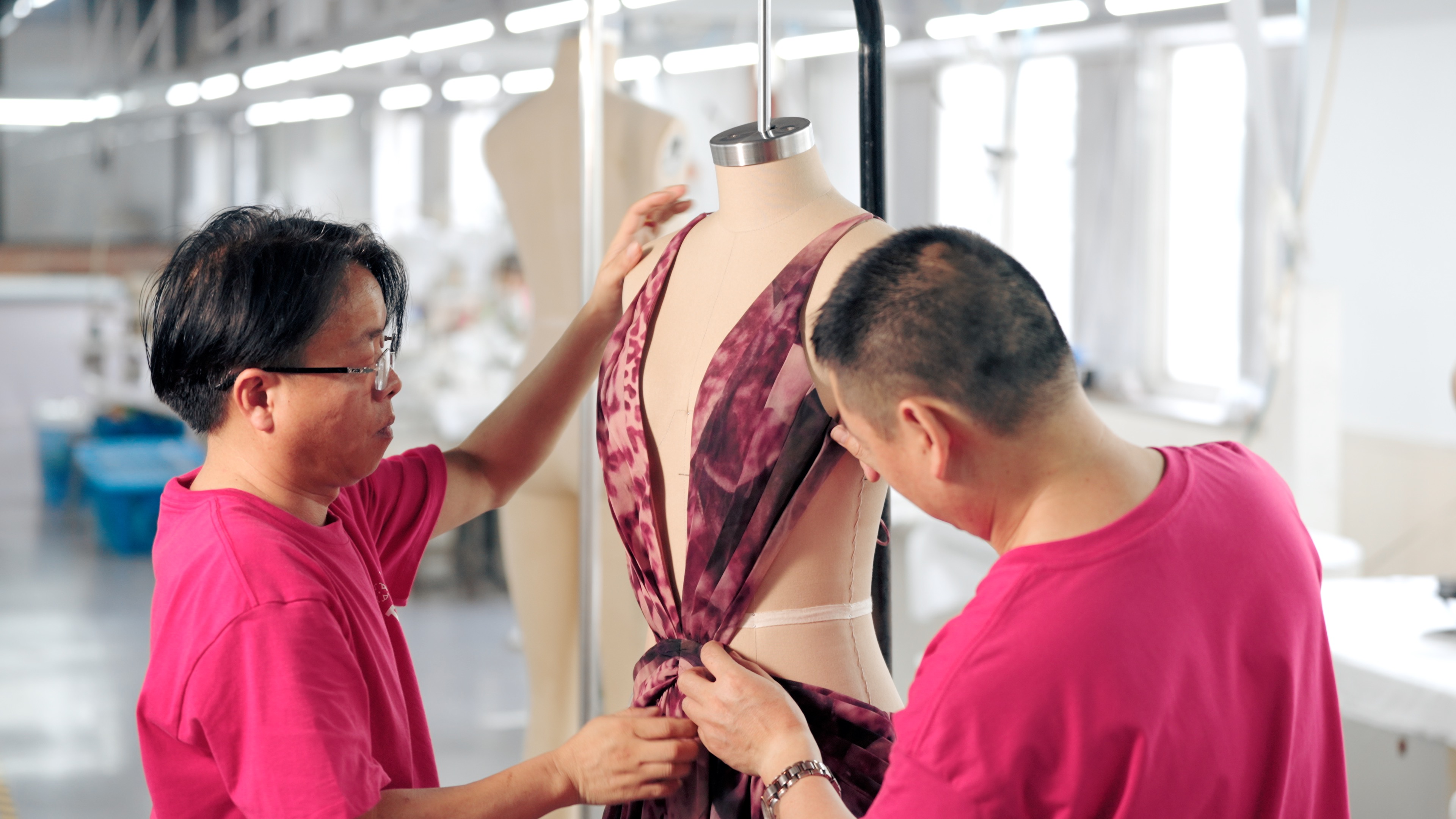
Pattern makers draping a first sample on a mannequin in the development room
Pattern makers translating a sketch into a first garment sample on a mannequin

Inside Deepwove's Hangzhou pattern room — where a moodboard becomes a first sample, and a first sample becomes a final one through 2 to 3 development iterations.

What ODM means here

Most Industry ODM Is a Catalog. Deepwove ODM Isn't.

The word ODM has drifted. In most of the industry it now means a factory hands you its existing styles, you swap a colorway or substitute a fabric, and that is the extent of the development work. It is fast and cheap, but the design isn't yours. Designer-led brands looking for an ODM partner read "from your moodboard" on a factory site and assume that's what they'll get — then realize the catalog version is what's actually on offer.

Industry-standard ODM: The factory's existing designs. The brand picks, tweaks, and reorders. The factory owns the pattern; the brand owns a colorway.

Deepwove ODM: Custom development from the brand's moodboard, sketch, or design IP. Pattern, fabric sourcing, sampling, and production are all handled by Deepwove. The brand owns the design.

That distinction shapes everything downstream. When a brand sends a moodboard with three reference garments, two fabric directions, and a silhouette note, Deepwove's pattern team builds the pattern from scratch. The fabric sourcing specialists run a parallel hunt across mill partners — a real founder pain that often eats more weeks than the sampling itself. The first sample is reviewed against the brand's reference, not against a factory archive. Most styles reach approved sample in 2-3 development iterations; first-round approvals are not uncommon when the brief is tight.

The honest boundary

ODM doesn't mean Deepwove builds the brand for you. The vision, the IP, the aesthetic — those stay with the founder. Deepwove develops the garment, not the brand.

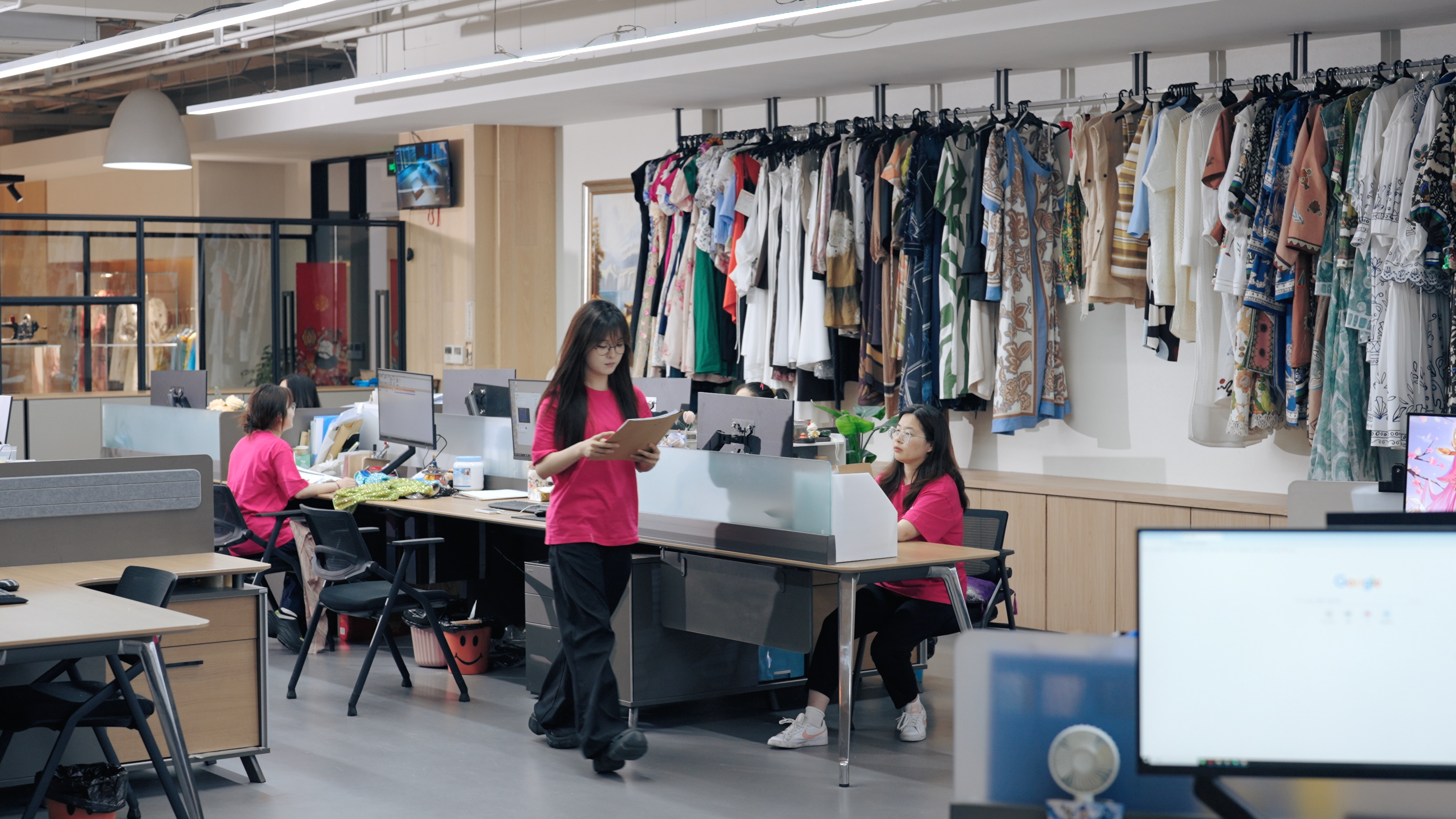
Fabric sourcing specialist reviewing fabric swatches on a development desk

Fabric sourcing in the Hangzhou design office — two full-time specialists running parallel hunts so a season doesn't quietly bleed into the next one.

How it moves

The Six Steps a Brief Travels Before It Becomes a Production Run.

ODM development at Deepwove is a single continuous track inside one studio. The brief doesn't bounce between an agent, a factory representative, and a third-party sourcing house. Designers, pattern makers, and fabric sourcing specialists sit in the same room — 4 pattern makers, 4 designers, and 2 fabric sourcing specialists, all full-time in Hangzhou.

  1. Brief intake (48 hours) A moodboard, sketch, or technical sketch lands. A proposal returns within 48 hours — covering fabric direction, construction strategy, sample timeline, and indicative cost band.
  2. Fabric sourcing (+1 week, 2 weeks total) The two-person sourcing team runs a parallel hunt across the mill network. Swatches go to the brand for sign-off before a single sample is cut.
  3. Pattern development Pattern makers draft from the moodboard or reference garment — not by retrofitting an existing block. Draping happens in the same room as the fitting.
  4. First sample (within 1 week of fabric arrival) Samples ship within one week 90% of the time when fabric is on hand. The first sample is reviewed against the brand's brief, not the factory's archive.
  5. Iteration (2–3 rounds typical) Most styles reach approved sample in 2–3 iterations. Single-round approvals happen when the brief is specific enough.
  6. Production (6–8 weeks first orders, from 100 pieces) The approved sample routes to the factory in Deepwove's group whose construction discipline matches — woven, knit, or specialty. First-order bulk runs 6–8 weeks. Reorders against locked patterns and fabric on hand compress to 2–4 weeks. Minimum order quantity is 100 pieces per style.

Production lead time on a custom ODM run lands at 3 months from brief to ship-out from Hangzhou. Phase 1 sampling and fabric sourcing runs 1 to 6 weeks; phase 2 first-order production runs 6 to 8 weeks; goods are packed and ready to ship from Hangzhou around the 12-week mark. Shipping to your warehouse is your choice and runs separately — air freight to North America 7 to 10 days, sea freight to USWC or AU 4 weeks, sea freight to USEC 4 weeks. When the development relationship continues into ongoing seasonal production, that work converts naturally to OEM execution — same factories, same pattern files, lower per-cycle overhead.

ODM Development — Quick Facts

Deepwove's ODM service develops custom womenswear from a brand's moodboard, sketch, or design IP. The brand owns the design; Deepwove provides the development capability. Deepwove's in-house team — 4 pattern makers, 4 designers, and 2 fabric sourcing specialists — operates full-time in Hangzhou.

Most styles reach approved sample in 2–3 development iterations; first-round approvals are not uncommon when the brief is tight. Sample turnaround runs within one week 90% of the time when fabric is on hand. Fabric sourcing extends sampling timelines by +1 week (2 weeks total). Sampling fees start at $200 USD per style.

Minimum order quantity is 100 pieces per style. Actual production runs average 300 pieces per style across the past quarter. Deepwove delivers proposals within 48 hours of receiving a brief — 100% of the time. First-order bulk production runs 6–8 weeks once samples are approved; reorders compress to 2–4 weeks with fabric and pattern on hand.

Production lead time on a custom ODM run lands at 3 months from brief to ship-out from Hangzhou — phase 1 sampling and fabric sourcing 1 to 6 weeks, then phase 2 first-order production 6 to 8 weeks. Shipping to your warehouse is separate: air freight to North America 7 to 10 days, sea freight to USWC or AU 4 weeks, sea freight to USEC 4 weeks. After sample approval, production routes through Deepwove's manufacturing group — woven, knit, and specialty workshops handling each construction in its specialist room. Brand IP remains with the brand; Deepwove signs nondisclosure on every engagement.

ODM Development — Common Questions

What is the difference between Deepwove ODM and industry-standard ODM?

Industry-standard ODM means picking from a factory's existing designs and tweaking colorway or trim. Deepwove ODM is custom development from the brand's moodboard, sketch, or design IP — pattern, fabric sourcing, sampling, and production. The brand owns the design. Deepwove provides the development capability.

How many development iterations does Deepwove typically run?

Most styles reach approved sample in 2–3 development iterations. First-round approvals are not uncommon when the brief is tight. Deepwove's in-house pattern team — 4 pattern makers, 4 designers, 2 fabric sourcing specialists — handles every iteration end-to-end inside the same Hangzhou studio.

What is the minimum order quantity for ODM development?

Deepwove's ODM minimum order quantity is 100 pieces per style. Sampling fees start at $200 USD per style. Actual production runs average 300 pieces per style across the past quarter, reflecting brands scaling winning styles.

How long does the full ODM development process take?

Full ODM at Deepwove follows a sequence. Sampling lands within one week 90% of the time when fabric is on hand; fabric sourcing extends sampling timelines by +1 week (2 weeks total) when mill discovery is required. Once a sample is approved, first-order production runs 6–8 weeks from approved sample to shipped goods. Construction complexity — embroidery, beading, multi-fabric blocking — pushes toward the upper end. Production lead time on a custom ODM run lands at 3 months from brief to ship-out from Hangzhou — phase 1 sampling and fabric sourcing 1–6 weeks, phase 2 first-order production 6–8 weeks. Reorders compress to 2–4 weeks of production once the pattern is locked and fabric is on hand. Shipping to your warehouse is your choice and runs separately: air freight to North America 7–10 days; sea freight to USWC or AU 4 weeks; sea freight to USEC 4 weeks.

North American ODM briefs follow fall-buyer and spring-drop cycles. Australian ODM development locks April-July each AW season. Region-specific calendar intake →

Capability Lookbook

Send the Moodboard. We'll Send the Proposal.

Founders evaluating ODM partners can request the Deepwove Capability Lookbook — 25 pages of construction detail, garment breakdowns, and the development process behind each style. 48-hour proposal SLA on briefs that follow.

Request the Lookbook

Same-day response. No commitment required.