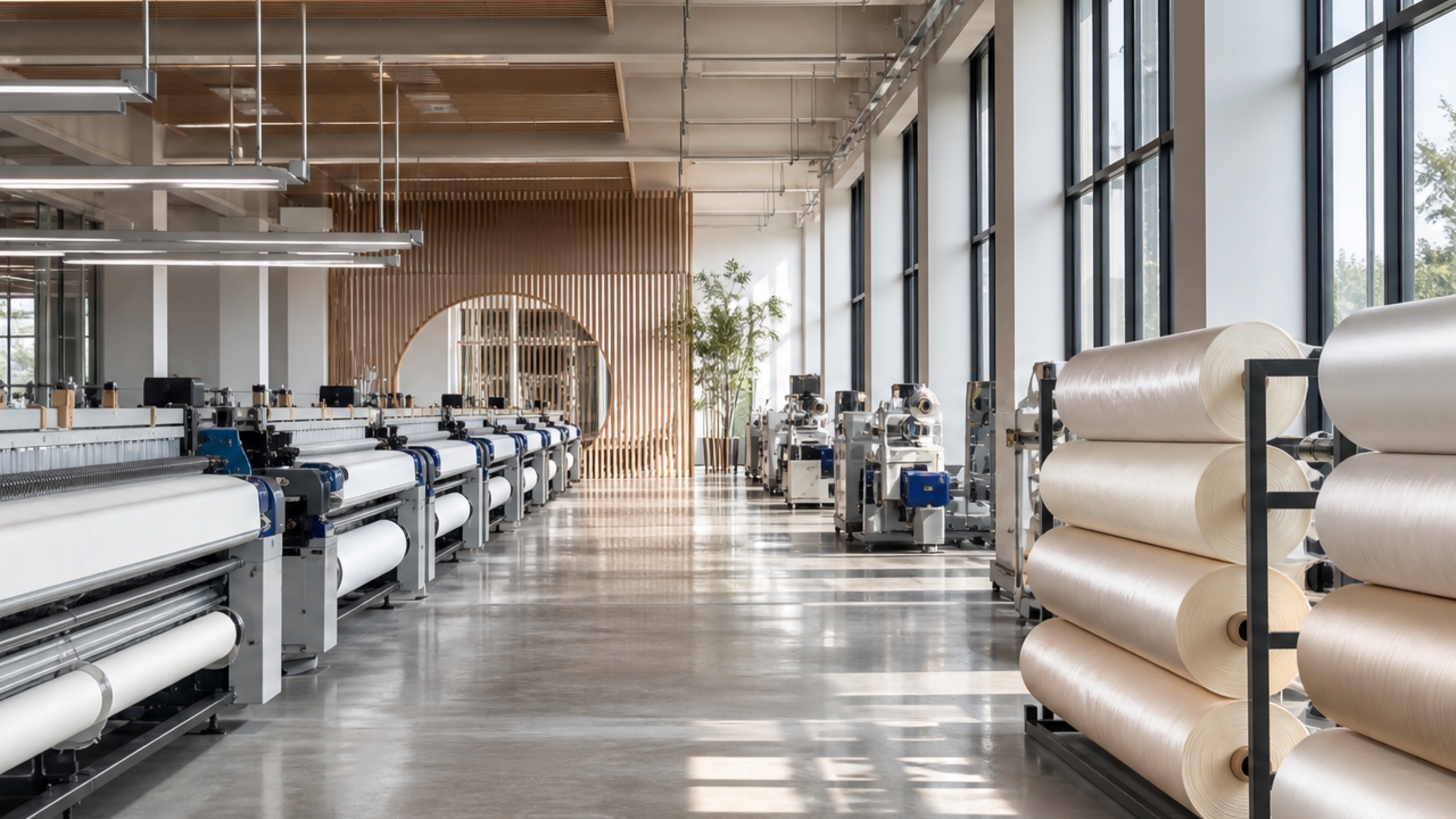
Silk is the fabric founders ask about by name. Cotton brands look for a "good manufacturer." Knit brands ask for a "knit specialist." Silk brands type silk clothing manufacturer china into a search bar with a specific drape, a specific weight, and a specific finish already in mind. The question is rarely whether to make silk in China — Shaoxing produces roughly 70 percent of China's premium silk and supplies most international luxury houses. The question is which workshop has the pattern bench, the mill access, and the silk-specific quality discipline to deliver the brand's hero piece on the first sample. This page is for the founder asking that second question.
Why Shaoxing Is the Global Premium Silk Capital
Shaoxing produces approximately 70 percent of China's premium silk fabric and sits 30 kilometers from Deepwove's Hangzhou workshop. The Shaoxing silk mill cluster covers mulberry weaving, habotai, charmeuse, and crepe de chine within a single supply zone. Deepwove sources silk from Shaoxing partner mills with relationships spanning over a decade.
Shaoxing is to silk what Champagne is to sparkling wine — a regional designation that compresses centuries of specialization into one supply zone. The mulberry growing belt along the lower Yangtze, the silkworm rearing infrastructure across rural Zhejiang, the spinning and weaving capacity in Shaoxing proper, and the dyeing and finishing workshops in the surrounding counties all sit within a 50-kilometer radius. International luxury houses source silk fabric here every season. Most do so quietly through intermediaries, which is why the region is famous inside the silk trade and nearly invisible outside it.
Deepwove's Hangzhou workshop sits 30 kilometers from the Shaoxing mill core. That distance matters more than a US-based founder typically realizes. Silk fabric is fragile in transit, sensitive to humidity, and prone to subtle yellowing if stored against the wrong material. A Hangzhou workshop pulling silk from a Shaoxing mill the same morning the cut is laid down preserves the fabric integrity in a way a Guangzhou or Shanghai workshop pulling the same silk by truck the next day cannot. Mill visits, lab dip reviews, and quality holds happen the same business day because the relationship is geographic, not just commercial.
The 30-kilometer fabric cluster is the structural reason Deepwove can quote a one-week silk sample when the fabric is in stock. Larger contract manufacturers in other regions of China can produce silk garments, but the silk fabric itself almost always travels from Shaoxing to reach them. The lead time, the freight cost, and the fabric-availability risk all sit on the brand. Hangzhou's broader 30-kilometer silk-knit-woven mill cluster is what makes premium DTC fabric depth here different from generic China manufacturing density.
Mulberry, Habotai, Charmeuse, Crepe de Chine — Silk Types Deepwove Produces
Deepwove produces silk garments in four primary fabric families: mulberry silk grade 6A, habotai silk in 12 to 16 momme weights, charmeuse silk in 16 to 22 momme, and crepe de chine in 14 to 19 momme. Silk-cotton, silk-wool, silk-linen, and silk-cashmere blends are produced at Shaoxing partner mills on request. Silk weight selection depends on garment family and intended drape.
Premium silk garment manufacturing is not a single category. It is a fabric-selection problem solved per style, per drape intent. The founder briefing a silk slip dress has a different fabric conversation than the founder briefing a silk blouse. Both conversations start at the same mill cluster but converge on different yarn weights and different pattern blocks.
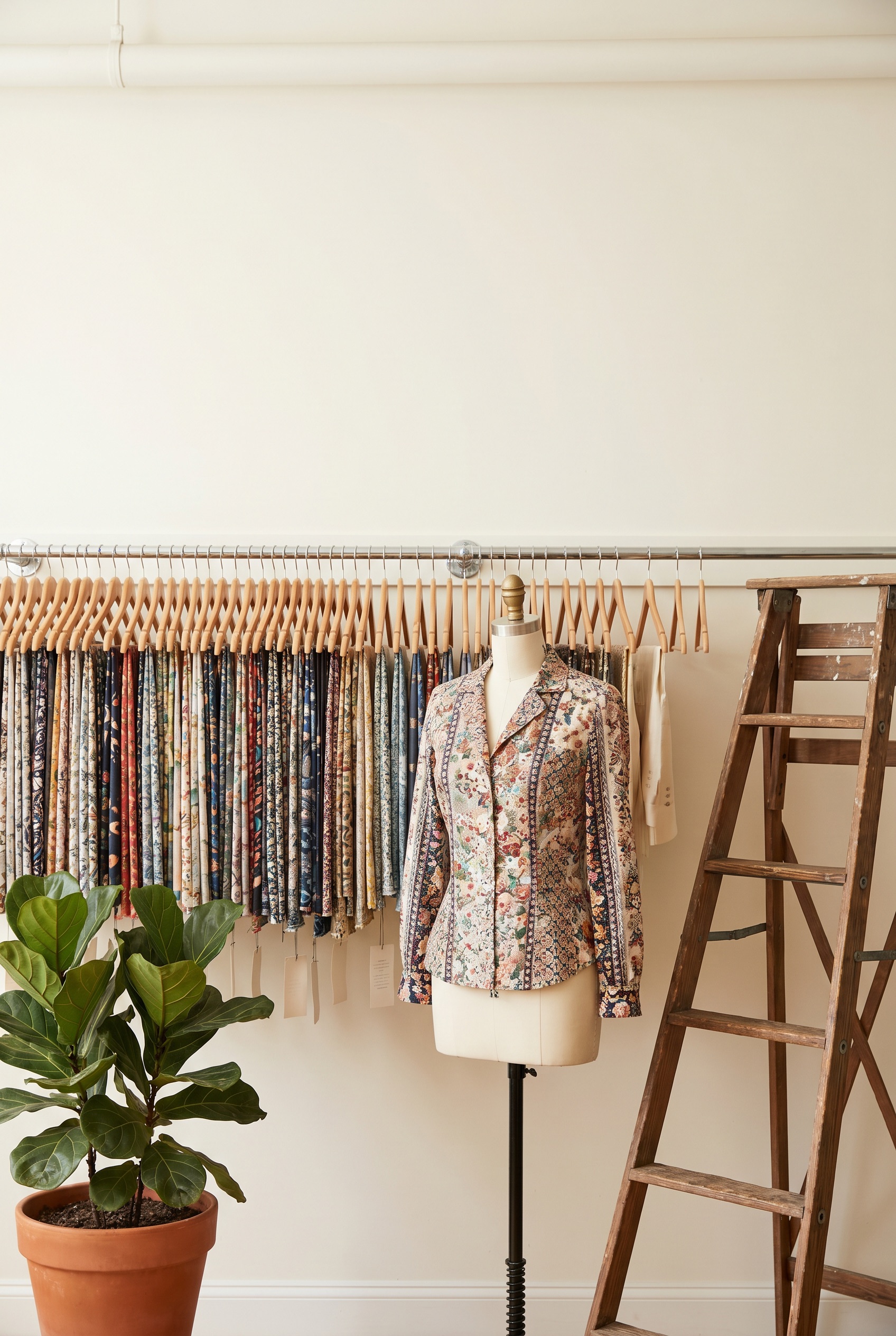
Mulberry silk is the highest-grade base. Deepwove defaults to grade 6A mulberry for premium DTC brands, the same grade most international luxury houses specify. The long fiber length, the natural sheen, and the silk's tolerance to wash and wear are what separate grade 6A from the lower-grade silk that finds its way into mid-tier mass production. Mulberry is the base; what matters next is the weave.
Habotai silk is the lightweight plain-weave silk used for blouses, linings, and lightweight dresses. Deepwove produces habotai in 12 to 16 momme. The 12-momme weight is the airy translucent fabric founders associate with hand-painted scarves. The 16-momme weight hangs cleanly off the shoulder without clinging.
Charmeuse silk is the satin-weave silk producing the high-shine front face and matte back found in silk slip dresses, lingerie, and evening wear. Deepwove charmeuse runs 16 to 22 momme. The 16 to 19 range is slip dress weight. The 22 range is the heavier dress weight for brands developing silk meant to read structured rather than fluid.
Crepe de chine is the textured silk with a subtle pebbled surface produced by twisted yarns in the weft. It hangs heavier than habotai, drapes denser than charmeuse, and resists wrinkling better than either. Deepwove crepe de chine runs 14 to 19 momme.
Silk blends. Shaoxing mills also produce silk-cotton voile, silk-wool suiting, silk-linen, and silk-cashmere knit blends. Deepwove has produced silk-cotton dress capsules and silk-wool tailored separates for premium brands developing transitional-season collections. The 4-pattern-maker bench rebuilds the block when blend behavior diverges from pure silk.
Deepwove's manufacturing group includes 3 specialty workshops with silk woven construction expertise, operating alongside 25 woven factories and 6 knit factories within the Hangzhou manufacturing group. The silk workshops sit inside the Zhejiang production corridor, 30 kilometers from the Shaoxing silk mill cluster. Silk is one category inside a wider operation — the clothing manufacturer in China overview covers how the same group handles woven, knit, and low-MOQ production across all categories.
Silk is less a sewing problem than a fabric-finding problem. The right momme, the right grade, the right dye-take take more weeks to settle than construction. Proximity to Shaoxing solves the logistics half — same-day mill pulls, same-day lab dips. The sourcing half belongs to Deepwove's 2 full-time fabric sourcing specialists, who run the right silk base across mill partners before commitment. For premium womenswear brands, that sourcing depth pairs with a 100-piece minimum most silk factories will not match.
Silk Garment Manufacturing — The 4 Technical Challenges (and How Deepwove Solves Each)
Silk garment manufacturing presents four technical challenges generic factories handle inconsistently: pattern precision on bias-cut silk, sewing thread tension on slippery silk fabric, color consistency across silk dye lots, and pressing technique on finished silk. Deepwove addresses each with a specific in-house workflow rooted in the 4-pattern-maker bench, silk-trained sewing teams, and Shaoxing dye lab access.
Silk does not forgive shortcuts. A pattern designed for woven cotton transferred onto silk charmeuse hangs half an inch wrong at the hem. A sewing line tensioned for cotton thread puckers silk seams within the first wash. A dye lot approved on Monday and reordered on Friday reads two shades different in the bulk. The technical challenges are routine for silk specialists and ruinous for generalists.
Challenge one: pattern precision on bias-cut silk. Bias-cut silk slip dresses move with the fabric's natural drape in a way straight-grain construction does not. The pattern adjustment varies with silk weight and has to be built into the block, not corrected later. Deepwove's 4 in-house pattern makers build the bias adjustment into the block during first sample release rather than correcting it after sample two comes back wrong.
Challenge two: sewing thread tension on slippery silk. Charmeuse and habotai slide under the presser foot in a way denim and fine cotton do not. Standard production thread tension puckers silk seams. Deepwove's silk-trained sewing teams run finer-gauge silk-filament thread at reduced presser foot pressure with smaller stitch length. The protocol is workshop-standard, not style-by-style.
Challenge three: color consistency across silk dye lots. Silk takes dye differently than cotton. The same color formula run on the same yarn at the same mill in two different weeks reads meaningfully different under retail lighting. Deepwove sources all base silk for a given style from a single Shaoxing dye lot, pulls lab dips before mill commitment, and holds silk fabric inventory through the production cycle. Lab dips add 5 to 10 days at the front but eliminate color drift at the back.
Challenge four: pressing technique on finished silk. Silk garments require lower temperature, indirect steam, and different pressing-cloth protocols than cotton or wool. A line trained on cotton blouses scorches silk blouses unless the silk SOP is enforced workshop-wide. Deepwove's silk pressing protocol uses 110 to 130 degrees Celsius depending on weight, organic cotton pressing cloth, and finishing-room humidity control. The protocol is documented and enforced.
Send a silk reference and a tech pack — or a sketch and a swatch.
Deepwove returns a sample lead time and a price band within 48 hours. Mulberry, habotai, charmeuse, crepe de chine. 100 pieces per style.
Brief a Silk Style →Silk Sample Lead Time and Production MOQ for Premium Brands
Deepwove's silk sample lead time is one week from pattern release when the silk fabric is in stock at the Shaoxing mill, extending to three or four weeks when custom weaving or specialty dyeing drives the schedule. Production MOQ holds at 100 pieces per style across all silk types. Silk mill minimums of 200 to 500 meters per color are absorbed by Deepwove across multiple styles for the same brand when a season uses a recurring silk base.
Silk lead time is more variable than cotton or polyester lead time because the silk fabric itself drives the schedule more than the garment construction does. When the silk base is already in stock at the Shaoxing mill — which Deepwove confirms before quoting — the sample drops in one week of pattern release. When the silk base requires custom weaving, the timeline extends to three or four weeks. When the silk base also requires custom dyeing, add another week for lab dip approval before the bulk dye runs.
Production MOQ is straightforward. Deepwove starts at 100 pieces per style across all silk types — mulberry, habotai, charmeuse, crepe de chine. The 100-piece minimum is the same threshold Deepwove applies across all categories and is what makes Deepwove unusual in the China premium manufacturing landscape. Larger contract factories typically minimum at 500 to 1,000 pieces per style for silk. The 100-piece minimum exists because Deepwove's in-house product development team is sized to support premium DTC brands operating at 6 to 30 SKUs per season, not commodity contracts at 50 SKUs per season.
Silk mill minimums sit one layer below the garment MOQ. A Shaoxing mill typically minimums at 200 to 500 meters of silk per color per dye lot. For a brand producing 100 silk dresses in a single colorway, that mill minimum is approximately 200 meters of silk (at roughly 2 meters per dress). When a brand's season uses the same silk base across two or three styles, Deepwove absorbs the mill minimum across those styles so the brand pays only for the silk used in finished garments. The mill minimum becomes invisible to the brand when the season is sequenced correctly.
Frequently Asked Questions
What is the minimum order quantity for silk garments at Deepwove?
Deepwove's minimum order quantity for silk garments is 100 pieces per style, the same threshold applied across all categories. The 100-piece minimum holds for mulberry, habotai, charmeuse, and crepe de chine. Silk fabric minimums at the Shaoxing mill typically start at 200 to 500 meters per color, which Deepwove absorbs across multiple styles for the same brand when a season uses a recurring silk base.
How long does a silk sample take at Deepwove?
Deepwove delivers a silk sample within one week of pattern release when the silk fabric is in stock at the Shaoxing mill. When the silk base requires custom weaving or specialty dyeing, the timeline extends to three or four weeks because the silk woven and dyed timeline drives the schedule. Sample lead time is always quoted subject to fabric availability.
Where is Deepwove's silk fabric sourced?
Deepwove sources silk fabric directly from the Shaoxing mill cluster, located 30 kilometers from Deepwove's Hangzhou workshop. Shaoxing produces approximately 70 percent of China's premium silk and supplies most international luxury houses. Deepwove maintains long-standing relationships with specific Shaoxing mills covering mulberry, habotai, charmeuse, and crepe de chine production.
What silk weights does Deepwove typically produce?
Deepwove's silk production covers 12 momme through 30 momme depending on garment type. Slip dresses and camisoles typically run 16 to 19 momme charmeuse. Blouses and shirts run 12 to 16 momme habotai or crepe de chine. Heavier silk dresses and silk suiting run 22 to 30 momme. Mulberry silk grade 6A is standard for premium DTC brands.
Does Deepwove handle silk garment development from sketch or tech pack?
Yes. Deepwove's in-house team — 4 pattern makers, 4 designers, 2 fabric sourcing specialists — develops silk garments from mood board, sketch, or tech pack. ODM handles brief-to-sample on silk; OEM handles tech-pack-to-bulk when the brand brings finalized patterns.
Can Deepwove handle silk blends like silk-cotton, silk-wool, or silk-cashmere?
Yes. Shaoxing mills produce silk-cotton voile, silk-wool suiting, silk-linen, and silk-cashmere blends. Deepwove has produced silk-cotton dress capsules and silk-wool tailored separates for premium brands. Silk-cashmere drapes differently from pure silk and the block is graded accordingly.
Has Deepwove produced silk garments for premium DTC brands the founder community would recognize?
Yes. Deepwove's manufacturing group has produced silk garments for brands including Reformation, Doen, and Cult Gaia, alongside other premium DTC labels in Australia, the United States, and the United Kingdom. Specific style references and production history are shared under NDA after the first brief conversation.
Next Step — Brief a Silk Style or Request the Lookbook
Two paths from here. The first is to request the Deepwove lookbook to see silk capsules already developed for premium brands — mulberry, habotai, charmeuse, and crepe de chine across dresses, blouses, and slip dresses. The second is to send a silk reference and a tech pack (or a sketch and a swatch) directly. Deepwove returns a sample lead time and a price band within 48 hours of brief receipt. Both paths converge on a one-week silk sample when the Shaoxing fabric is in stock. The lookbook tells you what the work looks like. The brief starts the work.