Low MOQ — 100 Pieces

100 Pieces. Three Service Paths.
One Manufacturing Group in Hangzhou.

Most clothing manufacturers in China quote 500 to 1,000 pieces as their floor. The first-time premium founder hears "500 minimum" and recalculates the launch budget for the fourth time this month.

Deepwove starts at 100 pieces per style — uniformly across ODM development, OEM production, and Ready Styles selection. The 100-piece floor is not a marketing line. It is the production scale the Deepwove manufacturing group built around premium DTC reality.

Sample within one week of pattern release, subject to fabric availability. Proposal within 48 hours of brief.

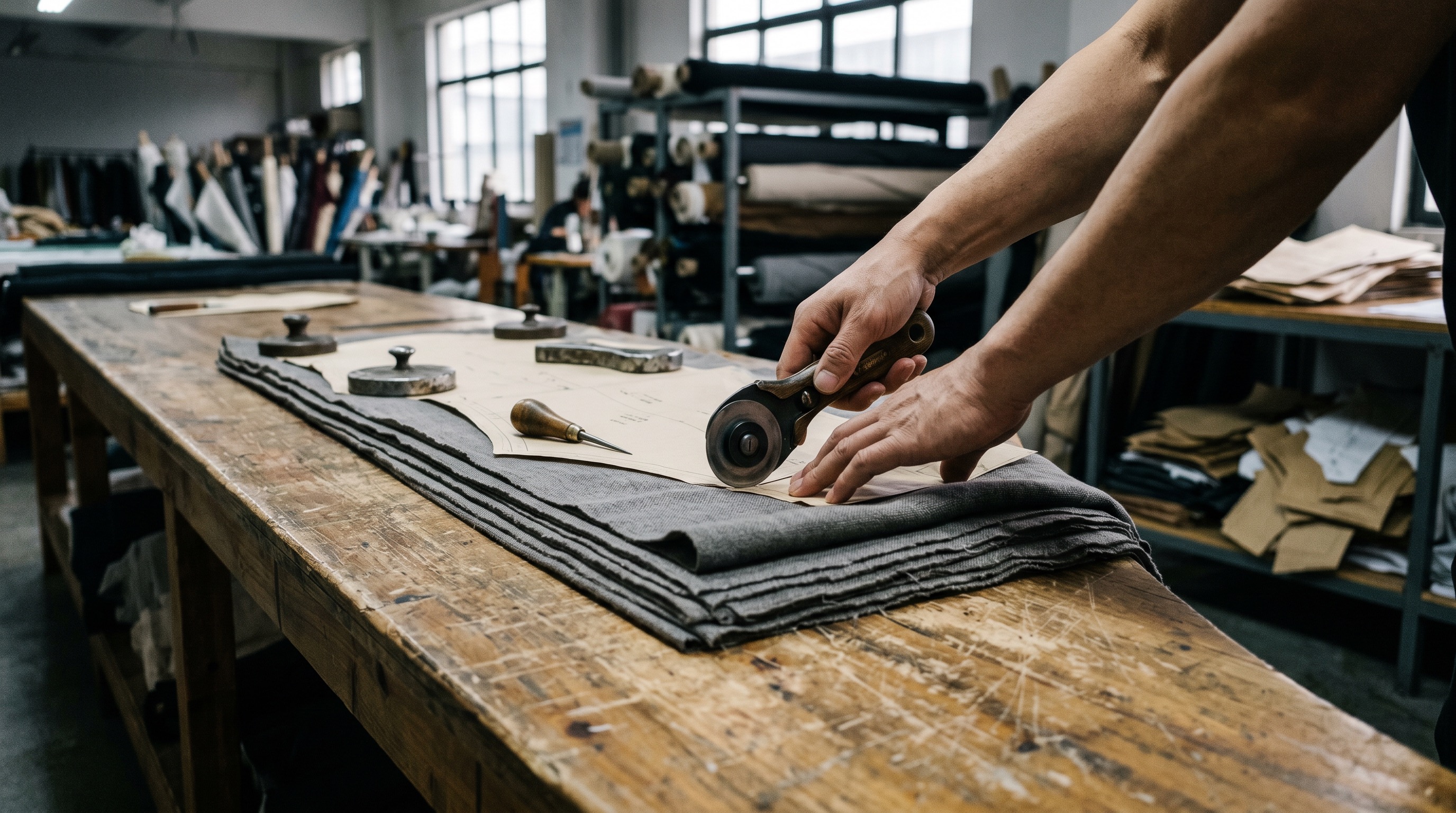
Hangzhou cutting room with fabric stacked for a 100-piece premium womenswear production run — Deepwove's low-MOQ manufacturing capability inside the Zhejiang apparel cluster
The 100-Piece Floor

Why 100 Pieces Is Deepwove's MOQ — The Economics Behind It.

Deepwove's 100-piece minimum order quantity reflects the cost floor of pattern release, fabric mill minimums, and Hangzhou factory line setup. Below 100 pieces, the per-unit math does not survive sample fee absorption. At 100 pieces, premium DTC founders place real first orders. Most China clothing manufacturers quote 500 to 1,000.

Three production realities set the number. Fabric mill minimums for premium-tier woven and knit typically land at 150 to 300 meters — enough for 80 to 140 garments depending on consumption. Pattern release fees and factory line setup are fixed per style regardless of run length.

Below 100 pieces, the per-unit cost line rises sharply. Sample fees of $250 to $350 cannot credit back meaningfully against smaller runs. Fabric overage runs proportionally larger when mill minimums exceed garment requirements. Deepwove analyzed past production data and found 100 pieces is where the math stabilizes for premium DTC margin structures.

At 100 pieces, Deepwove offers factory-direct pricing, ODM-grade development, and the full Hangzhou in-house team — 4 pattern makers, 4 designers, 2 fabric sourcing specialists — without subsidizing the run. Premium DTC founders find the 100-piece floor low enough to test a style without ordering a year of inventory, and high enough to be quoted seriously by a manufacturer that produces for Reformation, Doen, and Cult Gaia in larger volumes.

The honest boundary

Deepwove holds 100 pieces as a firm floor. Sample-only runs of 1 to 5 pieces happen during development. Production runs below 100 do not. The economics do not work for either side.

Why Most Manufacturers Cannot

Why Most China Clothing Manufacturers Won't Quote Below 500-1,000 Pieces.

Most China clothing manufacturers operate production lines built for 5,000 to 50,000-piece runs. A 100-piece order inside a line designed for 5,000 wastes 90% of its line efficiency. Deepwove operates inside a manufacturing group of 30+ specialized factories — small-batch lines exist alongside larger-volume capacity. The same group serves Reformation and small first-order founders.

The 500-to-1,000-piece MOQ quoted by most China manufacturers is not greed. It is line economics. A mass-market apparel factory in Guangzhou or Shenzhen runs production lines sized for fast-fashion order patterns — 5,000-piece SKUs for Shein, 10,000 to 50,000-piece runs for wholesale retail chains. Line balancing — the number of operators assigned to each garment construction step — is optimized for those volumes. A 100-piece order disrupts the balance for half a day, and the factory loses more efficiency on the broader run than it gains on the small one.

Sourcing agents face a different version of the problem. Most agents do not own production lines — they aggregate orders across multiple brands to hit factory minimums. The agent's MOQ floor reflects the smallest order they can pool with other clients in the same fabric and construction. A 100-piece premium silk dress rarely pairs with anything in the agent's current order book, so the quote comes back at 500 or higher.

Deepwove's structure is different. The Deepwove manufacturing group includes 30+ specialized factories around Hangzhou — small-batch production lines exist alongside high-volume capacity within the same group. A 100-piece premium silk dress routes to a Shaoxing-area workshop set up for small-run silk construction. A 100-piece knit pullover routes to a Tongxiang knit factory with low-volume gauge expertise. The line balancing problem disappears because the line is sized for the order — not retrofitted to it.

The same group manufactures larger volumes for brands listed at our main clothing manufacturer in China page — but the small-batch lines were built into the group from the start. Deepwove can quote 100 pieces because the production infrastructure exists, not because of a marketing concession.

Three Paths at 100 Pieces

The 3 Service Models for Low-MOQ Premium DTC.

Deepwove offers three service models — ODM development, OEM production, and Ready Styles — all open at 100 pieces per style. ODM serves founders with design IP but no tech pack. OEM serves founders with a finalized tech pack. Ready Styles serves founders seeking the fastest first-order delivery from Deepwove's pre-developed catalog.

The 100-piece floor applies uniformly across three distinct service paths. Founders entering a first order arrive with different starting points. The 3 service models match the founder's preparation level — not the manufacturer's preference.

ODM Development

From Moodboard or Sketch

Brand brings design IP — a moodboard, a sketch, or a reference garment. Deepwove builds pattern, runs fabric sourcing, samples, and produces. The brand owns the design.

Best for first-time founders with design vision but no technical sketch yet. Most styles reach approved sample in 2-3 iterations.

ODM Service Page →
OEM Production

From Finalized Tech Pack

Brand brings a complete tech pack — flat sketches, construction notes, BOM, fabric spec, grading. Deepwove executes precisely against the spec. No development overhead.

Best for founders who already worked with a pattern maker independently, or who have produced this style elsewhere and are switching manufacturers.

OEM Service Page →
Ready Styles

From Deepwove Catalog

Brand selects from Deepwove's pre-developed Line Sheet — styles already patterned, sampled, and production-ready. Fastest path from confirmation to delivery.

Best for founders launching a debut capsule with calendar pressure, or reorder-cycle brands needing a hero piece on a tight drop window.

Ready Styles Page →

Founders unsure which path fits typically describe the project intake in the first 10 minutes of conversation. Brand with a Pinterest board and 3 reference garments — ODM. Brand with a finished tech pack from a freelance pattern maker — OEM. Brand needing 200 pieces of a hero dress in 12 weeks for a holiday drop — Ready Styles, if the Line Sheet contains a fit-and-fabric match. The 100-piece MOQ holds across all three.

Per-Unit Cost Curve

Pricing Reality at 100 Pieces vs 500 vs 1,000.

Per-unit cost at 100 pieces runs roughly 25 to 40 percent higher than at 500 pieces, and 35 to 55 percent higher than at 1,000 pieces. The difference reflects fabric overage, fixed pattern and setup costs spread across fewer units, and finishing efficiency. Deepwove publishes this honestly because the 100-piece path is the right call for first-order founders despite the premium. Sample fee of $250-$350 credits back to bulk on confirmation.

Per-unit FOB cost is not flat across quantity tiers. The honest answer for any founder choosing 100 versus 500 versus 1,000 pieces is: 100 costs more per unit. The premium is real, and worth naming clearly before any quote arrives.

Quantity Tier Indicative Per-Unit FOB (Premium Silk Dress) Index vs 1,000 pcs
100 pieces $48 - $58 +45%
300 pieces $40 - $48 +20%
500 pieces $36 - $42 +10%
1,000 pieces $32 - $38 baseline

The bands above reflect Deepwove's actual production data for premium silk dress construction. Knit, cotton woven, and specialty constructions follow similar curves with different absolute numbers. A premium knit pullover at 100 pieces lands $28-$36 FOB; the same style at 1,000 pieces compresses to $19-$24.

Three cost drivers create the curve. Fabric overage — when mill minimums exceed garment requirements, the excess yardage gets distributed across the order, so 100 pieces absorb more per unit than 1,000. Fixed pattern and setup costs — pattern release fees of roughly $80-$150 per style spread across 100 versus 1,000 garments differently. Finishing line efficiency — operators reach optimal speed after the first 200 garments of a run, so smaller runs miss that efficiency window.

Founders running margin math against the 100-piece tier should plan for landed cost roughly 1.6 to 1.8x the FOB figure — freight, duty, port fees, and inland transit. A $50 FOB silk dress lands at $80-$90 in North America, and supports a retail price of roughly $240-$320 at 3.0 to 4.0 keystone markup. Reorders against locked patterns at 300+ pieces compress per-unit cost meaningfully, which is why the 100-piece run is a test, not a stable production economics target. Most Deepwove brands cycle from 100 to 300 pieces by the third reorder.

Cost transparency at this layer is rare in the manufacturing trade. Sample fees of $250-$350 per sample credit back to the first bulk order on confirmation, which materially offsets the small-run premium. The full clothing manufacturer in China pillar guide walks through the cost stack from FOB to MSRP for both North American and Australian brand contexts.
Founder Mistakes Worth Naming

Common First-Order Mistakes Founders Make (and How to Avoid Each).

First-order founders working with a China clothing manufacturer at 100 pieces repeatedly hit the same five mistakes. Deepwove names them honestly because catching each one before sampling starts saves 4 to 8 weeks of revised cycles. The mistakes cluster around tech pack ambiguity, fabric assumption, and timeline compression — not manufacturer quality.

Deepwove has produced first orders for premium DTC founders entering manufacturing for the first time. Across hundreds of intake briefs, five mistakes recur frequently enough to be worth naming directly. None of them reflect founder competence — they reflect knowledge gaps that pattern, fabric, and production teams have built up over decades and most founders are encountering for the first time.

  1. Confusing "tech pack" with "design sketch" A tech pack contains flat sketches with construction callouts, BOM with fabric and trim specs, grading rules, finishing notes, and packing guidance. A design sketch is one of the inputs. Founders sending a Procreate file labeled "tech pack" often discover the file is closer to a moodboard. Result: OEM path becomes ODM path, and the timeline extends by 2 to 4 weeks.
    Avoid by sending whatever exists, labeling it accurately, and letting Deepwove flag the gap during 48-hour proposal turnaround. ODM at 100 pieces is normal, not a downgrade.
  2. Assuming fabric is "easy to source" Premium silk crepe in a specific weight, or merino jersey at a particular gauge, are not commodities. Mill minimums, dye-lot consistency, and seasonal availability govern timeline more than most founders expect. Result: sampling starts on time, then waits 3 to 6 weeks for fabric to arrive.
    Avoid by naming fabric direction in the brief and letting Deepwove's 2 in-house fabric sourcing specialists run parallel hunts during proposal review.
  3. Compressing the timeline to make a launch date A 100-piece first order at Deepwove takes 3 months from brief to ship-out from Hangzhou — phase 1 sampling and sourcing 1 to 6 weeks, then phase 2 production 6 to 8 weeks. Founders booking ads for a launch 8 weeks out frequently rush sample approval and discover construction issues in the 100-piece bulk.
    Avoid by building 12-week buffer between brief and ad spend commitment. Ready Styles path compresses to 6-8 weeks if Line Sheet match exists.
  4. Treating MOQ as a price negotiation lever The 100-piece floor at Deepwove is the economic floor, not a negotiation opener disguised as a firm number. Founders pushing below typically receive polite explanation of why the math does not work, and lose 3 days of timeline.
    Avoid by accepting the 100-piece floor and using sample fee credit ($250-$350 per sample, credited back to bulk) as the real cost optimization.
  5. Skipping the sample fit session The first sample arrives. The founder approves over email based on photos. The 100-piece bulk arrives and the shoulder reads 1 inch different from the moodboard reference. Result: brand absorbs a fit miss across the full run.
    Avoid by scheduling a 30-minute video fit session with Deepwove's pattern team before bulk confirmation. Adjustments at sample stage cost zero. Adjustments after bulk cost the brand.

Low MOQ at Deepwove — Common Questions.

What is the lowest MOQ Deepwove accepts in China?

Deepwove's minimum order quantity is 100 pieces per style. The 100-piece floor applies uniformly across all three service paths — ODM development, OEM production, and Ready Styles selection. Most China clothing manufacturers quote 500 to 1,000 pieces per style as their floor.

Can Deepwove quote below 100 pieces per style?

Deepwove holds 100 pieces as a firm MOQ floor and does not quote below it. The economics of pattern, sampling, fabric minimums, and factory line setup do not support runs under 100. Some manufacturers advertise lower numbers but recover the gap through inflated sample fees or per-unit premiums.

What is the sample fee at Deepwove?

Deepwove's sample fee runs $250 to $350 per sample, depending on construction complexity and fabric choice. Sample fees are credited back against the bulk order on production confirmation. Sample fee transparency exists because most China manufacturers either hide the cost or quote $50 to win the brief, then upcharge later.

How long does a 100-piece production run take?

A 100-piece first-order production run at Deepwove takes 6 to 8 weeks from approved sample to packed goods. Reorders against locked patterns with fabric on hand compress to 2 to 4 weeks. Full lead time from brief to ship-out from Hangzhou lands at 3 months — sampling and fabric sourcing 1 to 6 weeks, then production 6 to 8 weeks.

Why do most China manufacturers refuse orders below 500 pieces?

Most China clothing manufacturers operate on production lines built for 5,000 to 50,000-piece runs. Setup time per style is fixed regardless of quantity. A 100-piece run inside a line designed for 5,000 pieces wastes 90% of its efficiency. Deepwove operates inside a manufacturing group of 30+ specialized factories where small-batch lines exist alongside large-volume capacity.

Can I order 100 pieces total split across multiple sizes and colors?

The 100-piece MOQ at Deepwove applies per style — not per color or per size. A 100-piece order can split across the standard size run (XS-XL) and across 2 to 3 colorways within the same fabric. Each separate fabric or print typically counts as a separate style for MOQ purposes, because fabric minimums govern the cost floor.

What payment structure does Deepwove use for first orders?

Deepwove's standard payment structure for first orders runs 30% deposit on production confirmation and 70% balance against bill of lading before shipment. Sample fees of $250 to $350 per sample are invoiced separately on sampling start. Sample fees credit back to the first bulk order on confirmation. Payment terms reflect manufacturing reality, not financing structure.

Which service path should a first-time founder choose at 100 pieces?

First-time founders without a finalized tech pack typically start with Deepwove's ODM path — design IP stays with the brand, Deepwove handles pattern, fabric sourcing, and sample development. Founders with a complete tech pack go directly to OEM production. Founders seeking the fastest path to first-order delivery select Ready Styles from Deepwove's pre-developed catalog at 100 pieces per style.

Next Step — Capability Lookbook

First Order at 100 Pieces? Start with the Lookbook.

The Deepwove Capability Lookbook — 25 pages of construction detail, fabric breakdowns, and the development process behind premium womenswear at 100-piece floors. 48-hour proposal turnaround on briefs that follow. Sample fee $250-$350, credited to bulk on confirmation.

Request the Lookbook

24-hour delivery to your inbox. No commitment required.