A founder running a Premium DTC brand at 100 to 2,000 pieces per style is not buying the same product as a wholesale buyer at 10,000. The MOQ conversation is different, the sample feedback loop is different, the fabric scope is different, and the relationship with the factory is different. Most China clothing manufacturers do not draw this distinction — they quote off a price list calibrated to a different customer entirely. Deepwove built the operation around the Premium DTC scale specifically.
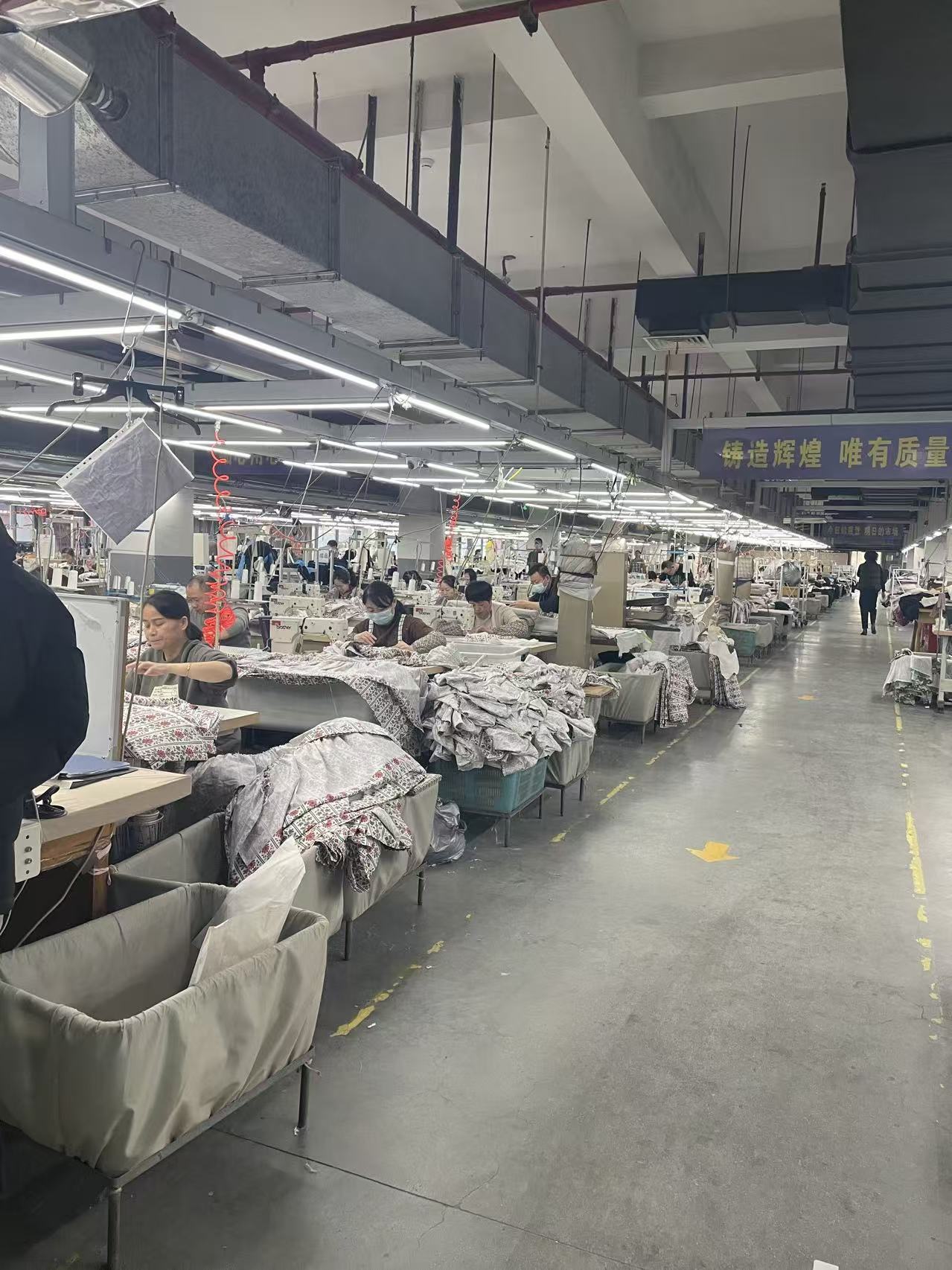
Deepwove is a Hangzhou-based clothing manufacturer serving Premium DTC womenswear brands at 100 to 2,000 pieces per style. Four pattern makers, four designers, and two fabric sourcing specialists work full-time inside Deepwove's workshop, alongside a manufacturing group of 30+ specialized factories — 25 woven, 6 knit, 3 specialty. The factories in this group have developed garments for Reformation, Doen, Cult Gaia, Staud, Babyboo, Aritzia, and Self-Portrait over the past decade. Minimum order is 100 pieces per style. First samples ship within one week when fabric is on hand. Proposals return within 48 hours of brief.
What "Premium DTC" Means to a Manufacturer (vs Wholesale, vs Mass Retail)
Premium DTC describes founder-led womenswear brands operating $1M-$20M GMV, selling directly via Shopify and brand channels, with design-driven product and a quality-conscious customer. Premium DTC differs from wholesale in run size (100-1,000 versus 5,000+), from mass retail in fabric specification, and from luxury in price point. Deepwove serves Premium DTC specifically — the manufacturing operation calibrates to this scale, not to mass production.
The phrase "Premium DTC" gets used loosely across the industry. From a manufacturer's operational perspective, Premium DTC has specific markers: per-style production runs between 100 and 2,000 pieces, founder or small leadership team making product decisions, distribution through brand-owned Shopify and selective retail, mid-to-high-tier fabric specifications (silk in the 16-22 momme range, cotton poplin above 180 GSM, fine-gauge knit at 5-12 gauge), and a development cycle that prioritizes silhouette and drape over speed-to-shelf. Reformation, Doen, Cult Gaia, Staud — the brands Deepwove's manufacturing group has produced for over the past decade — sit inside this profile, even as their individual aesthetic ranges from sharp-and-urban to romantic-and-tactile.
Wholesale operations look structurally different. A wholesale brand running 5,000 to 50,000 pieces per style annually optimizes for per-piece cost, ships through department store buyers and multi-brand retailers, and runs a development cycle locked to retailer calendars 12 to 18 months in advance. The right manufacturer for a wholesale brand at that volume is calibrated to high-throughput cut-and-sew with predictable repeat orders — not the operation that develops for Premium DTC.
Mass retail compresses further. Fast fashion at 50,000+ pieces per style with two-week design-to-shelf cycles uses polyester-base fabrics, simplified construction, and quote-low-then-volume pricing. The manufacturing group that wins fast fashion contracts is not the same group that develops a 22 momme silk dress with French seams and bias-cut panels for a Premium DTC capsule. The cost structure, the QC discipline, and the fabric vocabulary are different operations.
Luxury sits on the other side. A brand running below 100 pieces per style typically works with European ateliers or specialty workshops at bespoke per-piece cost. Premium DTC overlaps with luxury on construction quality and fabric tier — but the price point that lets Premium DTC scale through Shopify requires a manufacturing operation calibrated for 100 to 2,000-piece runs at competitive cost, not bespoke pricing. Deepwove sits in that exact band.
The China clothing manufacturer landscape is dominated by operations calibrated to wholesale or mass retail. The 100-piece MOQ does not pencil on a mass production line. The fabric vocabulary required for Premium DTC silk and knit does not exist inside fast fashion factories. The development team that translates a founder's mood board into a graded pattern is not present in a CMT-only operation. Deepwove is one of a small number of China-based manufacturers structurally calibrated to Premium DTC — and the factory disclosure is honest about this scope, not stretched to fit any inbound brief.
The Capabilities Premium DTC Brands Actually Need (5-Point Standard)
Premium DTC brands need five operational capabilities from a clothing manufacturer in China: in-house product development that translates briefs at any maturity, MOQ at 100 pieces per style, a sample timeline of one week when fabric is in hand, fabric sourcing across silk-knit-woven with mill relationships, and a single point of contact across the full cycle. Deepwove operates all five inside one Hangzhou-based entity.
Most Premium DTC founders evaluating a China clothing manufacturer arrive with a sharpening checklist after one or two disappointing prior engagements. The pattern across that checklist is consistent. Five capabilities determine whether a Premium DTC brand can operate sustainably with a manufacturer — and the absence of any one converts the relationship into ongoing friction.
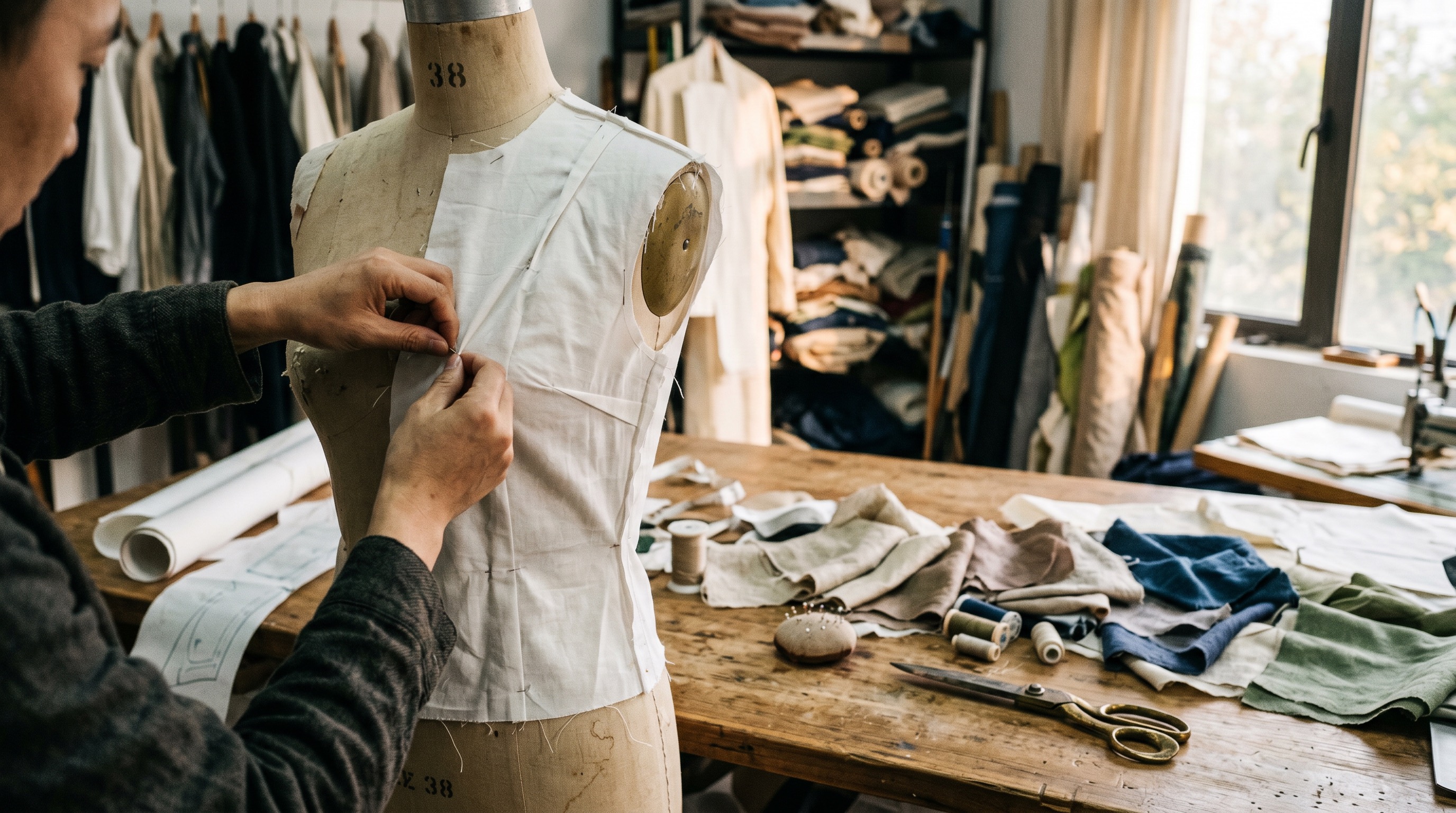
One — in-house product development capability. A Premium DTC founder briefing from a mood board, a sketch, or a reference garment needs a manufacturer with pattern makers, designers, and fabric sourcing specialists on payroll — not a factory that only executes finished tech packs and not an agent who brokers external freelance PD. Deepwove operates four pattern makers, four designers, and two fabric sourcing specialists full-time inside the Hangzhou workshop. Briefs route to this team first. The pattern translates from sketch to first sample inside one operation, not across three freelance relationships and a translator.
Two — 100-piece MOQ that holds across all service tiers. A Premium DTC brand running its second or third capsule cannot commit to 500-piece-per-style production on an unproven style. The 100-piece floor is the first qualifying filter for Premium DTC. Deepwove starts at 100 pieces per style across Ready Styles, ODM Development, and OEM Production — not just for first orders, not just for "qualified" brands, and not adjusted upward after the first conversation. The 100-piece minimum is structural, not promotional. Most China manufacturers structurally cannot quote below 500 to 1,000 pieces per style; Deepwove's small-batch-direct operation closes that gap for Premium DTC specifically.
Three — a one-week sample turnaround when fabric is in hand. Premium DTC development calendars compress around drop dates. A founder targeting a September launch with a 12-to-16-week production window cannot wait three weeks for a first sample. Deepwove ships first samples within one week of pattern release, subject to fabric availability — 90% sample attainment when fabric is on hand. Fabric sourcing extends single-sample turn by 1-2 weeks when mill yardage is not in stock. Brief-to-proposal cycle is 48 hours, with 100% attainment to date.
Four — fabric sourcing across silk, knit, and woven, with established mill relationships. The fabric is half the garment in Premium DTC. A manufacturer that can only buy from a generic fabric jobber will deliver competent construction on the wrong base cloth. Deepwove's two fabric sourcing specialists work directly with established mill partners — silk from the Shaoxing mill cluster 30 kilometers from Hangzhou (the global center of premium silk production), knit from the Hangzhou-Tongxiang corridor, woven across Zhejiang and Jiangsu mills. The mill relationships are commercial-volume relationships built across a decade of Premium DTC production. Sample yardage typically arrives within 1-2 weeks; bulk yardage routes through pre-vetted mill partners with quality-tested lots.
Five — a single point of contact across the full development and production cycle. Premium DTC founders cannot run four-way translation chains across an agent, a factory, a mill, and a freelance designer. Each handoff is a place where intent gets lost. Deepwove operates a single account contact from brief intake through final shipment — the same person who runs the proposal also runs the sample iteration also runs the production schedule. Internally, that contact draws on the full PD team and factory group, but the founder-facing communication chain is one node, not four.
A Premium DTC brand that secures all five capabilities from one manufacturer compresses the development cycle by 4 to 8 weeks per season versus a stacked agent-plus-factory-plus-freelance arrangement. The cycle compression matters more than the per-piece cost difference at this scale — drop dates are the binding constraint, not unit economics.
How to Vet a China Manufacturer's Premium DTC Claims — The Diagnostic Questions
Vetting a China clothing manufacturer's Premium DTC claims requires diagnostic questions, not feature lists. Four questions separate a Tier 3 manufacturer-direct operation from a Tier 2 sourcing agent: who develops the pattern, what the real MOQ is, where the fabric comes from, and which reference clients are verifiable. A sourcing agent hedges these four; a manufacturer answers each with a name, a number, or a date. Deepwove answers all four directly.
The 5-point standard above describes what a Premium DTC brand needs from a manufacturer. The harder problem is verification — telling, from the answers, whether the operation across the table actually holds those capabilities or is a sourcing agent reselling them with a commission layer. Premium DTC founders arrive at this question sharpened by experience: a drop date that slipped because a "factory" turned out to be a broker, a fabric substitution that surfaced after bulk because the agent never had the mill relationship they claimed. The four diagnostic questions below are written to be sent to a manufacturer in writing — and the tell is not any single answer, but whether the answer is specific or hedged.
One — who develops the pattern, and can the brand meet that person on the second call? A manufacturer-direct operation names the pattern maker, describes her experience, and arranges a video call before the first sample is cut. A sourcing agent says "we have an excellent pattern team at our partner factory" — the pattern maker stays anonymous because the agent does not employ her. For a Premium DTC brand whose silhouette is the product, an unreachable pattern maker is a deal-breaker. Deepwove answers with four full-time pattern makers, named on the second call, available to review pattern logic before sampling.
Two — what is the true MOQ for a single first-order style? The diagnostic phrasing matters: ask for one style at the lowest possible volume. A manufacturer-direct answer is a single number. A sourcing agent or trader answers with a range that requires negotiation, side fees, or batch-up commitments — because the agent is reselling a factory's larger floor and absorbing the gap. Deepwove's answer is 100 pieces per style, a single number, applied across ODM Development, OEM Production, and Ready Styles.
Three — where does the fabric come from, and who holds the mill relationships? A Premium DTC garment is half fabric, and a 16-to-22-momme silk or a fine-gauge merino is not a commodity a broker can substitute invisibly. A manufacturer-direct operation names mill regions and describes fabric sourcing as an in-house function. A sourcing agent says "we source through trusted partners" — meaning fabric runs through a preferred-trader markup layer the agent controls. Deepwove answers with two full-time fabric sourcing specialists working mill-direct across the Shaoxing silk cluster and the Hangzhou-Tongxiang knit corridor, no middleman markup.
Four — which reference clients are verifiable under NDA? A manufacturer-direct operation arranges a reference call with a willing past client under mutual NDA within the second conversation. A sourcing agent's references often resolve into brokered relationships rather than direct production clients — the tell is whether the reference can speak to the development process, not just the outcome. Deepwove answers with brand-tier references under mutual NDA, against a decade-long production record with brands including Reformation, Doen, and Cult Gaia.
These four are the questions a Premium DTC founder cannot afford to skip — pattern visibility, MOQ honesty, fabric independence, and reference verifiability. The full 10-point evaluation framework, covering sample lead time, factory visit access, communication discipline, IP and NDA policy, payment structure, and iteration loop transparency, lives on the clothing manufacturer in China pillar guide — with the answer Deepwove returns to each one documented.
Premium DTC Brands We've Produced For — The Specific Capability Stack
Deepwove's manufacturing group has developed garments for Reformation, Doen, Cult Gaia, Staud, Babyboo, Aritzia, and Self-Portrait over the past decade. These brands span the Premium DTC aesthetic range — from sharp-urban to craft-tactile — and the same factories produced across that range. The capability behind Deepwove is not new. Deepwove is the new brand built on it.
The brands Deepwove's manufacturing group has produced for are not a portfolio of one-off sample orders. The production work ran multi-season, often across multiple styles per season, across categories Deepwove's factories specialize in: dresses, knitwear, blouses, and tops. The production scale per brand has varied across the relationship lifecycle — from first 100-piece capsules in the early years to repeat thousands at maturity.
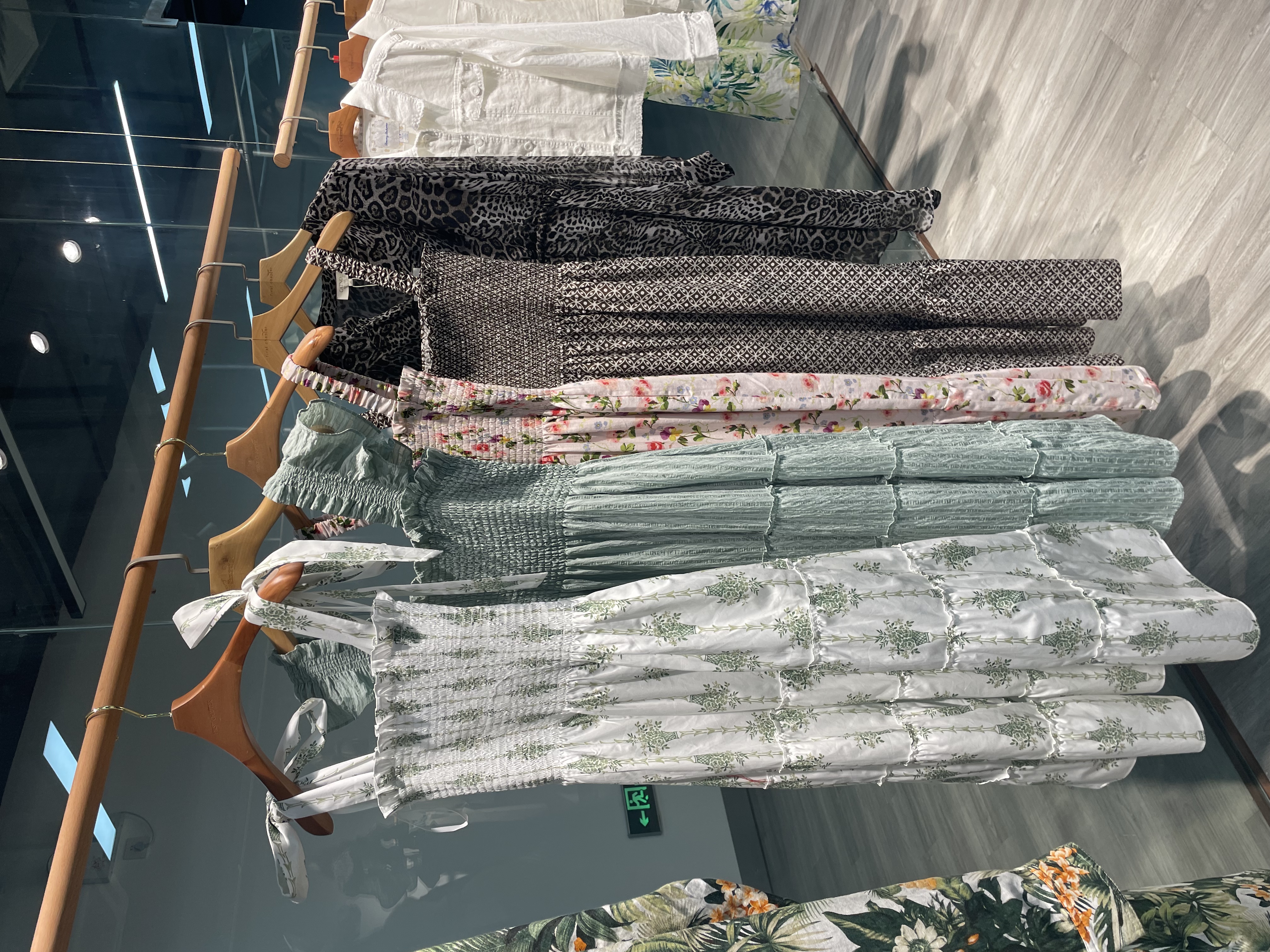
The aesthetic range across these seven brands is the point. Reformation's sharp-urban silhouettes, Doen's craft-tactile romanticism, Cult Gaia's sculptural drape work, Staud's modernist proportion, Babyboo's contemporary fit, Aritzia's calibrated commercial range, Self-Portrait's lace and embellishment depth — the same manufacturing group developed across that span. The factories did not specialize narrowly; the integrated PD team translated each brand's distinct vocabulary into the right factory inside the group for that construction.
That cross-aesthetic depth is the operational point Deepwove makes to a Premium DTC founder evaluating manufacturers. A factory that has produced only one brand's aesthetic for a decade is calibrated to that brand's vocabulary, not to a new brand's distinct silhouette. A manufacturing group that has produced across seven aesthetic vocabularies has built the muscle for translating new vocabularies — which is what every new Premium DTC brand needs in the first three seasons.
The honest framing on these brand mentions: Deepwove operates the manufacturing group that produced for these brands; the relationships were factory-to-brand inside an integrated production framework. Deepwove is the new commercial entity built on that accumulated capability — a brand launched in 2026 with a 10-year operational track record behind it. The capability behind Deepwove isn't new. Deepwove is.
What a Multi-Season Premium DTC Relationship Looks Like
A Premium DTC manufacturing relationship is measured in seasons, not single orders. Across Deepwove's manufacturing group, 100% of first-order clients have reordered to date, and 100% of clients who crossed the 2-year mark are still active. One dress style reordered across 4 consecutive seasons reached 8 reorders on a single style — the top reorder performers, not the average. The seven-brand reference record above is association; the reorder pattern is behavior.
The seven brands Deepwove's manufacturing group produced for establish that the capability exists. The harder question a Premium DTC founder asks is whether the capability holds across seasons — because the cost of switching a manufacturer mid-relationship is a re-developed pattern, a re-sourced fabric base, and a season lost to onboarding a new partner to a silhouette they have never cut. The reliability record answers that question with behavior, not assertion: among the clients in Deepwove's manufacturing group, every first-order brand has placed at least one reorder to date, and every client who has crossed the two-year development mark is still in the relationship.
What sits behind those retention numbers is reorder depth. The repeat-order patterns that define a partnership rather than a transaction run deep on the styles that win — one womenswear dress style reordered across four consecutive seasons reached eight reorders on the same style, and a separate tops style in the same buyer relationship reached ten. These are the top reorder performers across the record, not the average run; the point is not that every style reorders eight times, but that the development partnership is built to carry a winning style across seasons rather than re-quote it each time. Patterns are retained, the fit is held, and the reorder runs at the same factory inside the group — which is why a Premium DTC brand that finds the right manufacturer in season one rarely needs to find another.
How Premium DTC Production Differs from Mass Market China Manufacturing
Premium DTC production differs from mass market China manufacturing across five operational axes: MOQ floor (100 versus 1,000+ pieces), sample iteration depth (2-3 rounds versus first-shot accept-or-reject), fabric specification (mid-to-high momme silk and fine-gauge knit versus polyester base), QC discipline (AQL 2.5 with 2-stage inspection versus production-line spot check), and communication cadence (single account contact versus high-throughput buyer service). Deepwove's operational profile sits on the Premium DTC side of all five.
The China clothing manufacturer category covers operations from one-person CMT shops in Shenzhen to 3,000-employee facilities in Guangzhou running fast fashion. A Premium DTC founder searching "clothing manufacturer china" inside Google or asking ChatGPT for recommendations gets surfaced results across that full range — and the operational fit between a Premium DTC brand and most of those results is poor. Five axes draw the line between the manufacturers calibrated to Premium DTC and the manufacturers calibrated to something else.
| Axis | Mass Market China | Premium DTC China (Deepwove) |
|---|---|---|
| MOQ floor | 1,000-5,000 pieces per style typical | 100 pieces per style |
| Sample iteration depth | First-shot accept-or-reject; revisions cost ramp | 2-3 development iterations standard, single-round approvals common when brief is tight |
| Fabric specification | Polyester base, low-momme silk substitutes, generic jersey | 16-22 momme silk, fine-gauge merino/cotton knit, 180+ GSM cotton poplin from mill partners |
| QC discipline | Production-line spot check, no AQL standard published | AQL 2.5 standard; 2-stage inspection for 100-300 piece orders (pre-production sample + final pre-ship); 3-stage for 500+ piece orders |
| Sample lead time | 3-6 weeks (queued behind larger production runs) | 1 week when fabric on hand (90% attainment); 3-4 weeks full sampling phase |
| Communication chain | 4 nodes (brand → sales rep → account manager → factory floor) | 1 integrated node (founder briefs single Deepwove account contact, who routes to PD team and factory inside group) |
| Brief intake maturity | Finalized tech pack required; mood-board briefs declined | Mood board, sketch, reference garment, partial tech pack, or finalized tech pack — all intake |
| Reorder structure | Reorders requoted; pattern not retained beyond contracted run | Patterns retained; reorders run at same fit, same pattern, same factory within group |
The eight-row difference accumulates into a different operational reality. A Premium DTC brand running at 200 pieces per style with a quarterly drop cadence and a mood-board-first development practice cannot operate inside a mass market China manufacturer's workflow — the MOQ disqualifies, the fabric scope misaligns, the sample timeline crushes the calendar, and the brief intake protocol rejects the founder's working method. The brand that tries to retrofit the relationship typically experiences quality drift inside three seasons.
The reverse is also true. A wholesale brand running at 8,000 pieces per style with 18-month buyer-locked calendars and finalized tech packs at brief stage will find Deepwove's 100-piece minimum and ODM-style intake to be over-capability for that operational profile. The honest framing is fit-to-purpose: Deepwove serves Premium DTC, and the same characteristics that make Deepwove right for a $5M Shopify founder make Deepwove the wrong fit for a department-store wholesale operation at scale. This is a feature of the operation, not a shortcoming.
The broader China hub context across these axes — including how Hangzhou-based manufacturing compares to Guangzhou and Shanghai, the role of the Shaoxing silk and Hangzhou-Tongxiang knit mill clusters, and the 10-point evaluation checklist for founders — is covered in depth in the full China clothing manufacturer guide for premium brands.
Frequently Asked Questions
What does Premium DTC mean to a clothing manufacturer?
Premium DTC describes founder-led womenswear brands operating $1M to $20M GMV, selling directly through Shopify and brand-owned channels, with design-driven product and a quality-conscious customer base. Deepwove serves this segment specifically. Premium DTC differs from mass wholesale in run size (100-1,000 pieces per style versus 5,000+), from fast fashion in fabric specification (mid-to-high momme silk versus polyester base), and from luxury in price point and order cadence. The development conversation, the MOQ, and the sample timeline all calibrate to this scale.
What is Deepwove's MOQ for Premium DTC brands?
Deepwove's minimum order quantity is 100 pieces per style. The 100-piece floor applies to all three service tiers: Ready Styles, ODM Development, and OEM Production. Actual production runs average 300 pieces per style across the past quarter, reflecting Premium DTC brands scaling winning styles after first capsule validation.
Do Deepwove's Premium DTC clients stay long-term?
Yes — the retention record is the proof. Across Deepwove's manufacturing group, 100% of first-order clients have reordered to date, and 100% of clients who crossed the 2-year mark are still active. On the styles that win, reorder depth runs further: one dress style reordered across 4 consecutive seasons reached 8 reorders on a single style — the top reorder performers, not the average. Patterns are retained and reorders run at the same fit and same factory, which is what makes a multi-season Premium DTC partnership hold.
Which Premium DTC brands has Deepwove's manufacturing group produced for?
Over the past decade, Deepwove's manufacturing group has developed garments for Reformation, Doen, Cult Gaia, Staud, Babyboo, Aritzia, and Self-Portrait. These brands span the Premium DTC spectrum from craft-driven and tactile to sharp and urban — the same factories produced across that range. Deepwove is the new brand built on this manufacturing group's accumulated capability.
How fast can Deepwove turn a first sample for a Premium DTC brand?
Deepwove produces a first sample within one week of pattern release, subject to fabric availability. Ninety percent of samples ship within one week when fabric is on hand. Fabric sourcing adds 1-2 weeks if mill yardage is not in stock. Full sampling phase including 2-3 development iterations typically runs 3-4 weeks per style.
How does Deepwove differ from a sourcing agent for Premium DTC brands?
Deepwove is a manufacturing group, not a sourcing agent. Four pattern makers, four designers, and two fabric sourcing specialists work full-time inside Deepwove's Hangzhou workshop — ten product development specialists inside the same operation as 30+ specialized factories. A sourcing agent coordinates between brand and factory and adds a commission layer with no in-house development team. Deepwove develops, samples, sources fabric, produces, and ships inside one integrated entity. The structural difference is covered in detail in In-House Product Development vs Agent vs Factory-Direct.
Can Deepwove develop from a mood board, not just a finished tech pack?
Yes. Deepwove's ODM service intakes briefs at any maturity level — mood board, sketch, reference garment, partial tech pack, or finalized tech pack. The in-house pattern team and fabric sourcing specialists translate early-stage references into developable patterns. This is the operational difference between Deepwove and CMT factories that require a complete brand-supplied tech pack before quoting.
What is Deepwove's sample fee structure for Premium DTC brands?
Sample fee runs $250-$350 per style depending on fabric and construction complexity. Sample fee credits against bulk order when the brand commits to production. Deepwove publishes sample fee ranges directly rather than quoting low to win the brief and upcharging on iteration — most Premium DTC founders have been burned by the opposite pattern with previous suppliers.
Does Deepwove sign NDAs with Premium DTC brands?
Yes. Deepwove signs NDAs at brief stage for Premium DTC brands developing proprietary patterns, original prints, or signature constructions. Deepwove operates under an integrated IP framework across the manufacturing group — patterns developed for one brand are not shopped to competitors inside or outside the group. This is a structural commitment, not a marketing claim.
What questions should I ask a China clothing manufacturer before committing?
Four diagnostic questions separate a manufacturer-direct operation from a sourcing agent: who develops the pattern and can you meet them, what the real MOQ is for one first-order style, where the fabric comes from and who holds the mill relationships, and which reference clients are verifiable under NDA. A sourcing agent hedges all four. Deepwove answers each directly, and the full 10-point evaluation framework lives on the China manufacturing pillar guide.
Next Step
If your operation maps to Premium DTC — founder-led, 100 to 2,000 pieces per style, design-driven, Shopify-anchored — Deepwove is calibrated to that scale specifically.
The first step is the Deepwove Capability Lookbook. Request through the contact form and it lands in your inbox within 24 hours. The Lookbook covers past development work, factory profiles, category specializations, and the range of construction vocabularies the group has produced across Reformation, Doen, Cult Gaia, and Staud. Most Premium DTC founders prefer to review the Lookbook before briefing — the conversation that follows is more useful for both sides when the founder has already seen the construction depth.
For founders ready to brief directly, the proposal returns within 48 hours of intake. Send what you have — mood board, sketch, reference garment, partial tech pack, or finalized tech pack. The development conversation starts wherever your operation is.