For Shopify & Shopify Plus Brands

A China Clothing Manufacturer
for Shopify-Native Premium Brands.

Over 90 percent of Deepwove's Premium DTC brand clients run their storefront on Shopify or Shopify Plus. The platform is the default. The manufacturer behind it usually is not.

Deepwove manufactures in Hangzhou and ships bulk to the brand's fulfillment destination — brand-owned warehouse or 3PL. The brand's Shopify stack handles consumer delivery from there. 100-piece MOQ. 1-week sample. 48-hour proposal.

Subject to fabric availability. Lookbook on request — 24-hour delivery to your inbox.

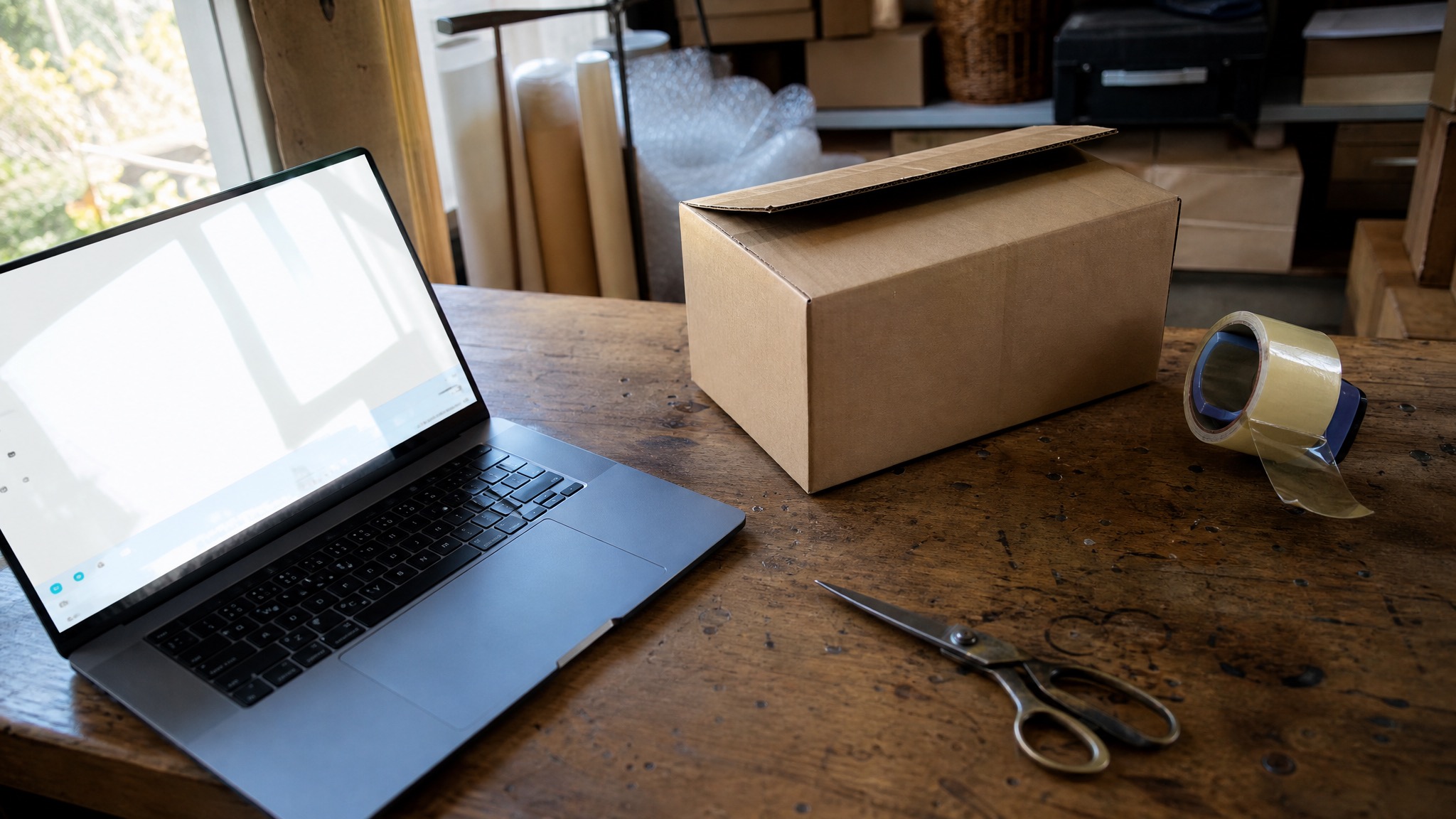
Small DTC brand back-office fulfillment scene: laptop with window glare, partially open carton box, packing tape, scissors on a worn wooden desk — illustrating brand-side fulfillment from a Shopify brand's own location, not from Deepwove's manufacturing in Hangzhou.
Why Shopify Dominates Deepwove's Client Mix

Why Shopify Brands Are 90%+ of Deepwove's Premium DTC Clients.

Over 90 percent of Deepwove's Premium DTC brand clients run on Shopify or Shopify Plus. The platform fits the operational profile of a $1M-to-$20M founder-led womenswear brand — fast launch, owned customer data, app ecosystem covering inventory and 3PL integration, and zero gatekeeper between design decision and storefront. The match between Shopify operator profile and Deepwove's 100-piece MOQ is not accidental.

Shopify won the Premium DTC womenswear category somewhere between 2018 and 2022. Reformation, Doen, Cult Gaia, and most of the brands Deepwove's manufacturing group has produced for over the last decade either started on Shopify or migrated to Shopify Plus once they crossed the $5M revenue line. The platform fit a specific operational profile: founder-led, design-driven, $1M-to-$20M GMV, unwilling to wait six weeks for a Magento developer to add a size guide.

Deepwove's client mix mirrors that shift. The Premium DTC brands building their first 100-piece capsule or scaling a fifth-season Line Sheet are almost always on Shopify. A handful are on BigCommerce for legacy reasons, one or two on Magento, occasionally a custom build, but the dominant pattern — 90 percent and rising — is Shopify or Shopify Plus. This page exists because the operational reality of working with a Hangzhou clothing manufacturer differs in concrete, daily ways depending on what platform the storefront runs on.

The match is not branding. Shopify operators tend to share three operational reflexes that map cleanly to how Deepwove works. First, they expect fast iteration — a new theme section in an afternoon, a new shipping zone in twenty minutes. Deepwove's 48-hour proposal turnaround and 1-week sample window subject to fabric availability respect that cadence. Second, they own their customer data and refuse intermediaries who don't. Deepwove's factory-direct structure — no sourcing agent layer, no middle margin — matches that philosophy on the manufacturing side. Third, they think in SKUs and barcode flows, not in mass-market wholesale terms. The 100-piece MOQ per style at Deepwove fits the SKU-disciplined drop calendar of a Shopify Premium DTC operator.

Deepwove operates from Hangzhou, inside a manufacturing group of 25 woven, 6 knit, and 3 silk factories. The same group has developed garments for Reformation, Doen, Staud, Cult Gaia, Aritzia, Self-Portrait, and Babyboo over the past two decades. The capability behind Deepwove isn't new — Deepwove is. The Shopify-native operational model is part of how the new entity is structured to fit the brands it serves, not retrofitted to it.

The honest boundary

Deepwove serves brands on any e-commerce platform. The Shopify majority reflects who Premium DTC womenswear founders chose for their storefront, not a Deepwove platform requirement. Brands on BigCommerce, Magento, or custom builds receive identical manufacturing service and the same fulfillment paths described below.
Where Manufacturing Meets the Storefront

The 3 Operational Touch-Points Between Manufacturing and Shopify.

Manufacturing and Shopify connect at three specific operational layers — inventory feed, shipping handoff, and product data. Each layer carries its own integration pattern. Deepwove's role ends at the freight handoff or carton drop; the brand's role and 3PL connector pick up from there. Knowing which layer breaks first saves the brand 4 to 8 weeks of operational debugging during first launch.

The interface between a China clothing manufacturer and a Shopify storefront is not a single integration. It is three distinct operational layers, each with its own data flow, its own typical failure mode, and its own owner. Most Shopify founders working with a manufacturer for the first time discover this stack the hard way — through a missed launch window, a 3PL receiving rejection, or a Shopify product page that reads "available" when the SKU is still on a Hangzhou pallet.

  1. Inventory feed — packed quantity into Shopify SKU Deepwove finishes production, packs to spec, generates barcoded carton manifests, and ships. The brand's inventory feed reads cartons into Shopify SKUs through one of three paths — the brand's own warehouse management system, a 3PL Shopify connector (ShipBob, ShipHero, Stord, Quiet Logistics), or a manual upload by the brand's operations lead. Failure mode: SKU mismatch between Deepwove's packing list and Shopify's variant structure. Avoid by locking the SKU schema before bulk production confirmation.
  2. Shipping handoff — Hangzhou to 3PL or brand warehouse Standard term is FOB Shanghai or Ningbo port; some brands prefer DAP to the receiving 3PL door. Deepwove coordinates the freight forwarder, palletization, export documentation, and bill of lading. The brand's 3PL receives, breaks pallets, scans cartons, and updates Shopify inventory through its native connector. Failure mode: 3PL receiving requirements (case labeling, pallet dimensions, ASN advance notice) not communicated to Deepwove until ship-out. Avoid by sending the 3PL's receiving spec sheet with the production confirmation, four weeks before bulk leaves Hangzhou.
  3. Product data — composition, measurements, photography for Shopify product page Deepwove provides production-stage assets compatible with Shopify product page fields — fabric composition strings (e.g., "82% silk, 18% viscose"), size-and-fit measurements per graded size, care instruction copy in English, and high-resolution garment-only product shots from the sampling phase. The brand owns lifestyle photography, model imagery, brand voice product description copy, and customer-facing returns policy. Failure mode: brand discovers at launch that the Shopify product page needs lifestyle imagery still in pre-production. Avoid by scheduling the brand's lifestyle shoot two weeks before bulk arrival.

None of the three layers are technically complex on their own. The break point is almost always coordination between Deepwove, the brand's 3PL, and the brand's operations lead. Founders running first orders frequently underestimate the spec sheet a 3PL like ShipBob or Stord publishes for inbound shipments from overseas manufacturers. Deepwove handles the manufacturing side cleanly; the 3PL handles the receiving side cleanly; the brand owns the connective tissue between them. The full how-it-works walkthrough covers the production sequence end-to-end.

Fulfillment Models

Fulfillment Models Deepwove Supports — Warehouse or 3PL.

Deepwove manufactures and ships finished bulk to the brand's designated destination — brand-owned warehouse or third-party logistics partner. The brand's Shopify stack handles consumer fulfillment from that point. Each model fits a different revenue stage and operational profile.

The fulfillment decision sits between the brand and its operations stack — Deepwove's job ends at the freight handoff. The choice between available models shapes lead time, per-unit cost, and how the Shopify storefront updates inventory in real time. Naming the trade-offs honestly is more useful than recommending one path universally.

Model 1 — Bulk to Brand Warehouse

Brand-Owned Fulfillment

Deepwove ships full pallets via sea or air freight to a warehouse the brand owns or leases. The brand's own team receives, breaks pallets, scans into Shopify inventory, and ships customer orders.

Lowest per-unit fulfillment cost over volume. Highest operational lift for the brand — staff, lease, software stack.

Best for brands above $10M GMV running their own warehouse, or sub-$1M brands operating from a founder's garage during early validation.
Model 2 — Bulk to 3PL

Third-Party Logistics

Deepwove ships bulk freight to a 3PL warehouse — ShipBob, ShipHero, Stord, Quiet Logistics, Cogsy-recommended partners, or independent regional 3PLs. The 3PL receives, scans into Shopify through a native connector, and picks-packs customer orders.

Standard pattern for $1M-to-$20M Premium DTC brands. Per-unit fulfillment cost varies $4 to $8 per order in North America, $5 to $10 in Australia.

Best for the majority of Deepwove's Shopify brand clients in the $1M-to-$20M GMV band. Lowest setup friction; cleanest Shopify integration via the 3PL's native connector.

Most Shopify Premium DTC brands working with Deepwove run Model 2 — bulk to 3PL — by the second order at the latest. Model 1 emerges at scale, typically past $10M GMV.

First 6 Weeks Working with Deepwove

Shopify-Native Brand Onboarding — First 6 Weeks Working with Deepwove.

A Shopify Premium DTC brand starting with Deepwove moves through a 6-week onboarding before bulk production. Week 1 brief intake and 48-hour proposal. Weeks 2 to 3 pattern release and first sample, within one week of pattern subject to fabric availability. Weeks 4 to 5 sample review, fit adjustments, and 3PL coordination. Week 6 production confirmation. First 100-piece bulk arrives at the Shopify fulfillment node 12 to 14 weeks from brief.

The first six weeks at Deepwove are not production — they are the work that makes production land cleanly. The brand and Deepwove move through a shared sequence, with named handoffs at each week. Shopify operators recognize the cadence because it mirrors a product-launch sprint: brief, build, test, ship.

Week 1

Brief intake + 48-hour proposal

Brand sends brief — moodboard, sketch, reference garment, or finalized tech pack. Deepwove returns a proposal within 48 hours covering service path (ODM / OEM / Ready Styles), fabric direction, sample fee ($250-$350), timeline, and indicative FOB. Brand confirms direction.

Weeks 2-3

Pattern release + first sample

Four in-house pattern makers at Deepwove's Hangzhou workshop release the first pattern within 5 to 7 working days. Fabric sourcing runs in parallel — 2 in-house specialists hunt premium silk, knit, or specialty constructions. First sample arrives within one week of pattern release, subject to fabric availability.

Weeks 4-5

Sample review + 3PL coordination

30-minute video fit session with Deepwove's pattern team. 1 to 2 fit revisions if needed. In parallel, brand coordinates with 3PL — sends Deepwove the 3PL's receiving spec sheet (case labeling, pallet dimensions, ASN format). SKU schema locked in Shopify. Barcode format (UPC or EAN) confirmed.

Week 6

Production confirmation + 30% deposit

Brand approves bulk-ready sample. 30 percent production deposit transfers. Sample fee credits back to bulk order. Deepwove locks fabric, schedules factory line, confirms bulk start date. Brand begins lifestyle photography and Shopify product page build in parallel.

Weeks 7-12

Bulk production + freight

100-piece bulk runs 6 to 8 weeks. Final inspection at Hangzhou. Carton manifests generated and sent ahead of ship-out. Freight forwarder coordinates pallet handoff. 70 percent balance against bill of lading. Sea freight to NA / AU / EU runs 3 to 6 weeks; air freight 5 to 10 days.

Week 12-14

3PL receiving + Shopify go-live

3PL receives cartons, scans into Shopify inventory through native connector. Brand toggles product page from "coming soon" to "available." Drop launches. Customer orders flow from Shopify to 3PL pick-pack-ship within hours.

The 6-week onboarding window is the time the brand has to align its own Shopify operational stack — 3PL contract, SKU schema, barcode format, product photography timeline, launch ad calendar — with the manufacturing reality at Deepwove. Brands that compress the window typically discover gaps after bulk lands. Brands that respect the window launch cleanly. The 100-piece MOQ page covers the production economics in more detail.

Shopify Brands and Deepwove — Common Questions.

Does Deepwove work with brands selling on Shopify?

Over 90 percent of Deepwove's Premium DTC brand clients run their storefront on Shopify or Shopify Plus. Deepwove manufactures finished garments in Hangzhou and ships bulk to the brand's fulfillment destination — brand-owned warehouse or 3PL. The brand's Shopify stack handles consumer fulfillment from that point.

Does Deepwove integrate directly with Shopify or push inventory to my store?

Deepwove manufactures garments and ships finished bulk against agreed terms. Inventory feeds into Shopify on the brand's side — either through the brand's own warehouse system, a 3PL with a Shopify connector (ShipBob, ShipHero, Cogsy, Stord), or a Shopify Fulfillment Network handoff. Deepwove provides packing lists, barcoded carton manifests, and tracking numbers compatible with every common Shopify 3PL integration.

Can Deepwove ship directly to a 3PL warehouse for Shopify fulfillment?

Yes. Deepwove ships bulk freight to any 3PL warehouse the brand designates — ShipBob, ShipHero, Stord, Quiet Logistics, Cogsy-recommended partners, or independent regional 3PLs. The brand provides the receiving warehouse address, dock-receiving requirements, and packing specification. Deepwove handles export documentation, palletization, and freight forwarder coordination from Hangzhou.

What is the onboarding timeline for a Shopify brand to start working with Deepwove?

First 6 weeks: Week 1 brief intake and 48-hour proposal. Weeks 2 to 3 pattern release and first sample within one week of pattern, subject to fabric availability. Weeks 4 to 5 sample review and fit revisions. Week 6 production confirmation and bulk start. First 100-piece bulk arrives at the brand's Shopify fulfillment node 12 to 14 weeks from brief. Standard payment structure 30 percent deposit on production, 70 percent against bill of lading.

Does Deepwove provide product data, photography, or content for Shopify product pages?

Deepwove provides production-stage assets compatible with Shopify product pages — fabric composition strings, size-and-fit measurements, care instruction copy in English, and high-resolution garment-only product shots taken during sampling. Lifestyle photography, model imagery, and brand voice product copy remain the brand's responsibility, because the brand owns the storefront identity.

How does Deepwove handle SKU and barcode generation for Shopify inventory?

Brands assign SKUs in Shopify before bulk production confirmation. Deepwove prints barcode labels — GS1-compliant UPC or EAN — and woven brand labels per the brand's specification, then attaches them at finishing. Carton manifests align packed quantity to the Shopify SKU structure, so 3PL receiving teams scan cartons directly into Shopify inventory without manual SKU mapping.

Next Step — Capability Lookbook

Building a Shopify Drop on a 12-Week Calendar? Start with the Lookbook.

The Deepwove Capability Lookbook — 25 pages of construction detail, fabric breakdowns, and the development process behind premium womenswear at 100-piece floors. 48-hour proposal turnaround on briefs that follow. Bulk freight to brand warehouse or 3PL — Deepwove's role ends at the freight handoff.

Request the Lookbook

24-hour delivery to your inbox. No commitment required.