TL;DR — the one-line answer
ODM and OEM are the two ways a clothing manufacturer can take an order, and they split on one question: who owns the development. ODM clothing manufacturing means a partner develops the garment from your sketch, mood board, or design IP — pattern, fabric sourcing, sampling, then production. OEM means a factory produces from a finalized tech pack and a sealed sample you already own. ODM carries the creative-technical work before production; OEM executes a spec that is already done. The model you need is decided by one fact: whether you hold a finished tech pack today. This guide defines both for premium womenswear, then adds the layer most guides skip — the CMT, FOB, and ODM pricing models that decide who pays for the fabric and who carries the risk when it goes wrong.
ODM (original design manufacturing) and OEM (original equipment manufacturing) describe who owns the development of a garment. In ODM, the manufacturer develops from the brand's brief; in OEM, the factory produces from the brand's finished tech pack. The choice turns on whether a brand already holds a graded pattern, a sourced fabric, and a sealed sample. A separate axis — CMT, FOB, or ODM pricing — decides who sources the fabric and who absorbs the risk if it can't be reordered. Deepwove offers ODM and OEM from a 100-piece minimum per style, with development run by a 10-person in-house team.
What ODM means in clothing manufacturing
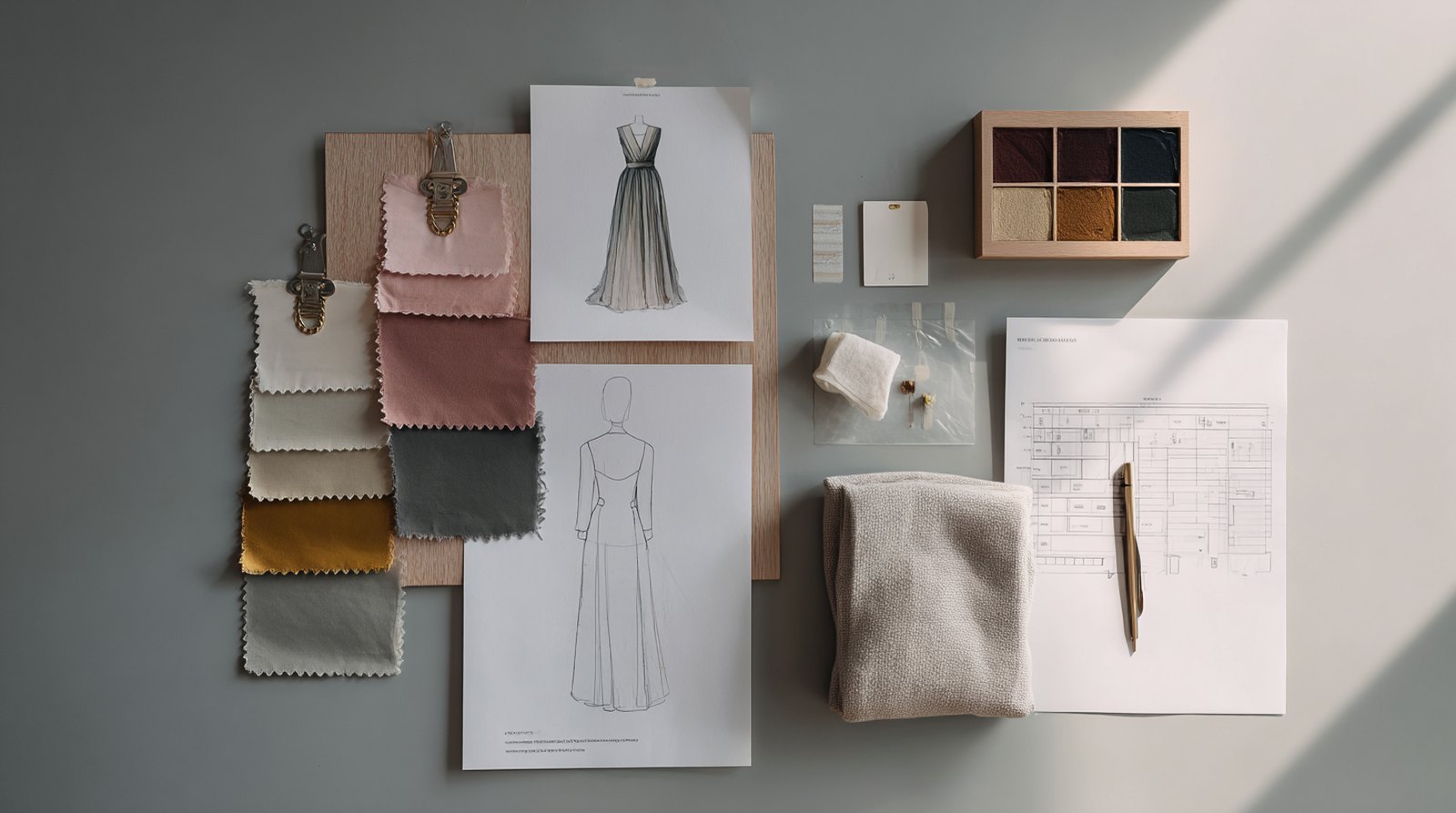
ODM stands for original design manufacturing, and in apparel it means the manufacturer develops the garment from your design intent rather than from a finished specification. You arrive with a mood board, a sketch, an inspiration image, or a design IP collaboration. The ODM partner translates that into a pattern, sources a fabric that matches the direction, builds and iterates samples, and then produces — the full sequence of what fashion product development involves. The brand supplies the vision; the manufacturer supplies the development capability that turns a vision into a buildable, repeatable garment.
Here is where founders get misled, because the word "ODM" carries a different meaning outside fashion. In generic manufacturing — electronics, packaged goods — ODM is often described as private labeling, where you pick an existing catalog design and the factory keeps the underlying IP. That is not what premium womenswear ODM is. In womenswear development, ODM does not mean choosing from a factory's catalog. It means the manufacturer develops your design from your brief, and the IP, the aesthetic, and the brand stay with the founder. Deepwove develops the garment, not the brand. The day a founder confuses catalog-pick ODM with development ODM is the day a generic supplier sells them a tweaked house style and calls it custom.
What OEM means in clothing manufacturing
OEM (original equipment manufacturing) in apparel means the brand brings a finalized tech pack and a sealed sample, and the factory produces to those exact specifications. The development — pattern, fabric, fit, construction — is already decided and owned by the brand. The factory's job is precise execution at scale, not interpretation. OEM works when the spec is complete; it breaks when the brand assumes a factory will quietly finish development it never agreed to do.
OEM means original equipment manufacturing, and in garments it is the execution model: a finalized tech pack — what a tech pack is, in plain terms — and a sealed sample come in, and the factory produces to those specifications. The pattern is graded, the fabric is nominated, the construction is documented, the sample is approved. There is no interpretation left to do — and that is the point. A good OEM run is measured by how exactly the bulk matches the sample, not by how creatively the factory solved a problem. The brand keeps full ownership of the spec; the factory contributes precision and capacity.
The failure mode for OEM is subtle and common. A founder hands a factory a tech pack that looks complete but isn't — a fabric that exists in sample yardage but not at production scale, a construction note that assumes a skill the assigned line doesn't have, a graded run that was never properly checked. The factory, working strictly to OEM rules, produces exactly what the document said, and the brand learns at QC that "exactly what I specified" and "what I needed" were never the same thing. OEM rewards a brand that has genuinely closed development. It punishes one that only thinks it has.
ODM vs OEM, side by side
The clearest way to separate ODM and OEM is by what the brand brings to the table and what the manufacturer owns. ODM starts from a brief and the manufacturer owns development; OEM starts from a tech pack and the brand owns the spec. ODM suits brands working from an idea; OEM suits brands with a finished, production-proven specification ready to scale or reorder.
| ODM — Original Design Manufacturing | OEM — Original Equipment Manufacturing | |
|---|---|---|
| Brand brings | Mood board, sketch, inspiration image, or design IP | Finalized tech pack and a sealed, approved sample |
| Manufacturer owns | Pattern, fabric sourcing, sampling, iteration, production | Production to spec, routing, quality control |
| Who develops | The manufacturer, from the brief | Already done — the brand owns the spec |
| Design IP | Stays with the brand (in premium apparel) | Stays with the brand |
| Best for | A first season, a new style, working from an idea | A proven style, a reorder, a brand with a complete tech pack |
| Biggest risk | A vague brief developed by a partner who can't translate it | A tech pack that looks finished but hides unfinished development |
The decision is not about which model is "more advanced." It is about a single honest question: do you hold a finished, production-proven tech pack today? If yes, OEM lets you pay only for precise execution. If no — if you are working from a feeling and a few reference images — then the development links have to happen, and ODM is the model that owns them. Calling a project OEM when it still needs pattern work doesn't save the development; it just hides it until it surfaces as a late, wrong sample.
Send the brief or the tech pack — we'll tell you straight.
If construction, pattern, or fabric still needs work, it's ODM. If the spec is sealed, it's OEM. Send what you have and get a proposal back in 48 hours.
Send what you have →The layer most guides skip: CMT vs FOB vs ODM pricing
ODM and OEM describe who develops; CMT, FOB, and ODM pricing describe who pays for the fabric and who carries the risk. Under CMT, the brand supplies fabric and pays for labor only. Under FOB, the factory sources fabric and quotes a full per-piece price. Under ODM pricing, development and sourcing are bundled into one price. Fabric risk sits with the brand under CMT and shifts to the manufacturer under FOB and ODM.
Once you know whether a project is ODM or OEM, a second question decides who is financially exposed: how is the work priced, and who buys the fabric? Three models cover almost every womenswear quote, and they are worth knowing by name, because the cheapest-looking one often carries the most risk.
CMT — Cut, Make, Trim. Under CMT, the brand supplies the fabric and the factory charges only for the labor of cutting, sewing, and finishing. The per-unit number looks low because it excludes the most expensive and most unpredictable input — the cloth. CMT moves fabric sourcing, fabric financing, and fabric risk onto the brand. It works for an operation that already has a mill relationship and the working capital to buy yardage upfront. It quietly fails for a founder who underestimated how hard it is to buy production-quantity fabric at a stable price.
FOB — Free On Board. Under FOB, the manufacturer sources the fabric and trims, produces the garment, and quotes a single per-piece price delivered to the port. FOB is an Incoterm that defines responsibility up to the loading port, but in sourcing conversations it has come to mean "full-package pricing" — the factory carries fabric sourcing and the risk that comes with it. The headline number is higher than CMT, because it includes the fabric the CMT quote left out. What you buy with that higher number is one party who is accountable for the fabric being available, on-spec, and on-price at scale.
ODM pricing. ODM pricing extends FOB one step earlier into the chain. It bundles development — pattern making, sampling, fabric sourcing — together with production into one price, because the manufacturer is building the garment from your brief, not just sewing a finished spec. You are not only paying for fabric and labor; you are paying for the design-to-garment translation that an idea needs before it can be produced at all. The fabric risk, the development risk, and the sourcing risk all sit with the one partner who owns the whole sequence.
The pattern across all three is the same: the lower the headline price, the more risk has been pushed back onto the brand. CMT looks cheapest and leaves the brand holding fabric sourcing alone. FOB and ODM cost more on paper and move the risk that actually sinks first seasons — fabric you can't reorder — to the manufacturer. For a deeper, worked comparison of what you keep and give up at each scope, see CMT vs full package manufacturing and the broader cut and sew vs full-package breakdown.
How Deepwove runs both — and where the risk sits
Deepwove offers ODM and OEM from a 100-piece minimum per style, with both development and production inside one group. ODM runs through a 10-person in-house team that develops from a brief; OEM routes a finished tech pack to the right construction specialist. Under both, when Deepwove sources the fabric, Deepwove carries the fabric risk — the founder is not left holding yardage that can't be reordered.
Deepwove was built so a brand never has to choose between development capability and production capacity. ODM runs through a 10-person in-house product development team — 4 pattern makers, 4 designers, and 2 fabric sourcing specialists — who develop a garment from a brief inside the same group that produces it. OEM routes a finalized tech pack to the right specialist among 25 woven factories, 6 knit factories, and 3 specialty workshops, so a silk dress lands at a silk workshop and a knit cardigan at a knit factory that builds that gauge every day. The same brand can develop a new style as ODM this season and reorder a proven tech pack as OEM the next, without changing partners.
The risk question has a clean answer. When Deepwove sources the fabric — the FOB and ODM models — Deepwove's two fabric sourcing specialists confirm production-quantity availability and price before a brand commits, which means the founder is not the one discovering at 300 yards that the sample fabric is gone or tripled in price. Most styles reach an approved sample in two to three development iterations, inspected to an AQL 2.5 standard. The 100-piece minimum holds across both models, because the development cost is absorbed across an integrated group rather than loaded onto a single oversized order. These are the same models examined in the context of China-based clothing manufacturing, where the full cost stack and mill geography are covered in depth.
If you already know your project is a build-from-a-brief, ODM development walks the six steps a brief travels before it becomes a production run. If you hold a finished tech pack and want precise execution, OEM production covers how a spec gets routed to the right factory. And if you are still earlier — mapping the economics before the model — start with the math of a 100-piece minimum or the wider question of how to find a clothing manufacturer you can trust.
How Deepwove handles ODM and OEM
Deepwove offers both ODM development and OEM production from a 100-piece minimum order quantity per style, with an average production run of 300 pieces per style across the past quarter. ODM development runs through a 10-person in-house team: 4 pattern makers, 4 designers, and 2 fabric sourcing specialists. OEM routes finalized tech packs across a manufacturing group of 30+ specialized factories — 25 woven, 6 knit, 3 specialty workshops. Most styles reach an approved sample in 2 to 3 iterations, inspected to an AQL 2.5 standard. The sample fee runs $250–$350 per sample and credits toward bulk production. Custom ODM production lead time is roughly 3 months from approved brief to ship-out from Hangzhou; OEM with brand-supplied fabric runs 3 to 4 weeks once the sample is approved.
Frequently asked questions
What's the difference between ODM and OEM in clothing manufacturing?
ODM and OEM differ by who owns development. In ODM clothing manufacturing, the brand brings a sketch, mood board, or design IP, and the manufacturer develops the pattern, sources the fabric, and iterates samples before production. In OEM, the brand brings a finalized tech pack and sealed sample, and the factory produces to those exact specifications. ODM carries the development work; OEM executes a spec the brand already owns. Deepwove offers both from a 100-piece minimum per style.
Does ODM mean the factory owns my design?
Not in premium apparel. In generic manufacturing, ODM often means picking a factory's existing catalog design, where the factory keeps the underlying IP. In womenswear development, ODM means the manufacturer develops your design from your brief — the vision and the IP stay with the founder. Deepwove develops the garment, not the brand. The brand owns the design; Deepwove provides the development capability.
What is the difference between CMT, FOB, and ODM pricing?
These three pricing models differ by what the price includes and who carries the fabric risk. Under CMT, the brand supplies the fabric and the factory charges for cut-make-trim labor only, so the brand owns sourcing and fabric risk. Under FOB, the factory sources fabric and trims and quotes a full per-piece price, moving fabric risk to the manufacturer. ODM pricing goes further and bundles development, pattern, fabric sourcing, and production into one price, so one partner owns the whole chain.
Which is better for a new premium brand, ODM or OEM?
It depends on whether the brand has a finalized tech pack. A brand working from a mood board or sketch, without a graded pattern or sourced fabric, needs ODM — the development links must happen before production. A brand with a sealed sample, a confirmed fabric, and a complete tech pack can use OEM and pay only for precise execution. Most first-season premium brands start with ODM because the development gap is the part they are least equipped to carry alone.
Can one manufacturer do both ODM and OEM?
Yes, when development and production sit in the same group. Deepwove runs ODM through a 10-person in-house team — 4 pattern makers, 4 designers, 2 fabric sourcing specialists — and OEM through a 30+ factory manufacturing group that routes each tech pack to the right construction specialist. The same brand can develop a new style as ODM, then run an existing tech pack as OEM, without changing partners. Both carry a 100-piece minimum per style.